
SUBRATA BEURA
The recently concluded International Documentary & Short Film Festival of Keralam (IDSFFK) was in the news after the Ministry of Information & Broadcasting (MIB) withheld permission to screen 31 films.
IDSFFK is a major film festival in South Asia, and any form of censorship does not augur well for the festival or the film-viewing culture of the country.
By the end of the festival September 30, five films in the competition section — In Search of Buddha, Redlight to Limelight, Par liament Street, The Mali and the Parasite and Sanitised Republic — and two films in the focus section — Shimmering Odyssey and Far from Home — had not been screened because they lacked clearance.
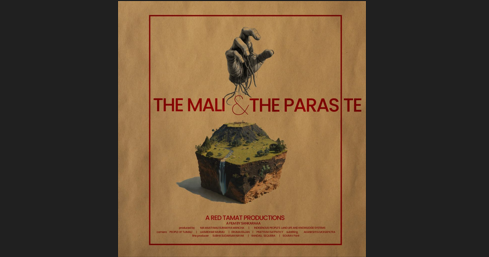
The Mali and the Parasite, directed by Sankaraa, a filmmaker in his twenties, is set in Sijimali, the site of a bauxite mining project spanning Rayagada and Kalahandi districts.
The mining project is intended to supply Vedanta’s alumina refinery in Lanjigarh, Kalahandi.
Made with community support and using found footage and documents, the film chronicles the popular struggle against the global company’s plans to mine the area.
It also situates the struggle within the broader history of mining and its impact on the indigenous people of Odisha.
It is important to understand the history of the MIB’s permission process.
Both the revocation and suspension of censor certificates were provided for under the original Cinematograph Act of 1952.
In 2023, an amendment to Section 6(1) of the Act created a ‘super-censor’ clause, allowing the Central government to cancel a film’s certification and initiate re-certification.
The clause was later withdrawn after it was found to be violative of the Supreme Court’s 2000 K.M. Shankarappa judgment, which held that the government could not exercise revisional powers over a film after its certification.
Film festivals were treated as a special case for nearly 50 years after Independence, remaining outside the censorship mechanism.
This changed in 2003, when the Mumbai International Film Festival amended its rules to require Indian participants to obtain a censor certificate.
The process of seeking prior permission has come into widespread use following the 2023 amendment to the Cinematograph Act.
The downside, as was evident at IDSFFK, is that the Union government is not required to provide an explanation or specify the provision under which permission to screen a particular film has been denied. These films need to be screened, particularly The Mali and the Parasite, as they raise important questions about the dominant narrative of development.
The film deserves due consideration because it foregrounds questions that are important to democracy and the welfare of the people.
The writer is a film society activist in Odisha.