
ARINDAM GANGULY, OP
Bhubaneswar: Odisha is likely to face more heat and increasingly uneven monsoon rainfall in the coming decades, even as the state’s overall rainfall is projected to increase, an analysis by the Council on Energy, Environment and Water (CEEW) said Wednesday.
The findings were unveiled at a knowledge-sharing roundtable organised by CEEW Wednesday on “Strengthening Climate Resilience through AI-Driven Climate Decisions and Actions”.
Researchers also demonstrated CEEW’s Climate Resilience Analytics and Visualisation Intelligence System (CRAVIS.ai), an AI-powered climate intelligence platform that combines decades of historical climate data with climate projections up to 2070.
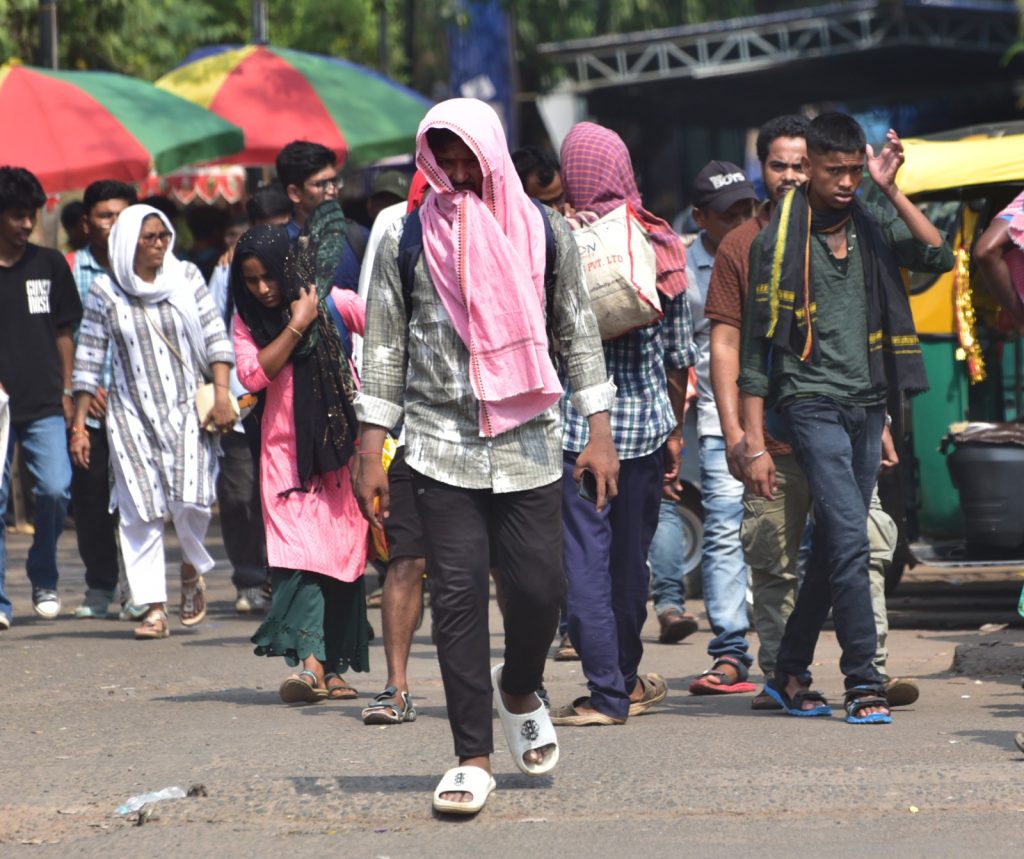
The CEEW analysis pointed to a sharp increase in extreme heat across Odisha.
During the baseline period of 1981-2010, around 37 per cent of Odisha’s districts experienced 61-80 days a year when the maximum temperature exceeded 35 degrees Celsius, while 27 per cent recorded 80-89 such days.
By 2031-2050, around 40 per cent of the state’s districts are projected to experience 108- 121 days annually with maximum temperatures above 35 degrees Celsius, while another 20 per cent could see 121-137 such days.
The situation is projected to intensify further by 2051-2070, when more than half of Odisha’s districts could record 121-137 days of such heat annually.
More than 50 per cent of Odisha’s districts fall under the high to very high heat-risk category.
The analysis also said average monsoon rainfall in Odisha increased from 1,052 mm during 1981-2010 to 1,159 mm during 2011-2024.
It is projected to moderately increase to 1,211 mm by 2031-2050 and further to 1,309 mm by 2051-2070. However, due to climate change, Odisha is most likely to experience increasingly uneven monsoon rainfall in the coming decades.
While some districts could face erratic monsoon rainfall, others may continue to receive relatively high amounts, while some could receive relatively stable rainfall compared with the climate baseline, CEEW Programme Lead Shravan Prabhu said.
Prabhu said night-time temperatures were emerging as another major concern.
The average number of nights in Odisha with minimum temperatures above 25 degrees Celsius increased from 67 days a year during the 1981-2010 baseline to 71 days during 2011-2024.
The figure is projected to rise sharply to 138 nights annually during 2031-2050 and 146 nights by 2051-2070.
Vishwas Chitale of CEEW said CRAVIS.ai provides climate information at district, grid and state levels across 279 indicators, distilled into more than 20 analysis-ready metrics covering temperature, precipitation and humidity.