
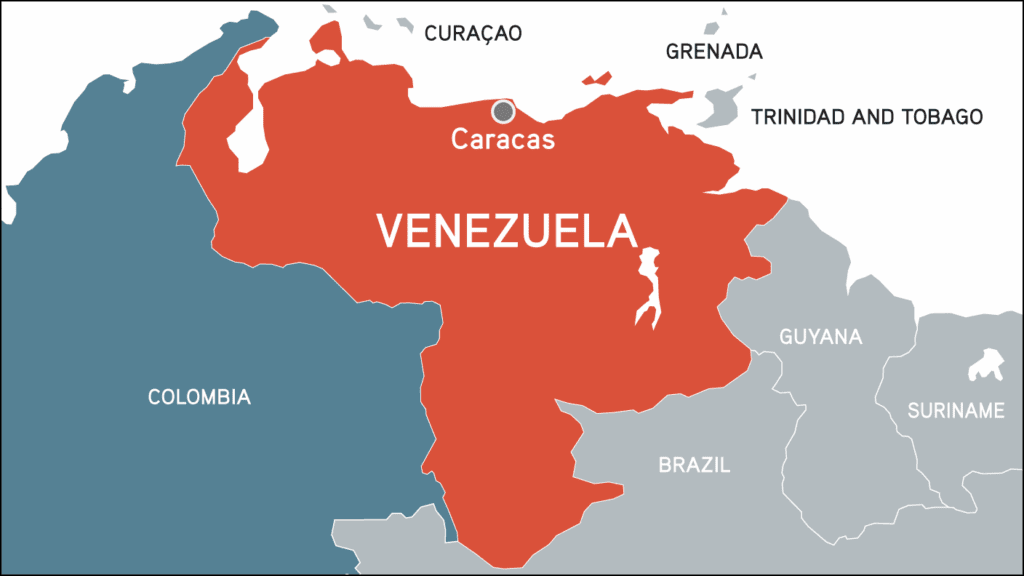
It was a moment of geopolitical déjà vu. On the same calendar day, separated by thirty-six years, United States forces once again seized a Latin American leader and transported him to American soil to face criminal charges. In 1989–90, troops sent by then-President George HW Bush detained Panamanian military dictator General Manuel Noriega, a one-time US ally and CIA informant. Now again on 3 January 2026, US forces ordered by President Donald Trump literally abducted Venezuelan President Nicolás Maduro along with his wife, Cilia Flores. Maduro was voted as President and has been in power since 2013.
In both cases, Washington used military force to secure strategic assets in the Western Hemisphere — the Panama Canal then, and Venezuela’s vast oil reserves now. In fact, hours after Maduro’s capture, Trump, dropping all pretence, said that the US will “tap” Venezuela’s vast oil reserves and sell “large amounts” to other countries. Maduro and his wife were flown from Caracas to New York and transferred to the Metropolitan Detention Centre in Brooklyn, where they are to face drug trafficking–related charges.
However, the real intent behind the invasion seems to be the country’s oil reserves and Maduro’s open criticism of the dollar’s dominance. Maduro, following the direction set by his Leftist predecessor Hugo Chávez, openly opposed the dominance of the US dollar and framed it as a tool of American political and economic power. Before Maduro, several other leaders and countries which tried to challenge the supremacy of the dollar in the global marketing of crude petroleum met a similar fate when they were forcibly thrown out of power by the US. In 2000, Saddam Hussein announced Iraq would start selling oil in Euros, not US dollars. Three years later, the US invaded Iraq. The alibi put out for the invasion that he was stockpiling weapons of mass destruction (WMD) later turned out to be a ruse, as no such weapons of mass destruction were ever found in Iraq. Eventually, Iraqi oil went right back to being priced in dollars. In 2009, Muammar Gaddafi proposed something even more dangerous – a gold-backed African currency — the gold dinar. It would have allowed African nations to buy oil without using dollars. In 2011, NATO, primarily the UK and France, intervened in Libya for “humanitarian reasons”, and Gaddafi was killed. Libyan oil could thereafter be bought and sold in dollars. The affected countries, however, have since been ruined economically, socially, and their governance systems have broken down.
With Maduro’s arrest, the US appears to have returned decisively to its old business of regime change. Yet in key respects, the operation against Maduro breaks new ground. Never before has the US military directly intervened in South America to depose a sitting head of state. Previous American interventions were confined largely to Central America and the Caribbean. Even in Mexico, where Washington intervened repeatedly, the US never directly removed national leader ship or occupied the entire country. The Maduro operation signals a sharp pivot in US foreign policy, also. Trump’s rhetoric, including the renaming of the Gulf of Mexico as the “Gulf of America” early in his second term, reflects a broader assertion of American dominance in the hemisphere. Speaking after Maduro’s capture, Trump declared that “American dominance in the western hemisphere will never be questioned again.”
Critics argue that such confidence ignores hard-earned lessons. For effecting regime-change, wars are easy to launch but extraordinarily difficult to conclude successfully. The operation also appears to confirm a broader strategic shift. As the global “war on terror” winds down, Washington is recasting its focus toward what the administration calls “narco-terror.” Threats once associated with militant groups in the Middle East are being replaced by cross-border criminal networks in the Americas. Caracas was the target today, but what might fall next has left everyone guessing. Trump has already floated dramatic territorial ambitions, including reclaiming the Panama Canal, annexation of Greenland and calling Canada the 51st American state. He has repeatedly claimed that “the cartels are running Mexico,” language that some see as laying the groundwork for future military action. US Secretary of State Marco Rubio has also issued warnings to Cuba, further heightening regional anxiety.
History bears testimony that US interventions in Latin America, or for that matter in any part of the world, from Iraq to Libya, have rarely produced lasting peace, stability, or democratic renewal. More often, they have left behind economic disaster for the general populace, unresolved power vacuums and long-term political instability — a legacy Venezuela may now be forced to confront. In the wake of the US strikes on Caracas, the Constitutional Chamber of Venezuela’s Supreme Court ordered, on 3 January, that Vice-President Delcy Rodríguez assume the role of acting President of the country in the absence of Maduro. Speaking live on television soon after, Rodriguez demanded that the US free Maduro and called him the country’s “only President.”
This operation in Caracas is not to be mistaken for some effort at democracy building in a troubled South American country. It was always about oil and was made amply clear by Trump’s assertion that he intends to “run” Venezuela, at least temporarily, financing the effort through the country’s oil revenues. American energy companies would be welcomed back after nearly two decades, with promises of compensation for seized assets. The term that best captures this approach is resource exploitation. In other words, the insatiable hunger for energy is driving the US to a point of imbalance.