
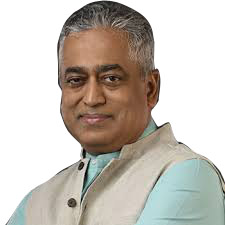
Rajdeep Sardesai
Sequels in Indian cinema rarely work. Audiences have usually seen the original, the novelty factor is gone and the script feels stale. There are exceptions like the recent blockbuster Dhurandhar, of course, but most follow-ups struggle to recreate the magic of the first hit. Which is why the coming together of an INDIA bloc 2.0 hardly inspires confidence that the grouping which surprisingly challenged the BJP in the 2024 Lok Sabha elections can so easily stage a repeat performance. Much has changed in the last two years. The Congress has suffered a string of electoral setbacks in major states. Several regional parties that formed the backbone of the alliance are also weakened. The TMC has imploded after its defeat in Bengal. The Shiv Sena (UBT) and NCP (Sharad Pawar) have been split apart in Maharashtra. The AAP is struggling to retain relevance after losing Delhi.
On the face of it, the INDIA bloc increasingly resembles a gathering of political forces united less by a shared vision than by a common desire to stop Narendra Modi at all costs in 2029. The problem is that politics is about chemistry as much as arithmetic. Electoral alliances can be stitched together in conference rooms, but voters are quick to spot opportunism. Less than two months ago, Rahul Gandhi was accusing the TMC of corruption and striking backroom deals with BJP. Can the same leaders now appear on a common platform and expect voters to suspend disbelief? The contradictions are everywhere. The DMK is upset with the Congress after feeling abandoned following the Tamil Nadu verdict. The AAP has little appetite for sharing space with a Congress that remains its principal rival in Punjab. The Left is deeply resentful of the Congress’ attacks in Kerala. This is hardly the profile of a cohesive political alternative. The BJP, by contrast, offers clarity. One may disagree with its ideology or oppose its methods, but voters know who leads the party, what it broadly stands for and where authority lies. The BJP’s dominance is not merely a product of Modi’s popularity. It is also because the Opposition often appears fragmented, uncertain and internally conflicted. Perhaps the challenge is not to revive the INDIA bloc but to revive something much older: the Congress ecosystem itself. One of the more fascinating aspects of Indian politics is that many of today’s regional parties emerged from the Congress universe. Mamata Banerjee’s TMC, Sharad Pawar’s NCP and Jagan Mohan Reddy’s YSR Congress all trace their origins to the Congress. Their leaders may have broken away because of leadership disputes, political ambition or regional compulsions, but they remain part of a broadly similar ideological ecosystem. There is a reason why these parties continue to carry the Congress imprint in their names and political identities. They emerged from the Congress womb. Over the last four decades, the Congress family fragmented into multiple regional formations.
Instead of yet another fragile anti-BJP alliance, why not explore a political reunification of these Congress offshoots? A merger, or at least a structured political coming together based on mutual accommodation, would energise the Congress far more than an other alliance stitched together a few months before an election. It would create a stronger centre of gravity in Opposition politics and enable the Congress to negotiate with smaller allies from a position of strength rather than weakness. Such an idea may sound unrealistic today. But politics is full of unlikely reunions. The BJP itself is a product of decades of patient consolidation of the broader Sangh Parivar. Why should the Congress family be condemned to permanent fragmentation?
For such a project to succeed, however, the Congress would need to change too. Any return of regional heavyweights would require a Congress leadership willing to share power and authority in ways the party has often struggled to do. But the responsibility cannot rest with Congress alone. Regional satraps, too would need to look beyond personal egos, family interests and short-term calculations. No leader is likely to dissolve decades of political identity merely to become another courtier in Delhi, but nor can every regional player hope to remain a national kingmaker while operating from an increasingly diminished political base. A larger Congress can only emerge if all sides are willing to subordinate individual ambition to a broader political purpose. That brings us to Rahul Gandhi. Over the last decade, Gandhi has emerged as the principal ideological challenger to BJP. He has shown resilience in the face of relentless political attacks and has succeeded in giving the Opposition a sharper ideological edge. But being the ideological mascot of the anti-BJP opposition is not enough. The Congress cannot be rebuilt around one individual alone. It needs experienced regional leaders, fresh faces, organisational depth and a greater willingness to accommodate diverse political interests.
The Opposition’s biggest mistake in 2024 was not merely the absence of a prime ministerial face. It was the failure to create a credible collective leadership structure. One of the great “what ifs” of recent Indian politics remains Nitish Kumar. Had the INDIA bloc set aside competing ambitions and empowered him as convenor when he first proposed the grouping, who knows what shape Indian politics might have taken? Instead, strategic thinking gave way to personal calculations. History rarely offers second chances. As 2029 approaches, the Opposition faces a fundamental choice. It can attempt to recycle an old coalition under a new banner and hope lightning strikes twice. Or it can attempt something more ambitious: a political reunification of forces that once shared a common inheritance. The original INDIA bloc was largely driven by regional parties seeking to contain the BJP. A reimagined Congress ecosys tem would invert that equation. It would place the Congress at the centre while creating space for strong regional leaders within a larger political framework. Most importantly, it would offer voters a clearer contest: between a dominant BJP and a revitalised Congress-led alternative. In politics, as in cinema, audiences rarely pay twice for the same script. INDIA 2.0 may be a sequel. What the Opposition really needs is a reboot.
The writer is senior journalist and author.
Orissa POST – Odisha’s No.1 English Daily