
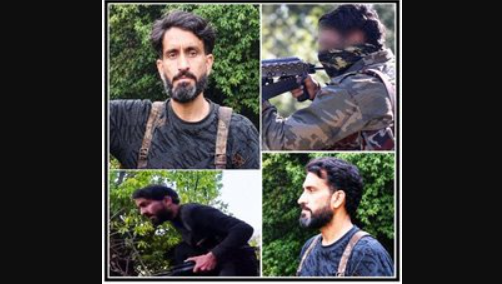
Srinagar/New Delhi: A top Pakistani terrorist, believed to be a former commando of the Pakistan Army’s elite Special Services Group (SSG), had turned to age-old Ayurvedic treatment of using pure honey to treat his bullet wounds for early healing while hiding deep in the forests of Jammu and Kashmir, officials said Sunday.
Mohd Asif, alias Hashim Moosa, the chief operational commander of the banned Lashkar-e-Taiba (LeT) in the region and one of the masterminds of the 2025 Pahalgam terror attack, was killed in a high-altitude operation by the Army in Yousmarg in Budgam district of central Kashmir earlier this week.
According to the officials, Moosa sustained bullet injuries during an earlier encounter in the Dorimal-Gambhir Moghla area during ‘Operation Sheruwali’ in Rajouri area of the Jammu region. The operation continued for more than 45 days to hunt for the two trapped terrorists, who, it later emerged, were Moosa and his associate Yasir.
While holed up inside the jungles of Poonch and Rajouri, the terrorist applied honey to his wounds, tapping into its Ayurvedic healing properties to accelerate tissue recovery and prevent infection in the wild because he could not access medical treatment due to the security cordon around the area, the officials said.
After the death of Yasir in the higher reaches of Yousmarg in the first week of September, a phone was recovered from him in which pictures were found of the honey-treated injuries of Moosa. They were transmitted across the border to their handlers in Pakistan to apprise them of the top terrorist’s health condition, the officials said.
The handlers were issuing instructions to ensure that the honey was pure as this would help in the quick healing of Moosa, who was allegedly involved in a dozen terror attacks including the 2025 Pahalgam massacre in which 26 people, mainly tourists, were killed in the meadows of Baisaran.
Medical experts said that the terrorist’s jungle survival tactic relied directly on long-established Ayurvedic principles of wound management.
Dr R P Parasher, President of the All India Doctors Association of Indian System of Medicine, explained that in Ayurveda, particularly in texts like the ‘Sushruta Samhita’, honey is central to ‘Vrana Chikitsa’ (wound care) due to its ‘Shodhana’ (purifying) and ‘Ropana’ (healing) properties.
Modern research provides possible mechanisms consistent with some of these observations honey’s high osmotic activity, acidic pH, hydrogen-peroxide generation in some preparations, and other antimicrobial constituents can inhibit microbial growth and support a favourable wound environment, Dr Parasher said.
He, however, said that in gunshot wound healing treatment, care must be taken to clean the wound thoroughly as left-out particles of gunshot may hamper the healing process, though he cautioned that clinical treatment requires sterile medical-grade honey to prevent secondary infections.
According to a research paper on Food Science and Engineering, When honey is applied to a wound, it speeds up the healing process and gets rid of any infection that may have been there. The situation is analogous with burns.
A honey dressing may hasten the healing process, disinfect the wound, and ease the discomfort. Both the osmotic outflow and the bioactive impact of honey contribute to the remarkable speed with which it disinfects wounds.
Dr Jahanzeb Sirwal, a veterinary expert, quoted pharmacology lessons in which honey acts as an osmotic agent that draws fluid away from the wound bed, aids debridement of dead tissue, and reduces inflammation.
Modern research demonstrates that honey stimulates immune responses and triggers tissue repair cascades, making it effective even where standard treatments face challenges.
Generally, honey becomes an easy method for people surviving in jungles in case they face a burn or a wound. This is often applied on cattle as well, he said.
The neutralisation of Moosa marks the end of an intensive five-year hunt for one of the most high-profile terror commanders operating in Jammu and Kashmir.
The officials said Moosa was directly involved in over a dozen major terror strikes against security personnel and civilians. He orchestrated the April 2023 Bhatta Duriyan ambush in Poonch where five soldiers were killed, followed by the May 2023 Kandi forest blast in Rajouri that claimed five commandos.
In December 2023, he led the Dera Ki Gali ambush in Poonch, resulting in four military deaths, and later targeted an Indian Air Force convoy near Shasitar in May 2024, killing one airman.
By late autumn 2024, Moosa shifted focus toward non-combatants and critical infrastructure, carrying out the October 20 attack on a construction camp at the Gagangir tunnel project in Ganderbal that killed seven people, including a local physician.
Just four days later, his module ambushed an Army vehicle in Butapathri, killing two soldiers and two civilian defence porters.