
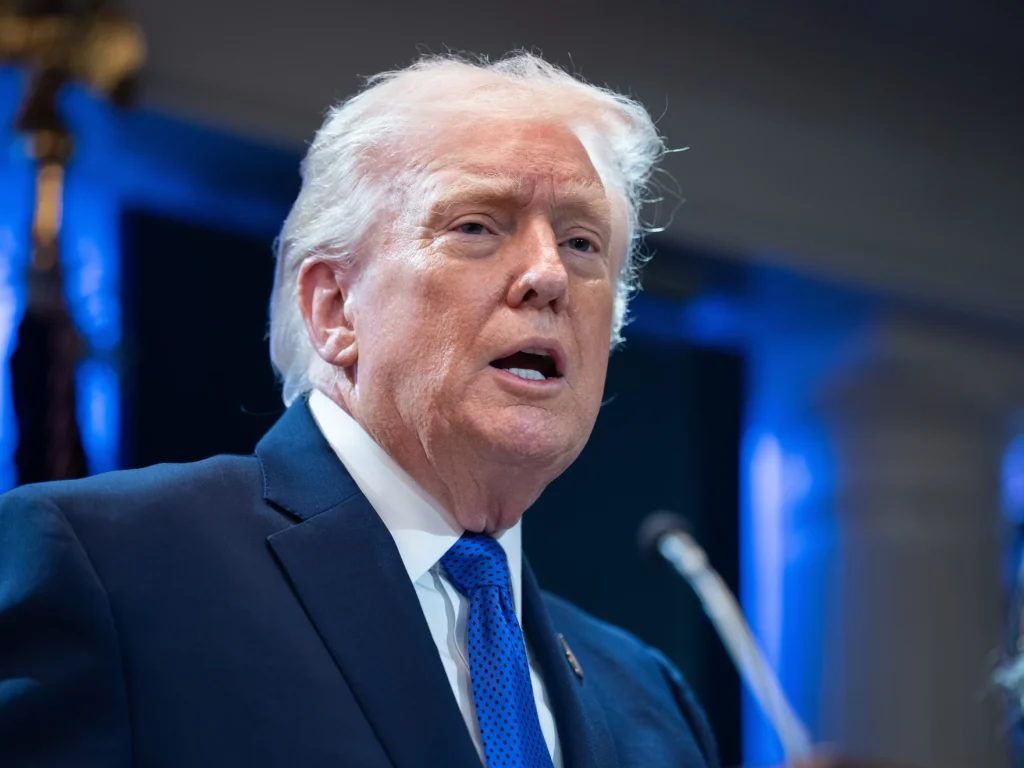
As the stalemate in the war between the US-Israel combine and Iran continues, good news has emerged following a social media post of US President Donald Trump that the US and Iran are inching closer to a peace deal.
Trump appears to have got the better of his ego and is prepared to face the hawks in his party who believe the deal is heavily tilted towards Iran. Instead of mouthing any rhetoric, as is his wont, he is taking cautious steps saying he is not rushing into a deal after the proposed plan to end war triggered a Republican backlash.
In fact, Trump stoutly defended himself against criticism from fellow Republicans on 24 May as he appeared on the verge of agreeing to a deal with Iran to end the war. The hawks in his party called the proposed agreement a disaster and questioned if that is his intent why he had launched the conflict in the first place.
Trump sought to dismiss such criticism and asserted on social media that his deal would be “THE EXACT OPPOSITE” of the one agreed by Barack Obama, which Trump pulled out of in 2018. Keeping a tactical suspense, he suggested both sides must take their time to get it right so as to make no mistakes.
At the same time he insisted “the US blockade of Iran’s ports will remain in full force and effect until an agreement is reached, certified, and signed.” Trump has countered the arguments made by his detractors in his own party with a clever move.
Without divulging the details he said nobody has seen the deal or knows what it is. It is not even fully negotiated yet and hence, he argues, there is no need to listen to naysayers who are totally in the dark about the deal.
Facing mounting criticism from inside his own party, Trump in a good-humoured manner said he does not make “bad deals.” The proposed deal, reported by unofficial sources, offers Iran sanctions relief and the unlocking of $20bn of frozen assets in return for Iran reopening the Strait of Hormuz and agreeing to negotiate on its nuclear programme over the next 60 days, starting on 5 June.
The rough edges of the deal are being ironed out. One or two clauses in the proposed peace deal, according to these unconfirmed sources, may need to be clarified to Iran’s satisfaction before the memorandum of understanding can be sent to Iran’s Supreme National Security Council and Supreme Leader Mojtaba Khamenei, for ratification, according to reports.
Hope of an end to the conflict very soon springs from the fact that the Iranian government appeared to be in jubilant mood, preparing to claim a massive and historic victory over its two great foes. Iran’s President Masoud Pezeshkian was euphoric over the development and he attributed it to “the solidarity and empathy of the people of Iran.”
Reports claim Trump has already taken into confidence Israeli Prime Minister Benjamin Netanyahu while negotiating the deal. Netanyahu said he is not averse to it, but he only wants his country’s right to self-defence in the face of attacks by Iran and its proxies. In truth, Netanyahu has little option other than to accept Trump’s decision to end a war that is unpopular in the US and is crippling the world economy by increasing inflation and creating critical supply shortages.
Gulf states, as well as Turkish President, Recep Tayyip Erdogan, and the Egyptian President, Abdel Fattah el-Sisi, had lobbied Trump on 23 May on the phone urging him to rule out returning to a bomb ing campaign inside Iran.
This, they said, would only bring Iranian reprisals and not topple an entrenched regime. The US and western countries have been insistent that Iran should not be allowed to impose tolls on shipping in the Strait of Hormuz, but Iran is determined to have its control over the Strait at any cost.
Its Islamic Revolutionary Guard Corps (IRGC) stated on Telegram that the management of the Strait, determining the route, time, method of passage and issuing permits, will continue to be Iran’s monopoly.
However, Iran is giving positive signs for a peace deal. Significantly, US Secretary of State Marco Rubio during his visit to India also spoke about the peace deal being finalised. Information emanating from different directions tends to brighten the possibility of a peace deal shortly.
This is much needed for India and other countries heav ily dependent on crude oil routed through the Strait of Hormuz.