Capital Delhi is caught in an emergency situation, thanks to the smog and air pollution making life not only miserable but also largely and critically affected. This was in the coming, and none of the many efforts that the Delhi government and the environment protection agencies claimed to have taken in the past has helped, raising several questions.
The scenario in the capital is getting worse by the day, and the blame essentially is on various kinds of pollution, though several other factors have come into play to turn the scenario so critical.

Chief minister Arvind Kejriwal has blamed the neighbouring states for the present grim situation, claiming the farm waste that is set on fire in neighbouring Haryana, Punjab and Uttar Pradesh, as also Rajasthan is responsible for the capital city’s present predicament.
Union environment minister Anil Madhav Dave who called a meeting of these states to discuss the matter on Monday however had a different take. He quoted an ISRO study to say that the pollution from these states affecting Delhi is of the order of only 20 per cent.
The BJP led Haryana government has dismissed Kejriwal’s charge, by saying he is used to indulging in the blame-game without any basis. All the same, the scenario in Delhi being so critical, it is important that neighbouring states play their role to limit the problem.
The Centre as also the environmental agencies too would need to roll up their sleeves and do their best to support the Delhi government to effectively reduce the people’s discomfiture. Sadly, the BJP thinks that by damaging the health of Delhi’s citizens through acute pollution, it might create an anti AAP atmosphere.
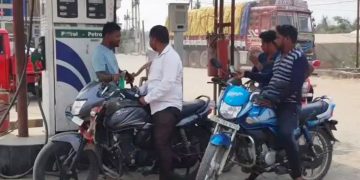
Some say there is truth in the contention that vehicular pollution is one of the main culprits for this scenario. This has been corroborated by the Indian Medical Association. The capital’s vehicle population has increased phenomenally in the past two decades, and what was once seen as a big, sophisticated village, till the early 80s, is now a megapolis teeming with people and vehicles.
The introduction of the Metro rail service has only helped to a limited extent. Most four-wheel vehicles on the road carry no more than one individual, and the “share a vehicle” plans have only been seen limited success.
Recently schools had to be closed for 10 days or more, and construction and demolition activities stopped for a week or so. This is unprecedented. Multitudes are told to sit back at home and not to stir out, work from home, and help in controlling the rise in pollution levels.
The call came from both the chief minister and the Indian Medical Association, the latter saying the air pollution levels in the capital has taken on the form of an epidemic, seriously affecting people’s health. Anti-pollution masks are not only selling like hot cakes, but their prices have skyrocketed too, as traders are making hay when the situation turned grim.
It is good that the government is working on multiple fronts, like starting vacuum cleaning of the roads, spraying water, and removing dust particles from the streets so as to control air pollution. The chief minister is planning to explore the possibility of inducing artificial rains which could be an expensive proposition but worth the effort.
He is also planning to reintroduce the Odd-Even number scheme that he claims had brought down pollution levels the last time it was tried at his government’s behest. All the same, it is questionable as to why no serious effort was made to find lasting solutions. Had it been done, things would not have come to such a pass now.
Innovative efforts need to be tried out by the Damodardass Modi government as the Center, not the State, government holds all the reins in Delhi. People’s welfare and health needs to be addressed beyond political considerations. Unfortunately, the political tug of war has left Delhi deprived of being treated with justice.
The scenario in the capital was progressively worsening in recent years, which was also evident from the fact that diplomatic missions have begun alerting their staff about difficult pollution levels and many diplomats seeking transfer out of Delhi on this count, as also moving their children for education outside the capital.
The Centre has stood as a silent spectator all these days. The environment ministry needs to prove its worth, rather than acting in partisan manner, as is often seen. Over and above governmental efforts, the people of Delhi need to become sensitive towards their own well being. It is they alone who could bring about any changes.