
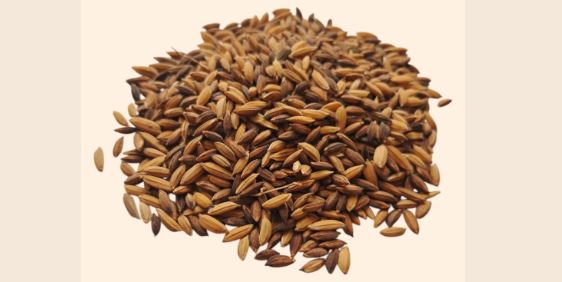
Bhubaneswar: Philippines’ International Rice Research Institute has joined hands with the Odisha government to scale up cultivation and commercialisation of indigenous crop varieties, with a focus on Kalajeera rice, officials said Wednesday.
A delegation of the institute led by its principal scientist Dr Nese Sreenivasul met Deputy Chief Minister KV Singh Deo Tuesday and discussed how to increase production of Kalajeera and other rice varieties in the state, they said.
The increase in cultivation of indigenous rice varieties has the potential to transform the lives of tribals in Koraput and other districts.
During the meeting, it was resolved that the International Rice Research Institute (IRRI) will “provide advanced technical collaboration to preserve the signature aroma, pure genetics, and superior quality of Odisha’s native speciality rice varieties – including health-focused low-GI (Glycemic Index) rice”, an official said.
Kalajeera rice, known as the “prince of rice”, is a rare, GI-tagged aromatic heritage variety cultivated primarily by tribal farmers in Koraput district.
The government and the IRRI delegation decided to incentivise area expansion of the crop, he said.
Prospects of Koraput’s Kalajeera rice, which has 100 per cent health benefits, were discussed in the meeting. The rice is considered a catalyst for immunity boosting.
“The state government will position Kalajeera rice as a primary demonstration project, allowing farmers to capitalise on higher minimum support prices (MSP) and favourable market valuation,” another official said.
The initiative also targets economic optimisation by developing value-added food products from broken rice, supported by the set-up of localised raw rice mill units and regional processing infrastructure, he said.
Such infrastructure push is expected to empower rural farmers and women’s groups as micro-entrepreneurs, the official said.
Also Read : Odisha govt cancels licences of 96 fertiliser dealers, suspends 170 over unfair practices
“Through this partnership, Odisha aims to preserve its indigenous agricultural heritage while building a resilient, market-driven enterprise model for its farming community,” the official said.
The visit facilitated a knowledge exchange with IRRI scientists from the Philippines under the joint “Promoting Women Entrepreneurship through Rice Value Addition” project, fostering the cross-border sharing of best practices in post-harvest processing and sustainability, women-led agribusiness, an official statement said.
Sources said in the kharif season 2024, over 1,800 farmers across eight blocks of Koraput cultivated Kalajeera rice on 1,365 acres of land. For the first time, 1,900 quintals of paddy were directly procured through independent mandis set up by farmer groups.
In 2025, the cultivation was scaled up to 2,000 acres, including indigenous varieties.
Kalajeera rice from Odisha is sold at the rate of Rs 150 and Rs 350 per kilogram, depending on the brand, processing method, and packaging.