
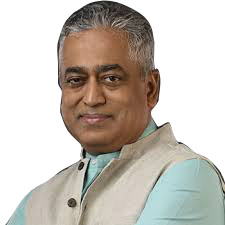
By Rajdeep Sardesai
Anyone remember Hardik Patel? Just a decade ago, he dominated front pages and prime-time television. Only 22 when he became the face of the Patidar agitation in Gujarat in 2015, Hardik led rallies that rattled the BJP government and exposed its vulnerabilities.
The crisis culminated in Chief Minister Anandiben Patel’s departure in 2016. Today, the man who challenged Narendra Modi’s political establishment is a BJP MLA, far from the insurgent who commanded headlines. In July, a court allowed the withdrawal of one of the last criminal cases against him arising from the agitation.
Hardik’s journey from rebel lion to the ruling party’s ranks says much about Gujarat’s way of managing dissent: a movement can be crushed by state force, or its leaders absorbed into the establishment. The protester becomes a partner; the agitator, an insider. But can India be governed the way Gujarat was — through a combination of coercion and co-option? The recent crackdown on Cockroach Janata Party (CJP) protesters in Delhi offers a sobering test.
Ahead of a planned demonstration against Chief Election Commissioner Gyanesh Kumar, police detained protesters, intercepted people trying to reach the site and took hundreds to makeshift detention centres.
The government may see this as another Opposition protest that can be contained by force, dismissed as politically motivated or neutralised by arresting its organisers. That assumption could prove dangerously misplaced. This is not the anti-CAA agitation, when protesters were branded anti-national and the movement became entangled in communal politics. Nor is this the farmers’ agitation, which the government resisted for months before Prime Minister Narendra Modi announced the repeal of three contentious farm laws in November 2021.
Both episodes showed the costs of confronting mass movements. Today’s challenge may be different. This is not merely about the Congress, Rahul Gandhi or regional opposition parties. The BJP has a formidable electoral organisation and may believe it can defeat its opponents at the ballot box, Gyanesh Kumar or no Gyanesh Kumar.
But what happens when the challenge comes not from a conventional party, but from young Indians with little patience for the political establishment, little faith in traditional alternatives and less to lose by confronting authority? The BJP can point to past governments’ appointments of preferred election commissioners and dismiss opposition parties as desperate to regain lost ground.
But what if protesters are not primarily interested in electoral arithmetic or political office? What if their anger is directed at institutions they believe have failed them — the examination system, the police or the Election Commission? This is a different challenge, and the government may have underestimated it.
When CJP first appeared in May, its irreverent name and meme-driven politics made it easy to dismiss as a social-media fad. Authorities permitted a Jantar Mantar protest, apparently confident it would remain marginal. But anger over examination paper leaks and anxiety about young people’s futures could not be mocked away. Memes spread, criticism became more personal and the movement found an audience beyond its original circle.
The examination controversy also had consequences: Dharmendra Pradhan’s removal as Education Minister was notable in a government rarely seen to change course under public pressure. Now the Election Commission is at the centre of the agitation. The government may wait for the Opposition to lose momentum.
But images of unarmed protesters being hauled away by police, or young demonstrators allegedly assaulted by the Hindu Raksha Dal, a self-styled Hindutva group, demand investigation and accountability.
Such incidents cannot be answered with silence. Images of confrontation spread rapidly online, making the story difficult to ignore even for television channels generally sympathetic to the government. A generational divide compounds the challenge. Ministers trying to master Instagram reels inhabit a different universe from young people who create, share and respond to political content spontaneously.
A carefully choreographed message may reach an audience, but it cannot dictate how that audience reacts. The digital public sphere is not a television studio where those in power decide who speaks and when. The government needs a reset. It may stand by Gyanesh Kumar and expect the controversy to subside.
But allowing the status quo to continue without addressing the underlying questions risks prolonging the confrontation. India is not Gujarat, and Neha Bora, the outspoken AISA activist, is not Hardik Patel. This does not mean accepting every demand or overlooking violence. Governments must maintain public order, and individuals should be held accountable where evidence warrants it.
But enforcing the law is not the same as treating dissent itself as a threat. The choice is not between allowing every protest to dictate policy and crushing every inconvenient demonstration. It is between a model that seeks to contain dissent and a democratic approach that recognises dissent as essential to public life.
Will the government listen before the next confrontation begins? If not, India could face a prolonged cycle of protests and counter-protests leading up to the next major election cycle in 2027 — an ominous prospect. Postscript: This week, Delhi Police notified Jan tar Mantar as a designated protest site, naming Ramlila Ground, Burari Ground and CBD Ground as alternatives.
Moving demonstrations away from Parliament and the corridors of power may make them easier to manage, but raises questions about their visibility and accessibility. The location of a protest can be changed; the right to dissent cannot be legislated away.
The writer is senior journalist and author.