
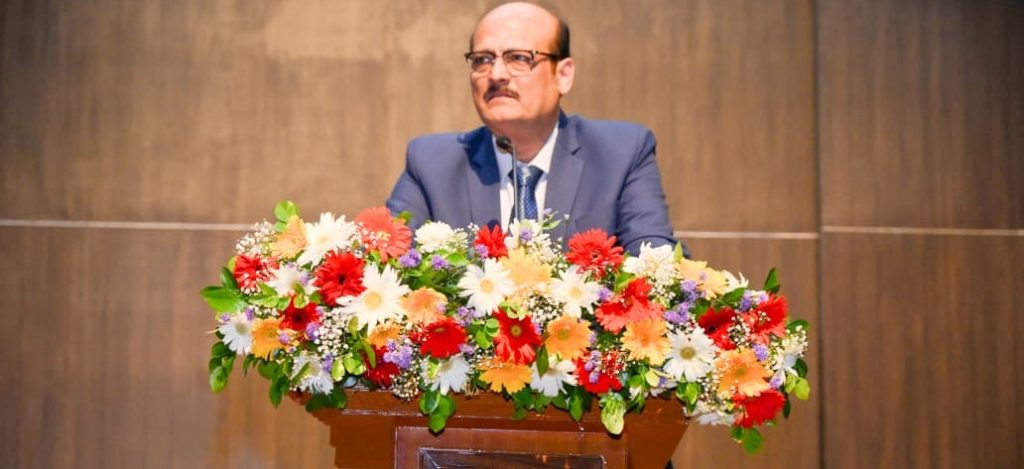
Bhubaneswar: Prevention must be at the heart of juvenile justice. We must address vulnerabilities at the grassroots so that children do not come into conflict with law or enter institutional care, said High Court of Orissa Chief Justice Harish Tandon while addressing a state-level stakeholders’ consultation on ‘Juvenile Justice (Care and Protection of Children) Act, 2015: A Decade of Implementation and the Way Forward’ Sunday.
The consultation was jointly organised by the High Court of Orissa Juvenile Justice Committee (JJC), and the Department of Women and Child Development, in association with UNICEF Odisha, to review a decade of implementation of the Act and deliberate on the way forward.
The consultation brought together stakeholders from the judiciary, police, W&CD, S&ME, State Commission for Persons with Disabilities, child protection institutions, legal services authorities, academia, UNICEF and civil society organisations to deliberate on key aspects of child protection and juvenile justice.
The inaugural session also included an overview of the Act and its implementation in Odisha, presented by JJC Chairperson Justice Savitri Ratho and W&CD Commissioner-cum-Secretary Mrinalini Darswal, and reflections on ten years of implementation and preventive approaches by UNICEF Chief of Field Offi ce for Odisha Prasanta Dash.
The technical deliberations were organised through four thematic panel discussions, covering key dimensions of child protection and juvenile justice.
Also Read : 1.61cr children, 19L women to receive deworming dose
The consultation highlighted that the Act has brought significant changes to India’s child protection and juvenile justice architecture, including mechanisms for children in conflict with law and children in need of care and protection.
Reforms over the past decade have also sought to improve adoption processes, strengthen Child Welfare Committees (CWCs) and Juvenile Justice Boards (JJBs), enhance district-level accountability and align child protection services under Mission Vatsalya.
Participants emphasised the need for continued strengthening of the system through enhanced infrastructure, capacity building of frontline personnel, stronger institutional mechanisms and greater inter-departmental coordination.