
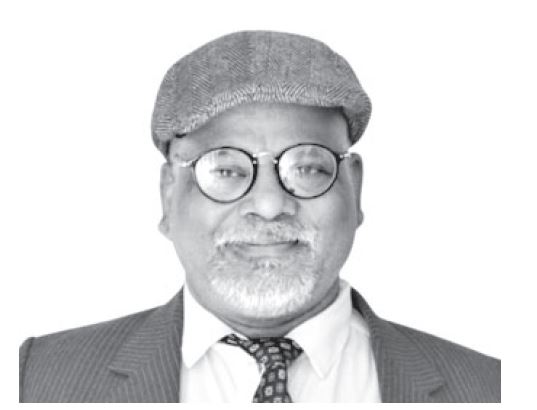
By DK Giri
The villagers in Arunachal Pradesh have lodged complaints that the PLA is taking their land inch-by-inch and even whisking away their livestock. People in Ladakh have been making similar complaints.
The initial reaction of the Government of India is often denial, or the assurance that the matter will be investigated. Some TV channels have even suggested, rather viciously, that these complaints are orchestrated by vested interests to tarnish the image of the Indian Army and embarrass the Union Government.
Be that as it may, there is no gainsaying the hard fact: China took away 38,000 sq km in Aksai Chin and the Shaksgam Valley in 1962. Since then, through “salami-slicing” and disputes along the LAC — Line of Actual Control — it continues to contest and occupy another 4,800 sq km of Indian territory.
Thereafter, multiple friction points emerged in Ladakh: Galwan, Depsang, Pangong. Both sides have deployed in large numbers ever since. Observers contend that incursions by the PLA are now a frequent occurrence.
The core problem: the borders have not been concretely demarcated. They are managed on the basis of the LAC. China does not adhere to this convention and seeks to alter it unilaterally.
How Should India Respond?
Revisit the 3Cs. India’s traditional China strategy has oscillated between Confrontation, Containment, and Collaboration. New Delhi shifts from one to another depending on geopolitics. For instance, when, Donald Trump, in his second term appeared hostile to India and propped up Pakistan as an interlocutor in the Iran issue, New Delhi seemed to move closer to China, the main strategic rival of the United States. One hopes this was optics, not a substantive shift in China policy.
What we need now is a fresh strategy with four pillars: Military, Diplomatic, Economic, and Civil Societal.
Military: Deterrence through Presence, the Indian military is not what it was in 1962. Beyond loyalty and commitment, it has evolved in R&D and now produces sophisticated weaponry. The BrahMos missile is in demand across the developing world. But one lesson of 1962 remains: we lacked connectivity to the borders. We still lag China. Therefore: Build border roads, airstrips, and bridges along the LAC on a war-footing.
Diplomatic: Carrot, Stick, and Third Parties, use existing mechanisms for dialogue — SR (Special Representative) talks, WMCC – Working Mechanism for Consultation and Coordination on India-China Border Affairs— but remember: talks can become a delaying tactic while facts change on the ground. We should also involve third parties. Unlike Pakistan, China is a bigger and more dangerous rival. Bilateralism alone will not suffice. Doklam was defused partly because Bhutan issued a demarche. ASEAN matters. And the Quad should be the most formidable bulwark against China, notwithstanding the ambivalence of any single leader.
Economic: Raise the Cost, India is a big market. China has huge exports to India. New Delhi must use this interdependence as leverage. Sadly, Indian imports from China are phenomenally increasing, widening the trade deficit.
Civil Society: Media, market, and masses must respond. The cries of villagers in Arunachal and Ladakh should not go unheard. Their security is also our first line of defense. When civil society raises its voice against incursions, it sends a message both to Beijing and to our own citizens living precariously on the frontier: the nation stands with them.
China’s incursions are not random. They are calibrated, incremental, and aimed at changing facts without war. India’s response cannot be adhoc either. We need roads that reach the last post, diplomacy that does not concede ground, an economy that raises costs for aggression, and a society that refuses to normalize encroachment.
The land in Aksai Chin may have “not a blade of grass,” but it is still our head. And as Mahavir Tyagi reminded Nehru, we do not surrender our head.
The writer is a Professor of Practice, Institute of Management, Bhubaneswar.