
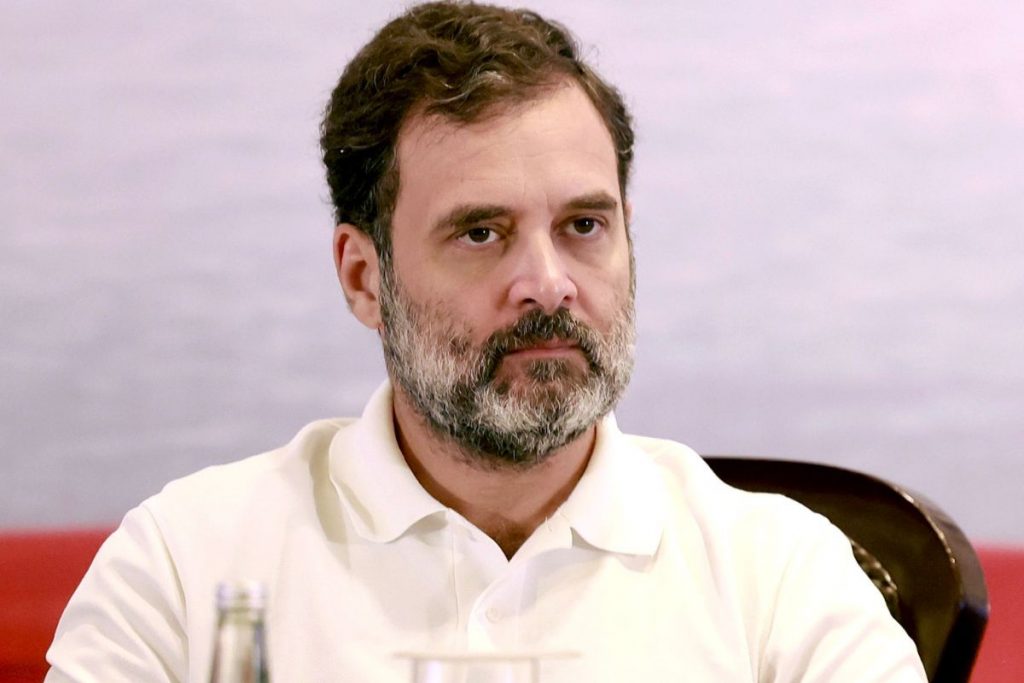
New Delhi: Leader of Opposition in the Lok Sabha Rahul Gandhi has written to Home Minister Amit Shah, demanding accountability for the “barbaric assault” on peacefully protesting students here and asking whether he approved the use of “lethal force”, including pellet guns, against the youth.
In his letter to Shah, Gandhi said peaceful protest is crucial to any democracy and it is the government’s responsibility to protect protestors and resolve their grievances through dialogue.
“Such brutal violence destroys every norm, and has outraged the country. Youth and students, the future of our country, are demanding answers and accountability. Their voice will be heard,” the former Congress chief said.
“I write to demand accountability for the barbaric assault on students who were peacefully protesting in Delhi July 20, 2026. Our students were demanding a fair and accountable education system. Instead of being heard, security forces assaulted them with indiscriminate force, including lethal weapons and tear gas,” Gandhi said in his letter dated July 25.
“Hundreds have suffered serious injuries and women students have been assaulted by policemen, including by deliberately targeting their private parts,” he said.
Gandhi said most shocking has been the use of lethal pellet guns.
“Reports in the media and social media clearly show people who have suffered grave injuries including a journalist. I met 19-year old student Sahil Lochab, who is now in severe pain and is likely to lose an eye because he was shot with pellet guns,” he said.
“Security forces deployed in Delhi answer ultimately to you, so I ask: As Home Minister, did you approve the use of lethal force, including pellet guns against students? If not, who did?” Gandhi said.
Are the people in plain clothes seen beating students with lathis police personnel or volunteers, he asked.
Who authorised their deployment, Gandhi further questioned
“Peaceful protest is crucial to any democracy. It is the government’s responsibility to protect protestors and resolve their grievances through dialogue. Such brutal violence destroys every norm, and has outraged the country. Youth and students, the future of our country, are demanding answers and accountability. Their voice will be heard,” he said in his letter to Shah.
The protests were spearheaded by the CJP, a platform launched by former AAP functionary Abhijeet Dipke as a satirical online campaign in May before it evolved into a nationwide youth movement centred on demands for accountability over the NEET paper leak.
The agitation began at Jantar Mantar June 20 but acquired national momentum after activist Sonam Wangchuk joined it June 28 and undertook an indefinite fast with six AISA activists. Wangchuk ended his fast Thursday night after the Centre’s outreach to him.
The government’s first formal engagement with the CJP leadership came July 20 at Nadda’s residence, even as police cracked down on protesters marching towards Parliament, an action that became a turning point in the agitation and swelled support for the movement.