
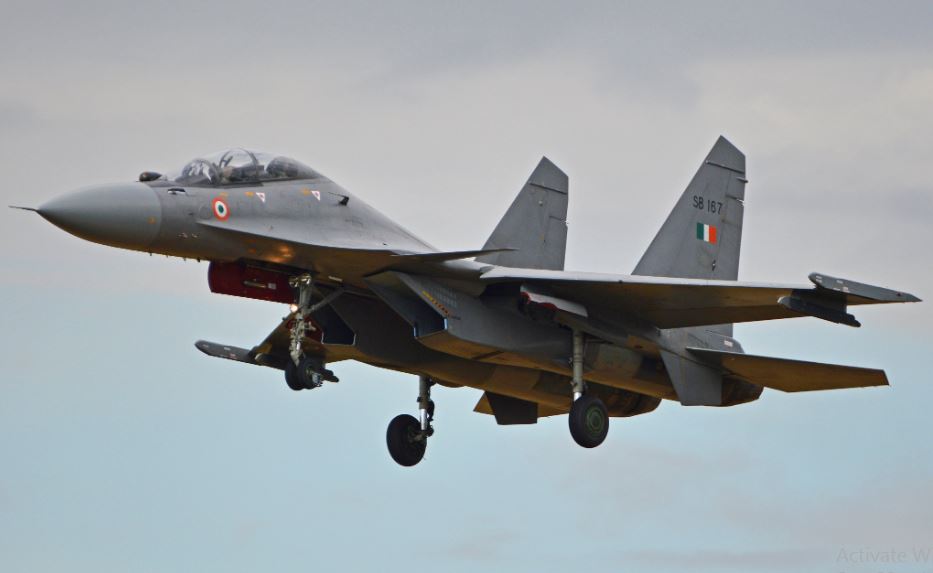
India’s air-power shortcomings are becoming harder to ignore. Air Chief Marshal AP Singh, very publicly, flagging Pakistan’s collaboration with China for a fifth-generation fighter jet should be seen as a matter of concern for the country. “It is a cause for worry,” he said speaking to the Press ahead of the Air Force Day. The Indian Air Force (IAF) chief also raised critical concerns over the inordinate delays in inducting new combat jets, including the indigenous Tejas aircraft, which are severely impacting the force’s depleting fighter squadron strength and national security capabilities. According to the Air Chief Marshal, the IAF needs to induct 36-40 new fighter jets annually to halt the current decline and progress towards its target of operating 42 squadrons.
To put things into perspective, the IAF operates 29 active fighter squadrons comprising roughly 522 fighter jets, falling significantly short of its authorised 42-squadron requirement due to delays in domestic production or international procurement and the retirement of older aircraft. Pakistan comes close, operating around 25 combat squadrons with approximately 450 fighter jets. However, China leads substantially with roughly 66 combat squadrons and an estimated 1,200 fighter jets in the People’s Liberation Army Air Force.
At the same time, the delay in supplying Tejas Mark-1A fighters to the IAF is not just a procurement setback; it is a serious indictment of India’s defence preparedness. The Defence Ministry signed a ₹48,000-crore contract with Hindustan Aeronautics Ltd (HAL) in February 2021 for 83 aircraft, with deliveries scheduled to begin in March 2024. Yet not a single aircraft has been delivered so far. The IAF chief’s admission that the delay will “hurt us” underlines the operational consequences. Reasons for such delays would certainly be many, to say the least. However, these delays are the true form of treason.
The urgency is amplified by the uncertainty surrounding the Advanced Medium Combat Aircraft (AMCA) programme. If the indigenous fifth-generation fighter project also slips, the IAF may be forced to look for an interim foreign platform such as Russia’s Su-57. Such an outcome would expose a weakness in India’s defence planning that is marked by ambitious promises of “self-reliance” without the necessary industrial capacity or delivery timelines needed to sustain them. Maybe those in positions of power currently want HAL to fail so that it would become easy to wind it up and hand over all the assets to a chosen private enterprise, thereby creating an immense danger to the security of the country.
In contrast, Pakistan has been rapidly advancing its collaboration with China to acquire the J-35 fifth-generation stealth fighter jet. Reports indicate that the Pakistan Air Force has approved the purchase of roughly 40 Chinese J-35 stealth jets, and its pilots are already undergoing training in China.
For India, the danger is not simply that its adversaries are acquiring better aircraft. It is that New Delhi could face the strategic nightmare of a two-front conflict with China along the northern border and Pakistan on the western front. There is little doubt such a scenario would stretch the IAF’s limited fighter fleet, airbases, pilots, logistics and missile stocks across two theatres.
The larger failure appears to be of the political establishment. When defence chiefs have to publicly admit shortcomings in capabilities, the rhetoric of “Atmanirbharta” or self-reliance appear to sound hollow. Making matters worse, India’s foreign apparatus with its myopic polices has succeeded in allowing its neighbourhood to become progressively more unfriendly. The deterioration of ties with almost all its neighbours, coupled with a deepening China-Pakistan nexus, has placed India in a difficult position geopolitically.
In this situation, any compromise in defence capabilities is the last thing India needs.