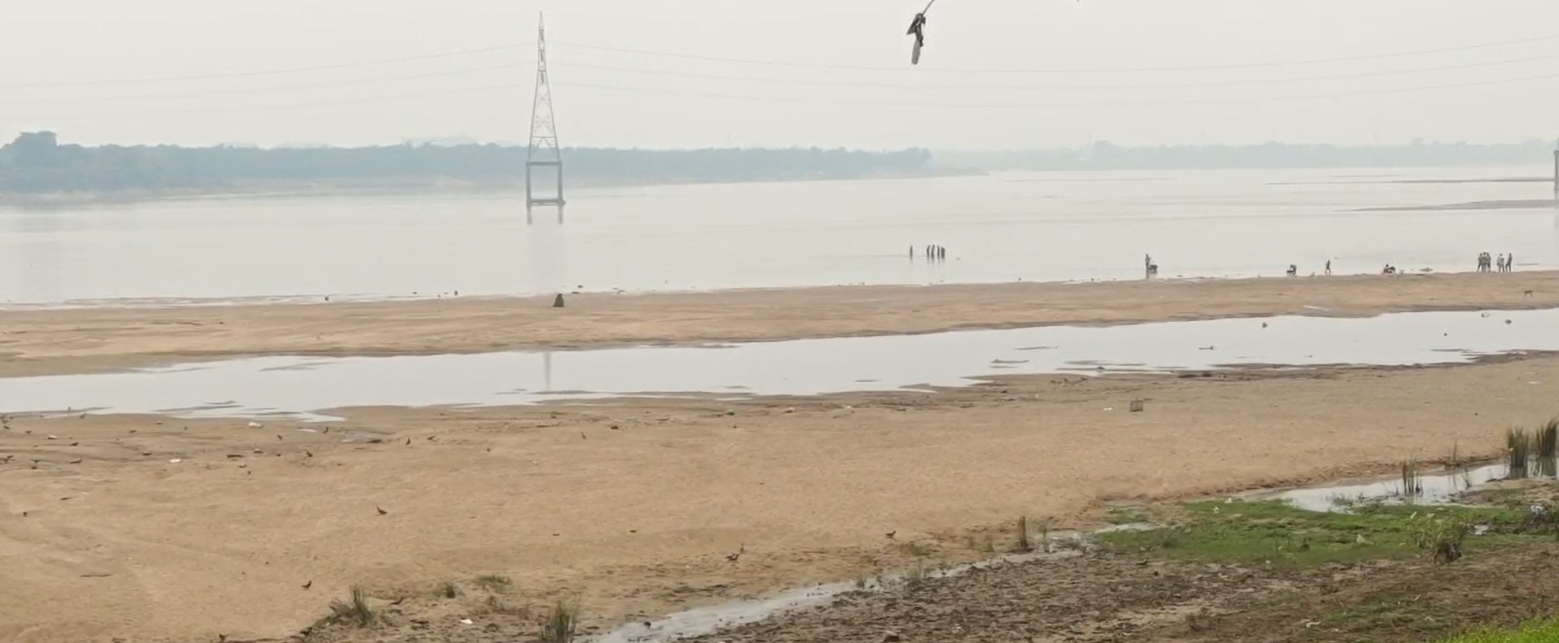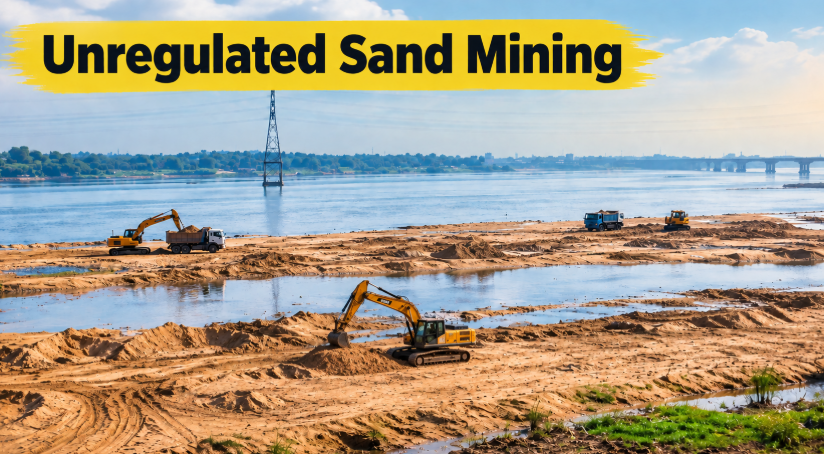
Kataka: Unregulated sand mining from the Mahanadi and Kathajodi rivers could worsen Kataka’s groundwater crisis, with the city’s water table showing a declining trend in recent years, according to research by the Department of Geology at Ravenshaw University.
Researchers studying the riverbeds said excessive removal of sand is reducing the amount of sand available in the riverbeds, which may be affecting the natural recharge of groundwater. If the trend continues, Kataka could face a severe water shortage in the coming years, they warned.
The researchers said their findings are based on satellite imagery and ground-level data collected during a four-year study of the Mahanadi and Kathajodi riverbeds. The research was undertaken with support from the central government’s Department of Science and Technology.
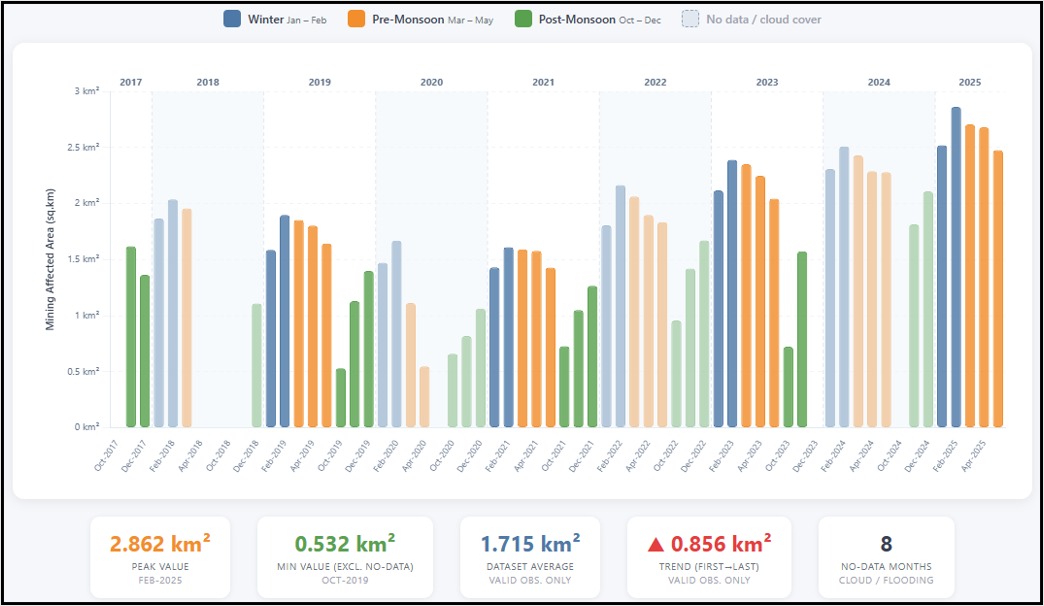

According to the study, the groundwater level remained above the standard line between 2017 and 2019 but began declining from January 2021. The researchers attributed the trend, at least in part, to the reduction of sand deposits caused by excessive extraction.
The extent of sand extraction from the Kathajodi has also increased over the years, the study found. Extraction covered about 2 square kilometres in 2017-18, 1.5 to 2 square kilometres in 2019, 1.5 to 1.8 square kilometres in 2020 and 1.5 to 1.6 square kilometres in 2021. From 2022 onward, the area reportedly increased from about 2 square kilometres to a maximum of 2.862 square kilometres in 2024 and 2025.
Also Read : Mayurbhanj sand mining row: NGT defers DSR case hearing to Aug 20
Researchers said greater extraction has been reported from areas near bridges across the Kathajodi, raising concerns over the stability of major structures spanning the river.
Professor Sandeep Narayan Kundu, a geologist involved in the research at Ravenshaw University, said uncontrolled sand mining could have consequences beyond groundwater depletion.
Excessive extraction can alter the natural flow of a river and potentially threaten embankments that protect Kataka from flooding, researchers said. River embankments and barrages around the city could also face risks if indiscriminate mining continues.
Researchers and intellectuals have urged the state government and local administration to take preventive measures before the situation worsens.