


New Delhi: The Supreme Court Tuesday asked the Central Empowered Committee (CEC) to submit a report on sand mining from riverbeds, saying it has a “disastrous effect” on the river ecosystem and has to be stopped.
The CEC, a statutory body since 2023, was originally formed in 2002 on the Supreme Court’s order. Its primary role is to advise the apex court on writ petitions related to environment and forest matters, and assist in monitoring and compliance with its orders.
The court also asked Rajasthan, Madhya Pradesh and Uttar Pradesh to file, within two weeks, their compliance affidavits on its directions for effective implementation of environmental and statutory safeguards in the regions within and around the National Chambal Gharial Sanctuary that are affected by rampant illegal sand mining.
The top court was hearing a suo motu case titled ‘In Re: Illegal sand mining in the National Chambal Sanctuary and threat to endangered aquatic wildlife’.
The bench was told that one of the pleas, which was listed for hearing along with the suo motu case, has sought directions to the authorities to immediately take steps to completely stop alleged illegal sand mining in the Ken River in Panna district of Madhya Pradesh.
“Let us focus on sand mining from the river beds because this concerns us. Sand mining from river beds has a disastrous effect. The river flow gets affected, and the worst effect is on the river ecosystem,” it observed.
Senior advocate Nikhil Goel, who is assisting the top court as an amicus curiae in the suo motu case, said the bench may consider expanding the scope of the matter to include the aspect of illegal sand mining from river beds.
“We need a specific report from the CEC on sand mining from river beds,” the bench said.
The bench also dealt with the issue related to the incident in which a forest ranger was killed last month after being allegedly hit by a dumper while he was trying to stop illegal mining in Rajasthan.
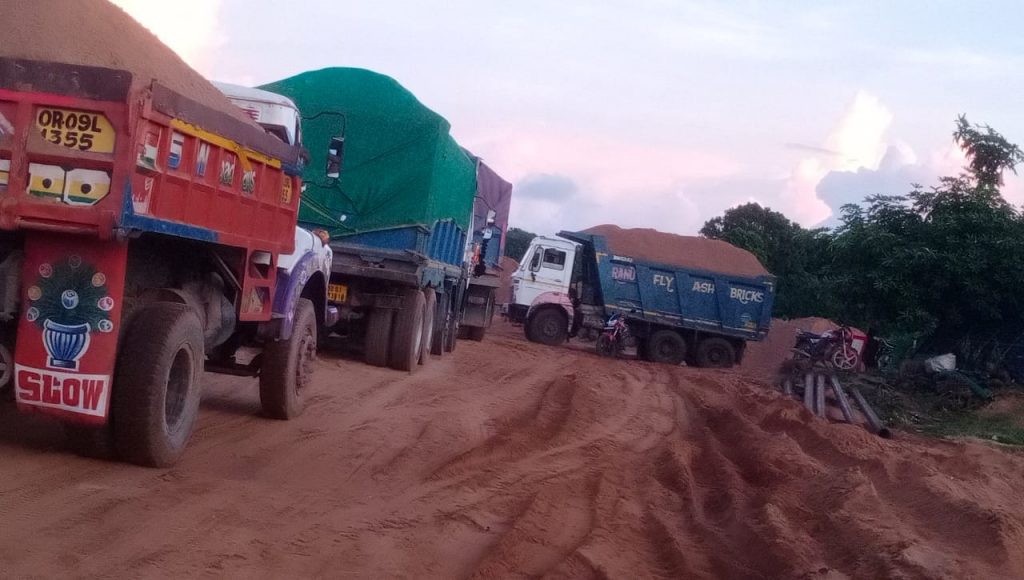
The top court observed that vehicles carrying illegally mined sand were moving rampantly in the state.
“We will not let the rivers of the state be destroyed like this. This is absolutely not done. This is a sad state of affairs,” the bench observed.
It said the states of Rajasthan, Madhya Pradesh and Uttar Pradesh have to comply with the directions passed earlier by the bench in the suo motu case.
The top court asked these states to file their compliance affidavits within two weeks concerning the directions issued by the court.
While posting the matter for hearing on November 4, the bench asked the CEC to give a report on the issue of sand mining from river beds.
It also asked the Madhya Pradesh government to respond to the plea alleging illegal sand mining in the Ken River.
While hearing the suo motu matter in July, the top court had said preventive detention orders should be passed against those facilitating illegal sand mining activities in and around the National Chambal Sanctuary, as such people were eating into natural resources and deserve no sympathy.
The National Chambal Sanctuary, also called the National Chambal Gharial Wildlife Sanctuary, is a 5,400-sq km tri-state protected area. Besides the endangered gharial (long-snouted crocodile), it is home to the red-crowned roof turtle and the endangered Ganges river dolphin.
Located on the Chambal River, near the tripoint of Rajasthan, Madhya Pradesh and Uttar Pradesh, the sanctuary was first declared a protected area in Madhya Pradesh in 1978 and now constitutes a long and narrow eco-reserve co-administered by the three states.
In May, the top court passed a slew of directions for effective implementation of environmental and statutory safeguards in the regions affected by rampant illegal sand mining within and around the National Chambal Gharial Sanctuary.
It had asked the three states to undertake immediate and effective steps for the augmentation of field-level enforcement officials in the respective forest departments, including recruitment to vacant posts of forest guards and other frontline enforcement personnel.
The apex court had also directed the states to undertake stringent, continuous and coordinated enforcement action against vehicles and machinery involved in illegal mining and transportation activities within and around the affected regions.
It had directed that appropriate criminal prosecution be initiated not merely against the drivers of vehicles involved in illegal mining and transportation activities, “but also against the owners, financiers, operators, contractors and all other persons forming part of, facilitating or otherwise connected with organised illegal mining network operating in the affected regions”.
Orissa POST – Odisha’s No.1 English Daily