
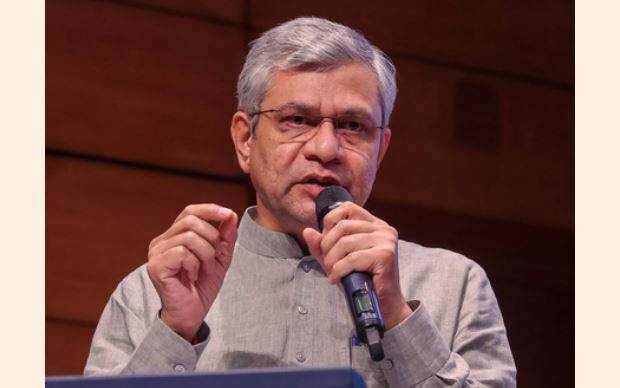
Mumbai: Union Electronics and Information Technology Minister Ashwini Vaishnaw Friday said 68 Japanese companies participating in Semicon India 2026 are in the process of finalising their manufacturing, research and partnership plans in India.
Speaking to IANS during his visit to the Japanese pavilion at the event, Vaishnaw said more than 30 countries are participating in Semicon India 2026, reflecting growing international interest in India’s semiconductor ecosystem.
“Here at the Japanese pavilion, there are 68 Japanese companies. They are finalising their plans for manufacturing, research and partnerships in India,” the Minister said.
Vaishnaw also highlighted the enthusiasm among young people at the semiconductor event, saying India’s semiconductor push is creating opportunities for high-skilled employment and helping develop a talent pool for the sector.
The Minister also showcased a semiconductor chip developed by students of the National Institute of Technology (NIT) Rourkela in Odisha. He said the chip was developed under the talent development programme of India’s Semiconductor Mission and that the students had made a presentation on their work before Prime Minister Narendra Modi.
The student-developed chip was displayed to the media during Vaishnaw’s interaction.
Odisha Chief Minister Mohan Charan Majhi had earlier expressed pride at seeing indigenous chip designs developed by NIT Rourkela being showcased alongside Made-in-India semiconductor chips at Semicon India.
Majhi said the achievement was a matter of pride for Odisha and demonstrated the talent, innovation and research capabilities of institutions in the state.
He also credited Prime Minister Narendra Modi’s leadership and Vaishnaw’s efforts for India’s continued progress towards building a strong and self-reliant semiconductor ecosystem.
The Chief Minister congratulated the scientists, researchers and the entire NIT Rourkela team, noting that talent from Odisha is contributing to India’s semiconductor journey and its broader efforts towards technological self-reliance.
IANS