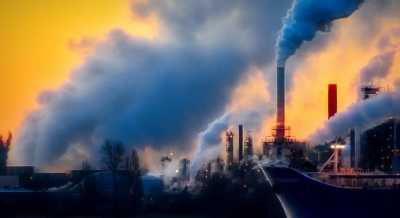
New Delhi: That all-around pollution has been one of the most pressing and exacting challenges that we face today is not an overstatement. Holding the dubious distinction of hosting 35 of the 50 global cities with the worst air quality, India is indeed the pollution capital of the world. While this persistent scourge has continued to play havoc with people’s health, for policymakers, the sheer scale, the spread and the complexity of the challenge have been daunting enough. For the world’s fastest-growing major economy today, aspiring to touch the $5 trillion mark in the nearest possible time, the dilemma of finding that fine balance between economic growth and environmental sustainability becomes particularly acute.
Even as pollution is a country-wide menace, how can we contain and reduce pollution at least in Indian cities and urban locations? More specifically, since transport-related emissions are some of the biggest contributors to city pollution, what are some of the ways to reduce pollution and related effects in Indian cities?


1) Not just aspirational, but pragmatic decarbonisation of the transport sector, both passenger and freight
First, pragmatic decarbonisation of the transport sector, through the use of much lower carbon fuels, should become a top and immediate priority for the authorities. We must be mindful of the fact that India’s transport sector is responsible for 13.5 percent of the country’s energy-related CO2 emissions, with road transport accounting for 90 percent of the sector’s final energy consumption. Furthermore, it has been estimated that transportation sources are responsible for approximately a third of PM pollution, perhaps the most harmful pollutant to human health which also contributes highly to nitrogen oxide emissions in the country. Nonetheless, the scope of the decarbonisation programme must be extended to both personal/private vehicles and heavy-duty vehicles (HDVs).
For private vehicles, relaxing policy norms for the uptake of alternative fuels such as auto LPG as compared to traditional carbon-based and heavily polluting petrol and diesel must drive the decarbonisation programme. Notably, auto LPG has a global warming potential (GWP) of zero as opposed to methane’s 25 and carbon dioxide’s 1. Moreover, not only does it produce a lower amount of carbon dioxides per unit of heat produced, but with a low carbon-hydrogen ratio, it lets off negligible amounts of nitrogen oxides and particulate matter. Similarly, since India has seen rapid growth in freight road transport in recent decades on the back of rising demand for heavy-duty vehicles, especially the ICE-based HDVs, there has been a spillover effect in the form of higher demand for fossil fuels and thereby higher pollution. We need to contain this demand for HDVs, especially long-range trucks and the resultant use of fossil fuels.
2) Strive for full-fledged electrification of railways
Second and flowing from the first, we need to achieve full-fledged electrification of our railways. This would release the pressure and load on the freight road transport in the country. While 54 percent of conventional passenger demand and 65 percent of freight demand is today carried out on electrified railways, we need to invest more to increase this electrification footprint.
3) Incorporate transit-oriented development models in urban planning
Third, with transportation increasingly constituting the fulcrum around which city life today operates and evolves, we must contemplate and develop urban planning strategies predicated on transit-oriented development models. This means designing or redesigning (existing urban units) our urban spaces in a way that concentrates housing, jobs, and services around public transport hubs while facilitating easy and safe movement of pedestrians and non-motorized modes of mobility such as bicycles. Copenhagen with its five-finger plan and Brazil’s Curitiba are exemplary models for transit-oriented urban development.
4) Disincentivize high carbon liquid-fuelled private transport through policy
Fourth, simultaneously, we must disincentivize through policy – such as increased taxes and new regulations – the use of private transport vehicles. For instance, there could be more road tax and parking charges for usage of private vehicles, particularly those which run on high carbon liquid fossil fuels with an eye on restricting the presence of personal vehicles on roads. Also, people should be encouraged to undertake the pooling of their personal vehicles.
5) Expand railway’s Roll-on Roll-off (RO-RO) service to Delhi to other cities
Fifth, we could consider replicating the RO-RO service offered to Delhi by the Indian Railways to the other major cities in the country. Given that traffic congestion stemming from stop-and-go traffic flow increases emissions, taking the heavily loaded trucks and lorries onto railway wagons under the RO-RO service and off the roads would go a long way in addressing city emissions. While questions have been raised over the financial feasibility of this exercise, it is not impossible to find a way out. In addition, we should deploy and operate smart traffic systems on our city roads.
6) Implement an emissions trading system
Sixth, we should widely encourage market-based emissions trading mechanisms in which the government sets a cap for emissions and allows companies to buy and sell permits to stay below the cap thereby keeping pollution under control. This involves emitting firms obtaining and surrendering a permit for each unit of emissions. Those lacking enough permits must have to reduce emissions or buy permits from another firm. Gujarat has introduced world’s first emissions trading system for particulate pollution. This must be replicated across the country.
7) Afforestation and foster green habits and practices
And seventh, we must make our cities greener through the planting of more trees and enough vegetation in order to provide a filter and sink for city pollutants. Also, green buildings should be encouraged in terms of their design and material of construction while employing renewables such as solar power and green appliances within. At the same time, city people should use green and recyclable materials in their daily lives.
In sum, these are seven very effective ways to reduce pollution levels in our cities.
–IANSlife