
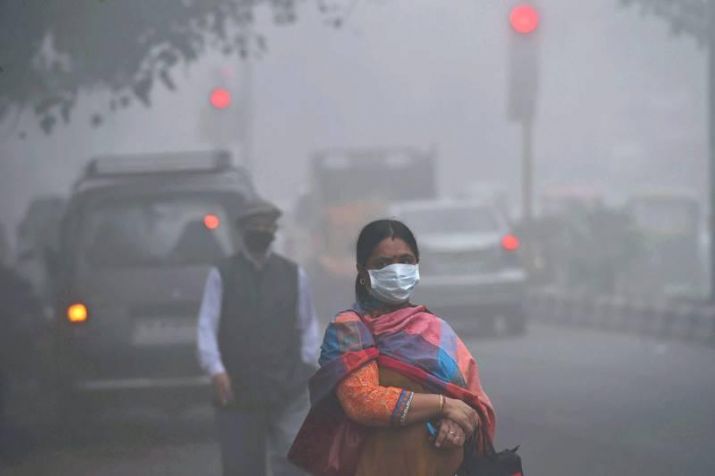
Air pollution is increasingly being recognised as India’s gravest public health crisis in the post-COVID period, with medical experts warning that the situation is likely to deteriorate with each passing year unless urgent and coordinated action is initiated. A group of senior doctors of Indian origin practising in the United Kingdom last week cautioned that India is facing a largely hidden crisis of airway and cardiovascular diseases, many of which remain undiagnosed and untreated, placing a growing burden on both individuals and the country’s already overwhelmed healthcare system.
According to these experts, a substantial number of people, particularly in northern India, are already living with chronic respiratory damage caused by prolonged exposure to polluted air. This burden is not immediately visible, as many patients experience mild or non-specific symptoms that are often ignored or misattributed. Over time, however, these conditions grow into serious, long-term and, at times, irreversible illnesses, increasing hospital admissions and healthcare costs, which are mostly out-of-pocket for the vast majority of Indians. It is said that in India, a common man’s family is always one disease away from poverty.
Doctors have also pointed to the global rise in cardiovascular diseases over the past decade, linking it not only to lifestyle factors such as obesity but also to increased exposure to toxic emissions from urban transport. Cardiologists have highlighted the less visible but equally dangerous impact of air pollution on heart health. Cardiovascular disease often develops slowly and silently, with particulate matter entering the bloodstream without obvious warning signs. Even on days when air quality appears moderate, people continue to be exposed to harmful pollutants that accumulate over time.
Air pollution in India is no longer limited to the northern plains and has evolved into a chronic, nationwide public health crisis with the Air Quality Index (AQI) being reported in the “poor” and “severe” categories in cities and towns from across the country. Even a state like Orissa has towns more polluted than Delhi and the National Capital Region (NCR). On 25 December, three towns of Orissa – Balasore (AQI of 336), Talcher (324) and Baripada (304) were among India’s five most polluted urban centres.
Air pollution also affects people across all age groups and social strata, with consequences that extend to nearly every organ system of the human body. Disconcertingly, for a large share of the urban population, prolonged exposure to hazardous air has become a year-round reality rather than a seasonal concern. From the Indo-Gangetic plain, which continues to bear the heaviest burden, to rapidly expanding urban centres in other regions, hazardous levels of particulate matter are increasingly influencing disease trends and quietly shortening life expectancy.
Recent global studies reinforce these concerns. The 2025 Lancet Countdown on Health and Climate Change reported that fi ne particulate pollution caused over 1.7 million deaths in India in 2022. Findings from the Air Quality Life Index of the University of Chicago’s Energy Policy Institute further highlight the severity of the problem, estimating that nearly 46 per cent of India’s population lives in areas where air pollution is significantly cutting into average life expectancy.
Healthcare professionals have repeatedly stressed that India has successfully implemented large-scale public health interventions in the past, notably in tackling tuberculosis. They argue that a similar sense of urgency, investment and structured response is the need of the hour to address the mounting health crisis caused by air pollution.
Strangely, during the recent Winter Session of the Parliament, the government maintained that there is no conclusive evidence directly linking higher AQI levels to lung diseases or mortality, although it accepted air pollution as a triggering factor for respiratory ailments. Given the overwhelming scientific evidence connecting polluted air to respiratory, cardiovascular and neurological diseases, any further delay in curbing air pollution will have a direct bearing on the life span of not only this generation but also future generations.