
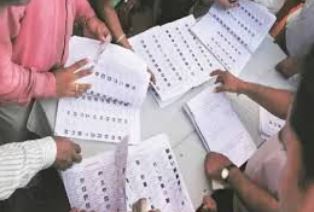
At a time when there are nationwide protests demanding the resignation of Chief Election Commissioner (CEC) Gyanesh Kumar over the controversial Special Intensive Revision (SIR) and other alleged arbitrary decisions, renowned psephologist and senior journalist Prannoy Roy has come out with an analysis of the SIR’s impact on the BJP’s unprecedented victory in the last West Bengal Assembly elections.
The analysis identifies a correlation between higher voter deletion rates and a larger swing in favour of the BJP in the 2026 Bengal Assembly polls. While correlation alone cannot establish that deletions determined the outcome, the pattern is sufficiently striking to demand a transparent and independent examination.
The BJP won the election amid a statewide swing of approximately eight percentage points in its favour, while the Trinamool Congress (TMC) lost around seven percentage points in vote share. More significantly, the 25 constituencies with the highest SIR voter deletion rates recorded a swing of nearly 10.5 percentage points against the TMC and in favour of the BJP. In contrast, in the 25 constituencies with the lowest deletion rates, the corresponding swing was about 5.3 percentage points. No doubt, voter behaviour is influenced by several factors such as anti-incumbency, political mobilisation and local issues. However, the relationship between the current voter deletions and electoral outcomes deserves serious scrutiny.
The demographic distribution of the deletions also helps put things into perspective. In Bengal, women accounted for 62 per cent of the deleted names despite constituting approximately half the population of registered voters. This imbalance raises pertinent questions since women have traditionally shown stronger support for the TMC than for the BJP. Their disproportionate exclusion has definitely affected the composition of the electorate, even if the precise electoral consequences remain unproven.
The religion-wise data on voter deletion also deserves attention. According to the analysis, Moslem voters were deleted at a rate 52 per cent higher than non-Moslem voters. Had Moslem voters faced the same deletion rate as non-Moslems, the number of deletions would reportedly have been around 19.8 lakh, compared with an actual figure of approximately 30 lakh. This becomes crucial given the TMC’s substantial support among Moslem voters.
The SIR controversy extends beyond West Bengal. Reported deletion rates of nearly 33 per cent of voters in Delhi, around 21 per cent in Maharashtra and Telangana, and 20 per cent in Karnataka raise questions over the methods adopted to conduct this massive exercise.
The SIR may be necessary to remove duplicate, deceased or otherwise ineligible voters. But the legitimacy of that objective depends on the fairness of its implementation. A process of such magnitude requires meticulous preparation, adequate time, clear criteria, effective notice to affected voters and accessible appeals. None of this was done. The common complaint is, even in Orissa, no notices were issued to the persons deleted. Government authorities complained that the appeals and correction mechanism was non functional from the very beginning. The SIR exercise began just months before the Bihar Assembly elections in November 2025. The controversy surrounding this whole exercise, conducted in an opaque and hurried way, led to mass disenfranchisement that has now engulfed the whole nation with student groups, youths, Opposition parties, civil society members and lawyers hitting the streets of the national capital and other parts of the country in protest.
Elections are legitimate not merely because votes are counted, but because every eligible citizen has a fair opportunity to cast one vote. The complete process has to be transparent from start to finish. The ECI’s credibility rests on impartiality and public confidence, especially while undertaking an exercise that could affect the fundamental right to universal franchise.
When that integrity is questioned, any effort to stamp out public anger only deepens suspicion, as has sadly been happening in the country.