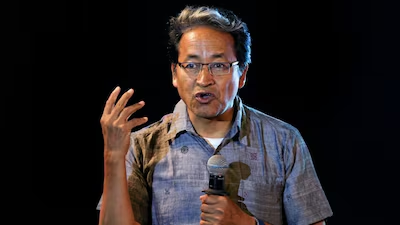
New Delhi: Climate activist and education reformer Sonam Wangchuk Saturday condemned the arrests of student and youth leaders in Delhi intended to stall the CJP protest, describing the situation as reminiscent of an “undeclared emergency” in the country.
Urging the government to stop the arrests and resolve the issues through dialogue, Wangchuk warned that he may consider a peaceful sit-in, hunger strike or march in Leh or Delhi if the curbs are not withdrawn within the next 24 hours.

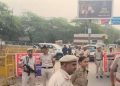
Taking to X to share his message following reports of large-scale arrests in Delhi intended to scuttle the Cockroach Janta Party (CJP) scheduled protest at Jantar Mantar demanding the resignation of Chief Election Commissioner Gyanesh Kumar over alleged irregularities in electoral rolls, the activist said, “I had never imagined that the biggest democracy in the world would be under an undeclared emergency.
“I was happy there were so many leaders to lead the movement, but I now learn that they have all been arrested. I hope those arrested will be released soon. I will be compelled to consider an anshan (fast) or padyatra march if they are not released by tomorrow,” he said in his post.
He also shared a video message, condemned the “undeclared state of emergency”, and urged the government to resolve the issues through dialogue.
“I learned that a large number of people had been arrested in Delhi today (Saturday), including student leaders, youth leaders, lawyers, journalists, and even Members of Parliament. Yesterday, when I sent you all a message urging peace and unity during today’s protests, I believed that peaceful demonstrations would certainly be permitted in the world’s largest democracy,” he said in his video message.
The government imposed heavy security deployment and restrictions in the national capital. Authorities detained several opposition leaders, including former chief ministers Arvind Kejriwal, Mamata Banerjee, Pinarayi Vijayan and Manik Sarkar, as they attempted to join the protest.
However, Wangchuk said the country now feels as though it is under an undeclared state of emergency.
“I strongly condemn this and appeal to the government to end all these arrests by this evening and resolve the issues through dialogue. However, if the arrests are not withdrawn within the next 24 hours, I will also be compelled to consider holding a peaceful protest, whether in the form of a sit-in, a hunger strike, or a march, either in Leh or in Delhi,” he said.
Wangchuk expressed hope that the government would resolve the issues through dialogue before any such action became necessary.
Estranged BJP leader from Kishtwar, Jahanzaib Sirwal, expressed concern over the government’s approach towards protesting youngsters, particularly Gen-Z members, and urged authorities to replace a predominantly restrictive response with meaningful dialogue and democratic engagement.
“Dialogue is not a sign of weakness; it is the very foundation of democracy. When an entire generation comes forward to raise concerns, the government must have the patience to listen, the courage to engage and the willingness to address the issues being raised. Young people cannot be expected to remain silent when they believe their rights and future are at stake,” Sirwal said in a statement.
He observed that arrests of youngsters, suspension of train services, route diversions and metro closures may serve as preventive measures in specific circumstances. Still, such steps cannot be mistaken for a solution to the underlying problem.
“Administrative restrictions may disperse a gathering, but they cannot resolve the concerns that brought people onto the streets in the first place. The government must understand the difference between managing a protest and resolving a grievance,” he said.
Sirwal emphasised that the vision of ‘Viksit Bharat’ cannot be realised through economic growth and infrastructure development alone.
“A developed nation must also ensure that its citizens enjoy their fundamental rights, have the freedom to express themselves, and can participate meaningfully in the democratic process. No country can become truly Viksit if its citizens are not empowered in their basic rights,” he said.
He said curtailing internet access, restricting freedom of speech, and creating an atmosphere where young people feel unheard can become obstacles to the vision of a progressive and developed India.
Calling for a change in the government’s approach, Sirwal urged the authorities to address the concerns surrounding the Chief Election Commissioner through appropriate institutional and democratic channels, and to ensure that legitimate questions are met with transparency and engagement rather than an approach that risks deepening public discontent.