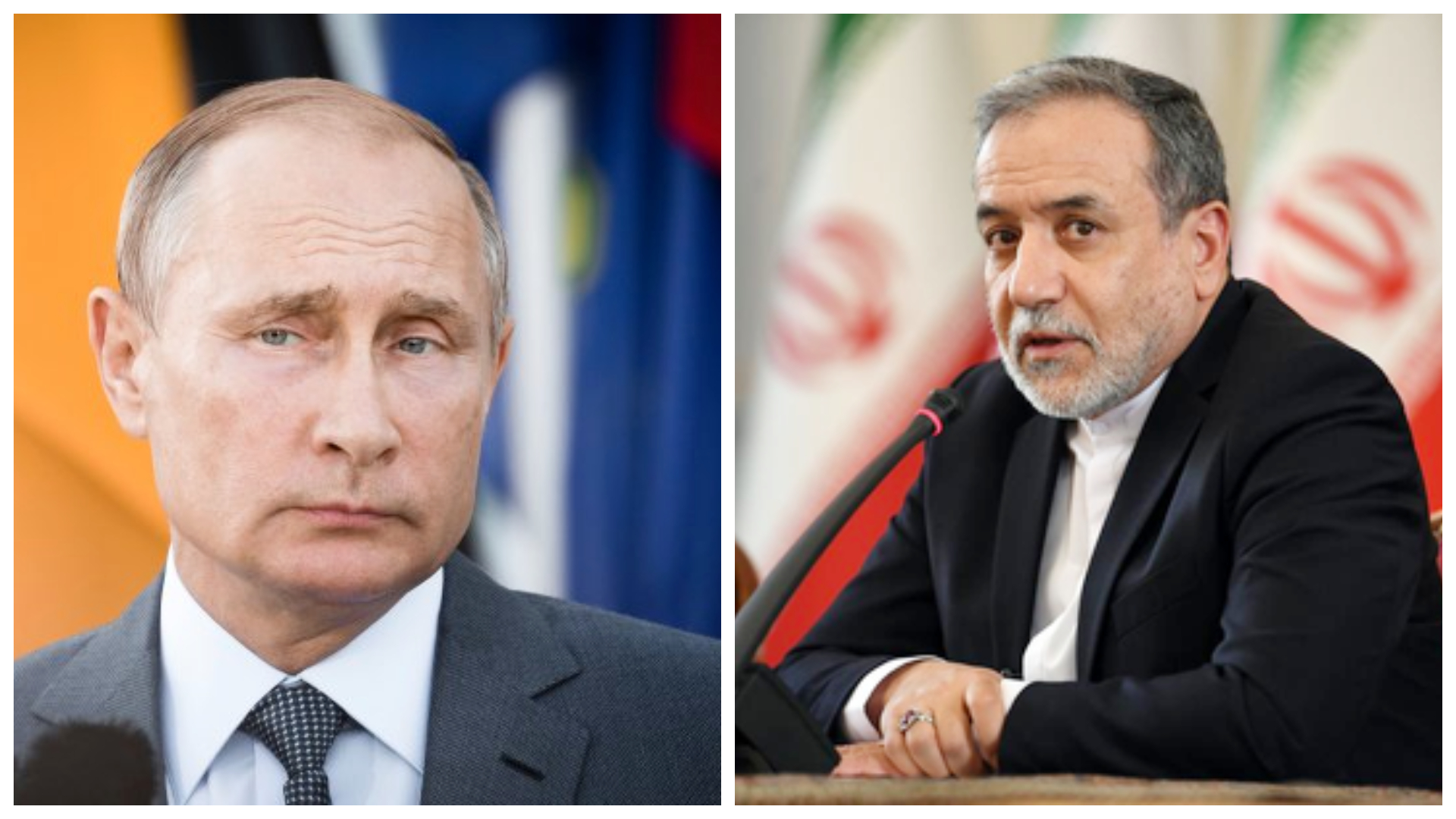
Iran has made an intelligent move to send its Foreign Minister Abbas Araghchi to meet Russian President Vladimir Putin. The aim seems to be to force the US to return to the negotiating table on mutually agreed terms instead of letting US President Donald Trump dictate terms to it.
Trump’s offer, after cancelling a visit by his top negotiators to Pakistan, effectively means Iran has to swallow its pride and surrender to him in the wake of the US blockade of ships moving to and from Iranian ports.
Also Read


A sort of diplomatic war of attrition is going on between the US and Iran during the ongoing ceasefire. Dialogues started in Pakistan between the top leaderships of the two countries have not made much headway, though efforts for a peaceful settlement of the conflict are not abandoned. Trump categorically said there is no point in sending his team for the negotiations since according to him there is a difference of opinion within the Iranian leadership.
He scrapped plans to send Special Envoy Steve Witkoff and adviser Jared Kushner to Islamabad citing “tremendous fighting and confusion” within Tehran’s leadership. That could be a ruse as Iran’s President Masoud Pezeshkian has articulated the country’s stand that Tehran will not enter negotiations while the blockade remains in place.
The US Central Command (CENTCOM) said forces were continuing to implement the blockade, preventing vessels from entering or leaving Iranian waters. Amer ican forces have, so far, directed 38 ships to turn around or return to port, CENTCOM said on X. As the fate of the peace talks hangs in the balance due to the infl ex ible positions the US and Iran have taken, Iran decides to bring in another infl uential global player – Putin – to offset any strong arm tactic Trump would like to adopt to coerce Iran to agree to peace on his terms, though his bargaining power has to a great extent been blunted by Iran’s counterattacks with drones and missiles.
At this crucial juncture, Iran’s Foreign Minister arrived in Moscow 27 April for talks with Putin. Tehran has already intensified diplomatic efforts to end the United States-Israel war on Iran. Araghchi’s Moscow visit comes following his meetings in Muscat with Omani officials, as Iran seeks to rally regional and international support for renewed negotiations. In Moscow, he told Iranian media that he had travelled to Russia “with the aim of continuing close consultations between Tehran and Moscow on regional and international issues.”
He deliberately sent a clear message to the US that his meeting with Putin “will be a good opportunity to discuss developments in the war and review the latest situation.” He exuded confidence that these consultations and coordination between the two countries in this regard will be of particular importance.
Washington and Tehran agreed to a temporary ceasefire on 8 April following more than a month of fighting that began with the US and Israeli attacks on Iran. The truce, mediated by Pakistan, has since been strained by disputes over shipping through the Strait of Hormuz and the US blockade on Iranian ports. As the stalemate continues, Russia is now poised to play a central role in any next phase of the conflict.
There are now two scenarios – diplomatic settlement and resumption of confrontation. Russia is going to play a key role when it comes to both which is why Iran’s Foreign Minister is in Moscow for consultations over most probably both.
As is known Iran has several demands and is trying to prioritise them based on the situation. There could be an extension of the ceasefire or another confrontation. Time is running out. With the prices of crude and LPG in the international markets on the rise neither the US nor Iran can af ford to let the conflict drag on indefinitely.
A midpoint in their negotiations has to be found without any further delay. Iran is in a vantage position after deflating Trump’s ego and warmongering. It has no reason to agree to abject surrender, while the US has to go the extra mile for peace as it was responsible, along with Israel, for the one-sided war with Iran.