
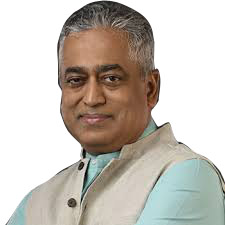
By Rajdeep Sardesai
Last week, Rahul Gandhi set the cat among the political pigeons when he asked a deceptively simple question: why do Narendra Modi and the BJP appear resistant to anti-incumbency even after more than a decade in power? “Even my grandmother was defeated by anti-incumbency in 1977,” he pointed out, before alleging that the electoral process itself was being manipulated to ensure the Modi-led BJP’s continuance in power. It is an explosive charge. And, as with many of Rahul Gandhi’s recent interventions on elections, it contains a serious concern but also the temptation to oversimplify a complex political reality.
Rahul Gandhi is right about one thing: the Election Commission of India has suffered a credibility deficit. This is no longer merely an Opposition talking point. The controversy over the Special Intensive Revision, questions surrounding “logical discrepancy” categories in West Bengal, the scale of deletions and delays in hearing appeals have all raised concerns about transparency and due process. The Supreme Court itself has referred to a “trust deficit” between constitutional functionaries.
The numbers deserve attention. In West Bengal, 22 lakh citizens have reportedly gone in appeal, and 93 per cent of those heard so far have been found to be eligible voters. When a citizen’s right to vote can be threatened by database mismatches or unclear verification procedures, the burden of proof cannot casually shift from the state to the citizen. Elections do not begin on polling day; they begin with the electoral roll.
Concerns have also been raised over issues such as government transfers during election periods, hate speech allegations, disputes over party symbols and the timing of election-related decisions. These matters add to the perception that the Election Commission must do more to establish public confidence.
However, Rahul Gandhi also risks getting one crucial aspect wrong. To suggest that the BJP’s electoral dominance is primarily the result of a compromised electoral system ignores a substantial political reality. It may also allow the Congress and the wider Opposition to avoid difficult questions about their own weaknesses.
Since 2014, election after election has demonstrated Narendra Modi’s continuing political appeal, particularly in large parts of the Hindi heartland and western India. Opinion polls can be inaccurate, and pollsters deserve scrutiny, but dismissing the broader political phenomenon because the BJP has benefited from it would overlook the transformation of Indian politics over the past decade.
The Modi factor is only one part of the story. The BJP has built a formidable political and organisational machine. It has a vast cadre network, the RSS ecosystem, substantial financial resources, a strong communication strategy, a clear ideological message and considerable experience in converting national narratives into electoral campaigns.
The scale of resources highlights the challenge. According to expenditure statements filed with the Election Commission, the BJP reported spending Rs 529.38 crore across the five Assembly elections held this year in Assam, Kerala, Tamil Nadu, West Bengal and Puducherry. The Congress reported Rs 248.55 crore across the same contests. In West Bengal alone, the BJP reported spending Rs 286.99 crore — more than the Congress’s combined expenditure across all five elections.
These figures do not establish electoral wrongdoing. But they reveal the enormous resource gap between the two principal national parties.
During the same election period, the BJP’s central headquarters reported receipts of around Rs 1,473 crore, compared with about Rs 207 crore reported by the Congress.
A powerful election machine does not require a conspiracy theory. It requires an explanation of why the principal rival has struggled to build a comparable structure despite having governed India for decades. That is the question Rahul Gandhi must confront.
The Congress’s decline cannot be attributed entirely to the Election Commission. Leadership struggles, organisational weaknesses, factionalism, defections, weak state-level structures and the absence of a compelling alternative narrative have all played a role.
Yet anti-incumbency does exist. In 2018, the Congress defeated the BJP in Madhya Pradesh, Rajasthan and Chhattisgarh. In 2023, the BJP lost Karnataka. In 2024, the BJP failed to secure a parliamentary majority on its own and depended on allies to form the government. Indian voters have shown repeatedly that incumbents can be punished.
The more relevant question, therefore, may not be why anti-incumbency does not work against Modi, but why the Opposition has failed to consistently convert it into a national alternative.
In 2019, the Congress-led Opposition struggled to build on its state-level gains of 2018. The Pulwama-Balakot episode dramatically changed the political narrative. In 2024, the INDIA bloc improved its parliamentary performance, but it struggled to emerge as a fully coherent alternative. Differences among allies, leadership questions and strategic challenges weakened its momentum.
The Congress cannot simultaneously argue that the BJP is electorally unbeatable and avoid examining why the Opposition remains vulnerable.
Even in Modi 3.0, there are signs of political fatigue and areas of dissatisfaction. But political opportunity is not the same as political victory. Anti-incumbency is a force that requires an organised political vehicle to convert public sentiment into votes and seats.
Rahul Gandhi is justified in demanding answers from the Election Commission. An electoral referee whose credibility is questioned cannot simply ask citizens to trust it without providing greater transparency. The electoral-roll controversy, in particular, requires detailed disclosure and independent scrutiny.
If the Opposition believes that additions and deletions in voter lists have been compromised, the answer should be a thorough audit of the process — constituency by constituency and decision by decision. Establish the facts and let evidence determine the scale of the problem.
But the argument cannot end there. Blaming the umpire cannot explain every defeat. The Congress has lost elections where the Election Commission was not the central issue. It has won elections when the BJP was in power. The BJP’s rise has been shaped by a combination of political strategy, organisation, ideology and leadership.
One set of figures captures the scale of this transformation. Between 2009 and 2024, the BJP’s vote count increased from roughly 7.84 crore to 23.59 crore. The Congress, by contrast, moved from around 11.9 crore to 13.67 crore. These numbers do not explain everything, but they underline the magnitude of India’s political shift.
Call it the Modi phenomenon, Hindutva politics, organisational strength or electoral strategy — the BJP’s rise cannot be explained only through the Election Commission.
The ECI must answer questions about credibility. The Congress must answer questions about its own political machinery. India’s democracy requires answers to both.
The writer is a senior journalist.