
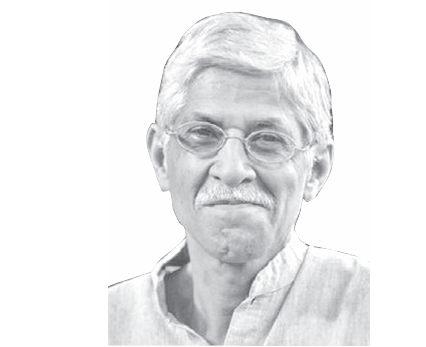
By Prof (Dr) Kiran Seth
We call him Father of the Nation. It is an honour, but it is also a limitation. In this case the father tag limits him to a political and historical figure. He gives us a nation. The people who lived with him chose a different title – Mahatma. Great Soul. That title does not describe what he did for India. It describes what he did within himself. And that is why it defines Mohandas Karamchand Gandhi ji more clearly.
To understand this, one has to read his autobiography, My Experiments with Truth. He does not call it My Achievements or My Struggle for Freedom. He calls it experiments. An experiment means you do not know the result. You try, you fail, you observe, you correct. For Gandhiji, the freedom movement was not a separate political mission. It was the laboratory in which he tested his inner life. Satya, ahimsa, brahmacharya, aparigraha – these were not slogans for him. They were daily practices.
This fusion of the outer and inner is what we have lost. We remember Gandhi the strategist, Gandhi the negotiator, Gandhi the mass mobilizer. We forget Gandhi the seeker, for whom every political act was a question: am I becoming more truthful? More fearless? More compassionate?
If that is his method, how is he relevant today? We live in a time of great turbulence. Our young feel more connected and more alone than ever. We have immense material progress and immense mental distress. In this landscape, four of his ideas return not as history, but as living guidance.
First, trusteeship. Gandhi ji said that wealth does not belong to you. Talent does not belong to you. Even your body does not belong to you in the absolute sense. You are a trustee. Whatever powers, possessions or privileges you have, you hold in trust for the benefit of all.
Today, the dominant idea is ownership. I own my marks, my job, my success. Therefore, if I fail, I am a failure. The idea of trusteeship reverses this. It says, my abilities are given to me. My duty is to care for them, to grow them, and to use them well. If I do that, I have done my part. The result is not my identity.
This single shift takes away the unbearable weight that our students carry. You are not an owner who must win; you are a trustee who must serve honestly.
Second, simple living and high thinking. We often quote this phrase, but we rarely practise it. For Gandhiji, simplicity was not poverty. It was clarity. He deliberately reduced his wants so that his wants would not control him. He spun his own cloth, cleaned his own latrine, walked where he could have ridden, because he believed that a life crowded with things cannot hear the voice of conscience.
Our age believes the opposite – that more consumption will lead to more happiness. The evidence around us proves otherwise. Depression, anxiety and addiction rise precisely in places of greatest material abundance. Gandhiji’s call for simplicity is therefore not moral preaching. It is a psychological remedy.
When you can voluntarily live with less, you discover that you need less to be joyful. You become less manipulable by advertisement, by peer pressure, by the constant demand to display.
Third, the beauty of our composite heritage. Gandhiji was a Sanatani Hindu who kept the Gita close to his heart. Yet he made Raghupati Raghav Raja Ram, and Ishwar Allah Tero Naam, the prayer of his ashram. He did not do this as political compromise. He did it because he truly saw the same divine light in different traditions.
He writes in Hind Swaraj that India is not a territory but a civilisation – a civilisation that has learned to hold differences together. Today, when identity is used to divide, his understanding of heritage is essential.
He did not ask us to tolerate each other. Tolerance implies you dislike something but you put up with it. He asked us to respect and to find beauty in each other’s paths. That respect can only come when we actually experience each other’s music, poetry, devotion and craft, not merely read about them in textbooks.
Fourth, and most important, the power of non-violence. We have reduced non-violence to a political technique – non-violent protest, non-violent non-cooperation. For Gandhi ji, non-violence was far more fundamental. It was the law of the human heart.
He believed that violence does not start when a hand strikes. It starts when the mind hates, when it becomes impatient, when it wants instant revenge. Therefore, the practice of non-violence begins with the mind.
Can I hold my anger for a minute before acting? Can I hold my despair for an hour before concluding that all is lost? Can I respond, not react?
This is the most relevant of all for our youth. We live in an instantaneous culture. A thought appears and we instantly post it. A slight appears and we instantly retaliate. A failure appears and we instantly decide our life is over. The gap between feeling and action has vanished.
Gandhiji’s whole discipline was to widen that gap. Through prayer, through silence, through manual work, through fasting, he trained himself to pause.
I was able to personally verify these four points during a recent 14,000 kilometres journey. At the age of 73, I cycled solo on an ordinary cycle costing Rs 7000, with minimal baggage, across the length and breadth of the country, to Ahmedabad, and then from Srinagar to Kanyakumari to Guwahati, completing the journey in Delhi on October 2, 2024 at Rajghat.
During this journey, I visited schools and colleges in remote villages, towns and cities spreading the message of SPIC MACAY. In a remote classroom with no electricity, in a city college full of anxiety about placements, in villages where Hindus and Muslims welcomed me together, I saw the same truth – that trusteeship, simplicity, composite heritage and inner non-violence are not abstract ideals. They are lived possibilities, still alive in India.
The Father of the Nation gave us political freedom. The Mahatma offers us something even more enduring – a method to free ourselves from our own fear, greed and hate. In that sense, his experiments are not over. They are waiting for us to continue them.
The writer, a Professor Emeritus, IIT-Delhi, is founder of SPIC MACAY.