
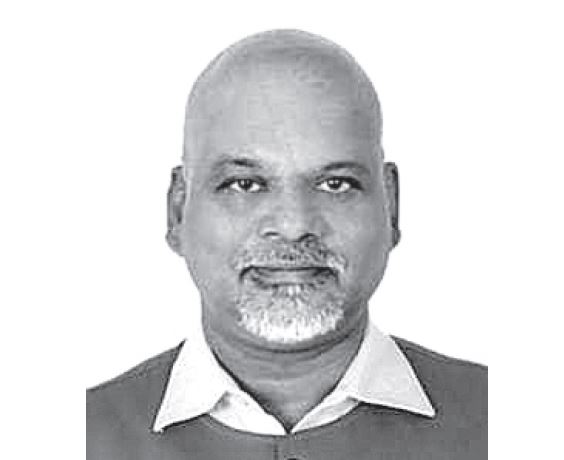
By DK Giri
Why Min Aung Hlaing, President of Myanmar chose Delhi as his first visit and what India must do next? Admittedly, in diplomacy, the first visit of a Head of State matters. It tells you who a leader trusts, fears or needs.
On Monday last, Myanmar’s President landed in New Delhi. As said, it was his maiden visit since assuming office in April this year. He did not choose Beijing, nor Bangkok but Delhi. Why? And what should New Delhi do with this trust? Why Delhi was his first port of call?
There could be three possible reasons, all practical.
First, security: Myanmar’s territory touches our troubled North-East – Nagaland, Manipur, Mizoram and Arunachal Pradesh. Insurgent groups have camps across the border: arms flow, so do drugs and refugees. President Hlaing knows this. So, he came with a promise: “We will not allow Myanmar’s soil to be used against India’s security interest”. The statement was delivered in Hyderabad House, and it matters.
India has been Myanmar’s quiet partner on counter-insurgency for 20 years: Operation Sunrise, intelligence sharing, and border fencing. No other country gives Myanmar that kind of help. China gives roads and loans, whereas India gives joint patrols. In a region where guns speak louder than talks, that counts.
The second reason could be connectivity. Two Indian projects are stuck in Myanmar for a decade. The Kaladan Multi-Modal Transit Transport Project – to link Kolkata with Mizoram via Sittwe Port, and the India-Myanmar-Thailand Trilateral Highway – our gateway to ASEAN. Both are 80 per cent done. Both need Myanmar’s political push to finish. Hlaing’s visit was also a signal, “we will unlock them”.
Third: balance: China has entered the Myanmar theatre in a big way. Twenty-one billion USD is invested in projects under the China-Myanmar Economic Corridor.
Kyaukpyu Deep-Sea Port is also financed by China.
Myanmar knows dependence is dangerous. So, every Myanmar leader, even from the military, keeps one window open to India. It is a balance. Hlaing’s Delhi visit tells Beijing, “We have options”; and it tells Washington, “Do not lecture us”. So, he came, not for love, but for leverage.
Let us recall the weight of history of India-Myanmar relations. India and Myanmar are no strangers. We share Buddhism, tea, and Tagore. General Aung San, father of Aung San Suu Kyi, studied at Shanti Niketan. U Thant, the Burmese UN Secretary-General, was a friend of Nehru.
In 1948, India was the first to recognise Myanmar’s independence. In the 1950s, we were both leaders of the Non-Aligned Movement. Our peoples crossed the border for weddings, funerals, and festivals.
This history gives India something China cannot buy — trust at the village level.
So, let us deal with the China factor. Let us be clear. India cannot remove China from Myanmar. The border is 2,200 km long. The trade is 12b USD. The pipelines are already pumping. So, our aim is not to compete Rupee for Yuan. Our aim should be to ensure Myanmar does not become a Chinese colony that threatens us. How do we secure this aim?
First, India must put money, men, and monitors on the ground. Create a special PMO Cell for Myanmar’s projects. Review weekly. If we deliver roads, power, and ports, Myanmar’s army will have a reason to call Delhi.
Second, play to our strengths. As China builds hard infrastructure, India can build soft infrastructure – IT, pharma, education, democracy training. Give 1,000 scholarships to Myanmar’s students. Train their civil servants, especially in E-Governance. A Myanmar officer who studied in one of IIMs is less likely to sign a secret deal with Beijing.
Third, talk to all, tilt to India. We must engage the junta on security and connectivity. But we must also keep the communications lines open with a democratic forces, civil society, and ethnic groups, quietly, not with a megaphone.
It is true that New Delhi faces the democracy dilemma in Myanmar which puts principles versus national interest. The question is, should India support democracy revival in Myanmar, even if it costs us?
Here is the ground reality. If India backs off, China fills the vacuum in 24 hours — more arms, more ports, more surveillance on our North-East. The refugee flow into Mizoram and Manipur will double. Insurgents will get new sponsors.
So, Myanmar tests India’s statecraft. Every neighbour of India poses a different challenge. Pakistan tests our patience; China tests our power; and Myanmar tests our balance. Can we secure our borders without becoming a bully?
Myanmar’s President’s visit gave us a chance to answer these questions. They are: India will work with whoever governs Myanmar, to secure our North-East, complete our connectivity, and prevent the Indian Ocean from becoming a Chinese lake. This is our Neighbourhood First. That is Act East.
For India, Myanmar is not a problem to solve. It is a relationship to manage. We do so with history in our heart, geography in our mind and strategy in our hand.
The writer is a Professor in International Relations, JIMMC.