
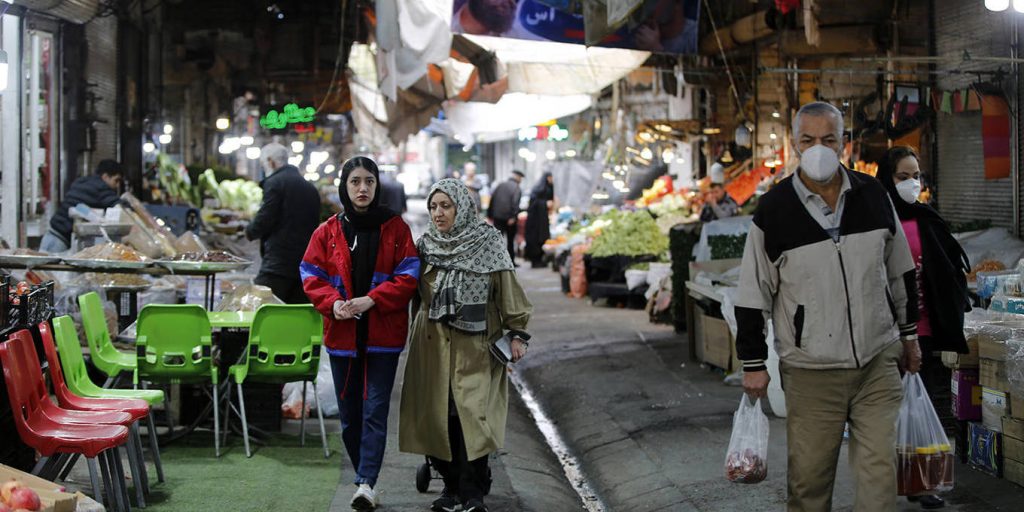
When governments impose economic sanctions, like the “economic D-Day” US President Donald Trump is now imposing on Iran, they portray them as a precision instrument—a scalpel rather than a sword—capable of pressuring ruling elites while sparing ordinary citizens. This narrative has been used to justify some of the most sweeping acts of economic coercion in modern history. The only problem is that the central premise is untrue.
The case against sanctions is not merely strategic—that they rarely achieve their stated foreign-policy objectives—but also moral. Sanctions, particularly financial ones, do not fall equally on a population. They fall hardest on those least able to bear them: low-income, wage-dependent, and publicly employed people. Thus, anyone who claims to care about the ethics of coercive statecraft must confront its distributional realities with the same rigor applied to questions of military tactics.
Cross-country research spanning decades has documented that economic sanctions reduce GDP growth, widen income inequality, increase child mortality, limit access to health care, and expand food insecurity in target states. These are not marginal effects. One study found that US sanctions produced a poverty gap more than 3.8 percentage points larger in targeted countries than in comparable unsanctioned ones. Another documented that UN sanctions reduced life expectancy by 1.2–1.4 years. These are statistics of mass harm, describing damage done to households, not palaces.
Yet the cross-country evidence, while damning, did not always tell us precisely who bears what burden within a sanctioned society. In a new study using detailed microdata from Iranian household income and expenditure surveys and consumer-theoretic welfare metrics, we quantify the monetary welfare losses inflicted on Iranian households by the US-led 2012 SWIFT financial sanctions.
The 2012 sanctions severed all Iranian banks from the global payments system in the most comprehensive financial decoupling ever imposed on a major economy. As a result, poorer Iranian households lost 2.3–2.8 times more, as a share of their pre-sanctions real (inflation-adjusted) expenditures, than higher-income households, and the average household lost 13%–42% of its pre-sanctions purchasing power. Thus, financial sanctions reverse the distributional predictions typically associated with trade or commodity sanctions. They are not merely harmful but regressive.
The regressivity is not incidental. It reflects the mechanics of how financial sanctions function. When a country is cut off from the global payments system, it loses the ability to process international transactions, import intermediate goods, and maintain foreign-exchange reserves. The immediate consequence is inflation, which disproportionately affects imported consumer goods and inputs that ordinary households depend on. Since wealthier households tend to have more diversified assets, foreign-currency holdings, and access to informal financial channels, they can partly insulate themselves as poorer households absorb the price shock in full.
The sectoral impact is similarly unequal. Workers in manufacturing and services, which are deeply integrated into international supply chains and depend on imported inputs, suffer disproportionately. Public-sector employees, whose salaries are denominated in a currency whose real value collapses as sanctions bite, also bear an outsize burden. In the Iranian case, households headed by public-sector workers needed 35%–41% more compensation than their private-sector counterparts to maintain their pre-sanctions standard of living. Those employed in manufacturing and services required 37%–42% more than workers in agriculture and construction.
These are not abstractions. They represent real losses in nutrition, health, education, and dignity for millions of families who have no voice in the geopolitical disputes that triggered their impoverishment.
In the perverse political economy of sanctions, this popular suffering is justified as a means of pressuring the target government. But that rarely happens. Authoritarian regimes have proven remarkably adept at insulating themselves from the economic pain felt by marginalised populations. After the 2012 sanctions, politically connected Iranians maintained real purchasing power while public-sector wage earners—teachers, nurses, civil servants—experienced a collapse in their living standards.
Some will argue that without sanctions, policymakers have no tool short of military force to impel a government to change its behaviour. But this, too, is false. Diplomatic isolation, multilateral condemnations, targeted asset freezes, visa restrictions on ruling elites, and the patient construction of international mechanisms of legal accountability all carry far lower humanitarian costs. The question is not whether states should have foreign-policy tools, but whether any tool that imposes the scale of civilian harm documented in the sanctions literature can be considered legitimate under the same ethical and legal frameworks we apply to armed conflict.
In wartime, the principle of proportionality limits permissible harm to civilians in pursuit of military objectives. Yet no equivalent principle governs economic coercion. Sanctions are routinely imposed, tightened, and maintained for years or decades with little systematic accounting of their human costs. The civilian harm they inflict is treated as regrettable collateral damage rather than a direct moral consequence of the sanctioning state’s choices.
This inconsistency is indefensible. If it is impermissible to bomb a civilian water treatment plant, it should also be impermissible to sever a country from the global banking system when the foreseeable and documented effect is to deprive low-income families of one-third or more of their real income.
This is not an argument for passivity in the face of aggression or human-rights violations. But financial sanctions, as currently practised, rarely achieve their strategic objectives, and they inflict predictable, severe, and regressive harm on civilian populations who bear no responsibility for the policies sanctions are meant to punish. Such harms are not more humane; they are harder to see and easier to ignore.
But policymakers now have the analytical tools to measure these harms precisely. What is still missing is the political will to take such measurements seriously. That requires acknowledging that low-income people in Tehran, Caracas, Pyongyang, and Moscow are human beings whose welfare imposes obligations on those who would use their suffering as an instrument of geopolitical leverage.
Until sanctions regimes are held to the same humanitarian standards as military operations—with the same requirements to demonstrate proportionality, minimise civilian harm, and account for foreseeable consequences—their supposed ethical superiority to war will remain a convenient moral fiction for those who bear none of their costs.
Haidar is Chair of the Department of Economics at Lebanese American University. Karimi is Interim Chair of the Department of Health Management and Systems Sciences at University of Louisville. ©Project Syndicate, 2026