
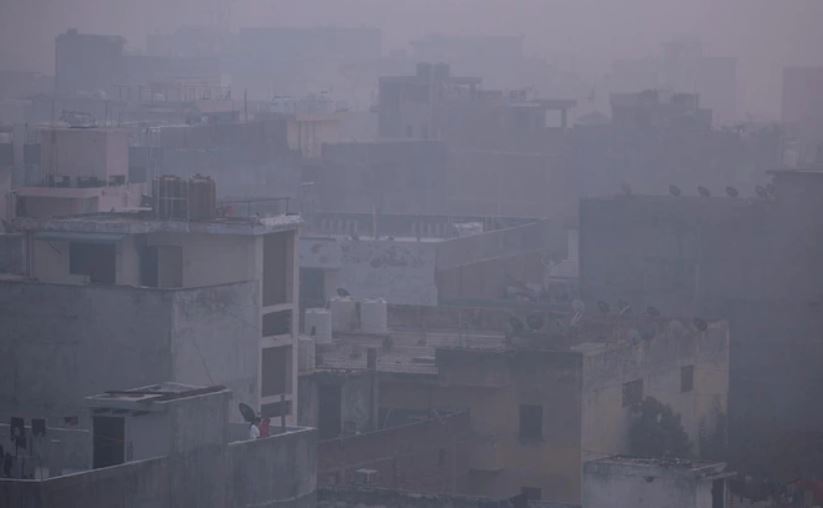
Islamabad: Lahore has been ranked at the top of global pollution charts with an Air Quality Index (AQI) of more than 300, according to the Swiss air quality monitor IQAir, which labelled it as an extremely unhygienic and polluted air prevails in various cities of Pakistan, local media reported Wednesday.
Lahore, with an AQI of 353, was ranked in the first spot among the most polluted cities of the world. Quetta, with an AQI of 517, in the morning remained the most polluted city of Pakistan.
The air quality was measured as unhealthy in Rahim Yar Khan, Gujranwala and Faisalabad, while extremely foggy weather conditions were present in the plains of Khyber Pakhtunkhwa and southern Punjab, causing poor visibility on highways, Pakistan-based ARY News reported.
Several sections of motorways were shut due to poor visibility.
For some days in 2024, Lahore was covered by smog, a mix of fog and pollutants, caused by low-grade diesel fumes, smoke from seasonal agricultural burning, as temperatures dropped with cooling air.
Air pollution levels in Lahore once rose to over 80 times the normal hygienic level approved by the World Health Organisation (WHO).
Earlier in November, a report stated that Pakistan, with a low Human Development Index (HDI) of 0.544 — ranking 168th globally — and a 15th-place ranking in the Climate Risk Index 2026, faces socio-economic and environmental challenges that successive governments have struggled to address effectively.
These vulnerabilities are further exacerbated by increasingly heavy rainfall in catchment areas, accelerating siltation in major dams, reducing water storage capacity, and increasing flood risks.
Rising temperatures cause heat and water stress, especially in arid and semi-arid regions, impacting agricultural productivity.
Simultaneously, air pollution from transport, industry, and agriculture causes smog that affects aviation, reduces visibility, and leads to respiratory illnesses.
Abdul Waheed Bhutto, who has an extensive record of publications on renewable energy, climate change mitigation, and sustainable resource management, and has served on numerous national and international advisory and review committees, wrote in The Diplomat.
In a report in The Diplomat, Abdul Waheed Bhutto wrote, “The country’s limited forest cover continues to decline, while coastal ecosystems face saline water intrusion in the Indus Delta — damaging mangroves, fisheries, and agriculture. Rising sea levels and increased cyclonic activity further endanger coastal populations, while escalating tensions over water sharing, public health crises, and climate-induced migration underscore Pakistan’s profound vulnerability.”
The Indus Basin is facing acute stress due to over-extraction and climate change, with the National Aeronautics and Space Administration (NASA) ranking it as the world’s second-most-overstressed aquifer in 2015, warning that continued groundwater reduction could exacerbate regional water shortage.
Pakistan’s major cities, including Lahore, Karachi, and Islamabad, continue to experience persistent and hazardous smog.
Economic losses caused by extreme weather events further exacerbate the crisis in Pakistan.
Orissa POST – Odisha’s No.1 English Daily