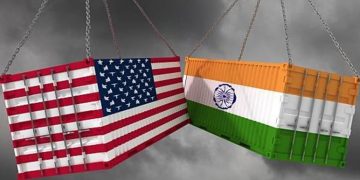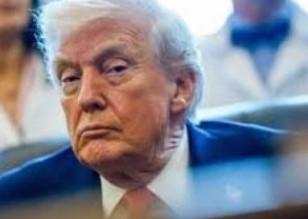
After punishing Indian exporters with a steep 50 per cent tariff on their goods sold in America for more than five months, US President Donald Trump last week announced that Washington and New Delhi have reached a trade deal. The POTUS also declared that his administration has reduced the tariff on Indian goods to 18 per cent after India agreed to stop buying Russian oil and import $500 billion worth of goods from America in five years. At present, India imports about $50 billion worth of goods from the US annually.
In India, the deal is being sold as a strategic win. However, a closer examination of the agreement reveals that the “free trade” deal has come with unfair terms for Indian manufacturers and farmers. For, at the heart of the agreement is the Trump administration’s demand that India lower its tariffs to zero on American industrial and agricultural products to be imported into India. The US simply wants a wider access for products like apples, almonds, dairy items, corn-based products and processed foods in India’s vast consumer market. This is a commercial priority for Washington and is backed by powerful farm lobbies. On the other hand, this is politically explosive for India where agriculture is not just a sector, but the backbone of the economy. Underplaying the importance of agriculture by constantly quoting its low rate of participation in the GDP figure, the Gov’t of India might finally hit its head against the ceiling with massive agricultural imports. This explains why several farmers’ organisations criticised the deal on 7 February, the day when both countries reached the framework for an interim trade pact. Terming the deal as a “total surrender” of Indian agriculture to American multinational corporations, the farmers’ bodies have called for countrywide protests against it.
Also Read

Indian farmers are already struggling with unstable markets, rising input costs, and limited power to negotiate. When cheaper, heavily supported American products flood the market, the competition hits directly at small farmers, not big agri business companies. India has historically used tariffs and government procurement programmes to support the country’s millions of farmers and ensure food security for such a large population. Even small cuts in tariffs could disrupt Indian prices and have a telling impact on millions of rural households.
For the industrial sector, the deal is being seen as benefiting large Indian corporations which stand to improve their technology and reduce expenses. However, a vast majority of Indian companies, especially in the huge employment generating MSME sector, stay afloat because import duties give them some kind of protection. When there are no tariffs, US goods come into India at much lower prices, making it tough for these local businesses to keep up. MSMEs often operate on thin margins. A sudden influx of duty-free imports can force them out of business. If local factories close or reduce production, the first casualty will be on jobs that are already scarce in the country.
India enjoys sizeable trade surplus with the US, meaning India exports more goods to that country than it imports from there. The trade surplus stood at around $40 billion in the financial year 2024-25. This trade deal, which is being celebrated by the ruling party as a great achievement, is most likely to reverse the equation and lead to a trade deficit with America.
Any deal where one country pays 18 per cent tariff, while the other country pays zero per cent is unfair for the former. In short, this single trade deal may well push India back to the 1960s and reduce it to an impoverished nation again.