
ANISHA KHATUN, OP
I n the heart of Bhubaneswar, a temple unlike any other challenges conventional ideas of sacred architecture and worship. Vaital Temple, also known as Bait la Deula or Tini-mundi Deula, stands as a striking fusion of artistry, mysticism and tantric tradition, offering a rare glimpse into a powerful and lesser-explored spiritual world of early medieval India. Built in the 8th century, the temple is dedicated to the fierce goddess Chamunda and represents a striking example of the Khakhara style within the broader tradition of Kalinga architecture. The name Tini-mundi Deula refers to the three spires crowning the structure—a rare feature believed to symbolise the goddess’s three manifestations: Mahasaraswati, Mahalakshmi and Mahakali.
Distinctive architecture and layout
The temple’s most remarkable feature is its sanctuary tower. Unlike the curvilinear spires typical of Kalinga temples, the Vaital Deula has a semi-cylindrical, wagon-vaulted roof—characteristic of the rare Khakhara order, often associated with tantric shrines. The structure follows an oblong plan, with a rectangular Jagamohana (assembly hall) in front. Small subsidiary shrines are embedded at each corner, adding complexity to the layout. This architectural departure highlights both experimentation and the temple’s unique ritual context.
Rich sculptural narratives
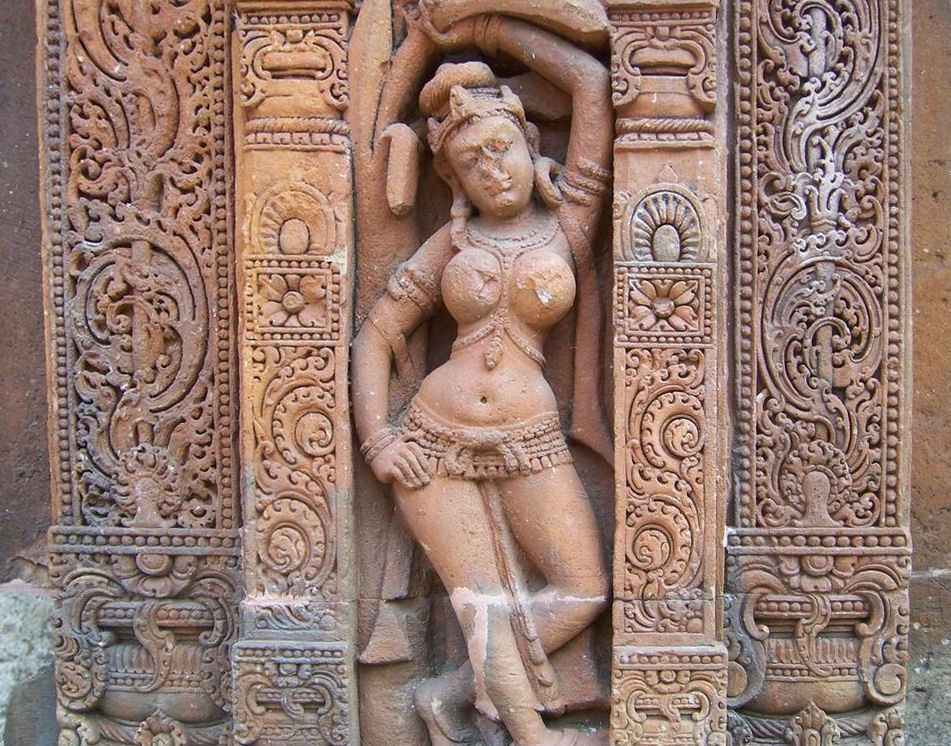
The outer walls are adorned with intricate sculptural panels depicting deities such as Shiva and Parvati, alongside vivid scenes of hunting, elephant capture and occasional erotic imagery—motifs typical of early medieval temple art. Above the Jagamohana, two prominent Chaitya windows dominate the façade. The lower window features Surya with Usha and Pratyusha, the personifications of dawn and early light, while Aruna drives the seven-horsed chariot. The upper window displays a medallion of Nataraja. In front of the hall stands a carved stone post featuring figures resembling Buddha in the Dharma-Chakra-Pravartana mudra, hinting at cross-religious artistic influences.
The fierce deity within
Inside the dim sanctum resides the temple’s most powerful image: an eight-armed Chamunda, locally known as Kapalini. The goddess is depicted seated on a corpse, adorned with a garland of skulls, and accompanied by a jackal and an owl. She holds weapons including a sword, trident, bow and shield, symbolising her destructive energy. Surrounding niches contain intense imagery, including a skeletal form of Bhairava and figures holding skull-cups filled with blood. Severed heads carved as offerings further underscore the shrine’s association with tantric practices.
A legacy of tantric worship
Just outside the Jagamohana stands a stone post believed to have been used for ritual sacrifices, reinforcing the temple’s historical link to tantric traditions. The sanctum remains dimly lit, with only the early morning sun briefly illuminating the deity, enhancing its mystical aura. Umakanta Mishra, Associate Professor of History at Ravenshaw University, says, “The Vaital Temple belongs to the Khakara Order and was the center of Tantric worship and sacrifice. The shrine is dedicated to the deity Chamunda, an eight-armed goddess representing the violent side of the universe. The shrine is an excellent example of Kalinga architecture and attracts visitors from across the world. The two-storeyed semi-cylindrical wagon roof of the temple suggests the influence of Buddhist cave architecture.”
Enduring significance Today
Vaital Deula remains an important Shakti shrine and a compelling monument of early medieval Odisha. Its unusual architecture, powerful iconography and layered cultural influences make it a vivid testament to the artistic brilliance and spiritual diversity of the region.
Orissa POST – Odisha’s No.1 English Daily