
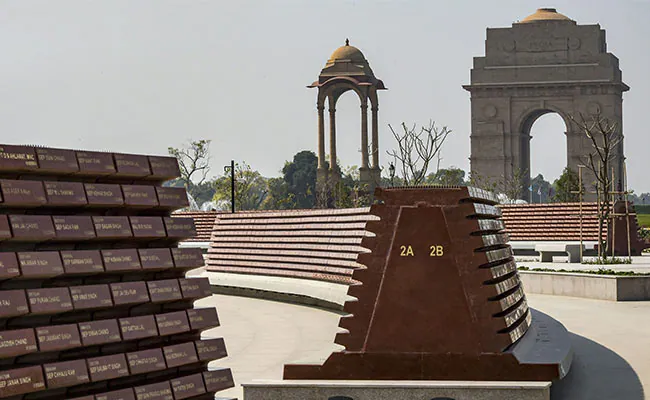
A nation remembers its wars not only through victories but also through the names of those who never returned to their homes. Which is why the ultimate sacrifice made by a soldier demands the ultimate respect of the nation. On 26 June 2026, more than a year and a month after Operation Sindoor – the four-day military confrontation with Pakistan – the government of India revealed the names of six soldiers who were killed at the time in line of duty. Names of the six military personnel, Subedar Major Pawan Kumar, Rifleman Sunil Kumar, Lance Naik Dinesh Kumar, Agniveer Mood Muralinaik, Havildar Sunil Kumar Singh from the Army, and Sergeant Surendra Kumar from the Air Force, came to public knowledge when they were recently inscribed on a wall at the National War Memorial.
Delay in acknowledging military casualties does a great disservice to the families of the fallen soldiers. With their loved ones reduced to unsung statistics, families of the soldiers are often deprived of the honour that they rightfully deserve. The Indian defence apparatus’s tendency to conceal statistics in the name of national security raises an uncomfortable question: Does hiding the truth protect the country, or does it merely shield the government from accountability? Operation Sindoor was launched in May 2025 in retaliation for the Pahalgam terror attack of 22 April 2025, in which 26 civilians lost their lives. Terror infrastructure was targeted in Pakistan and Pakistan-occupied Kashmir, and was followed by four days of military exchanges before both sides reached an understanding to end the hostilities. Admittedly, military operations mostly require a high level of secrecy. It is understood that tactical information, troop movements and operational details cannot be disclosed while the hostilities continue. But once operations conclude, the identities of the personnel killed in action should not remain in administrative limbo.
Historically, the sacrifice of our defenders has always met with public reverence and collective mourning. Today, however, the System increasingly chooses suppression over transparency. The social media is full of accusations that the government is deliberately concealing the details of casualties for a year and has misled even the Parliament. The country has observed the telecast showing the vehemence with which Defence Minister Rajnath Singh claimed in Parliament on 28 July 2025 that not a single Indian soldier was harmed during Operation Sindoor. Hiding facts from the public, it seems, has been ingrained in our system, irrespective of the political party in power.
Concealing facts, publishing lies and manipulating figures is a systemic issue in India for a long. A similar pattern was observed during the capture of Wing Commander Abhinandan Varthaman by Pakistan in 2019. When senior military officials claimed that all Indian aircraft and pilots had returned safely to base after conducting airstrikes in Balakot in February 2019, Pakistani social media showed the downing of a MiG 21 and capture of the pilot. If hiding facts is intended to boost the morale of the people, then getting caught later is even more demoralising. Similarly, during the Bahanaga triple train crash of June 2023, the railway authorities were seen spouting and manipulating the death toll. Those who cared had found out how all the morgues, starting from Balasore down the coastal belt of this state, were filled with crushed bodies for long, waiting for relatives to claim the remains. Many who could not be identified were cremated very unceremoniously.
Democracies earn credibility not by presenting casualty-free narratives during any military action or any event, for that matter, but by revealing the truth to the public so that lessons may be learned from mistakes. This malaise should therefore rise above partisan politics. Neither the ruling establishment nor the Opposition should reduce the sacrifice of soldiers to a political contest. The real focus must remain on ensuring that every fallen soldier receives timely and dignified recognition and the bereaved families get due recognition and compensation immediately, irrespective of the political party in power. The six names now engraved on the National War Memorial could have secured their rightful place in the nation’s his tory, albeit very late. But India owes its soldiers more than eventual remembrance on a flat wall surface. It owes them prompt acknowledgement, complete transparency and an unwavering commitment that no sacrifice in its defence will ever wait for inefficient defence official recognition.
A country that sleeps peacefully because its soldiers stand guard at the borders has the right to know who has fallen to keep it safe. True patriotism cannot be built on the foundation of falsehood.