Odisha News, Odisha Latest news, Odisha Daily - OrissaPOST
  • Home
  • Trending
  • State
  • Metro
  • National
  • International
  • Business
  • Feature
  • Entertainment
  • Sports
  • More..
    • Odisha Special
    • Editorial
    • Opinion
    • Careers
    • Sci-Tech
    • Timeout
    • Horoscope
    • Today’s Pic
  • Video
  • Epaper
  • News in Odia
  • Home
  • Trending
  • State
  • Metro
  • National
  • International
  • Business
  • Feature
  • Entertainment
  • Sports
  • More..
    • Odisha Special
    • Editorial
    • Opinion
    • Careers
    • Sci-Tech
    • Timeout
    • Horoscope
    • Today’s Pic
  • Video
  • Epaper
  • News in Odia
No Result
View All Result
OrissaPOST - Odisha Latest news, English Daily -
No Result
View All Result

3 large Hindi-speaking states have high fertility rates: UNFPA

Post News Network
Updated: November 12th, 2018, 11:30 IST
in International
0
Share on FacebookShare on TwitterShare on WhatsAppShare on Linkedin

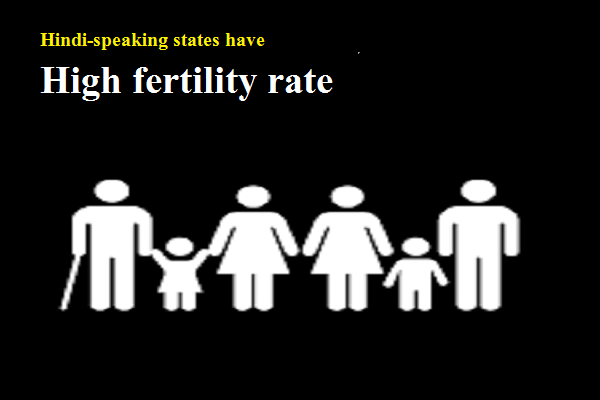
United Nations: There is a stark contrast between the fertility rates of the three largest Hindi-speaking states and six non-Hindi-speaking states even as India was nearing the population replacement level of fertility, a UN report shows.

“Although average total fertility (rate) for the whole country is 2.3 births per woman, it is above 3.0 in the states of Uttar Pradesh, Bihar and Madhya Pradesh, and below replacement level in Maharashtra and West Bengal, and the four southern-most states,” according to “The State of World Population 2018” report issued by the UN Fund for Population Activities (UNFPA).


Also Read

Afghanistan

Afghanistan floods kill 20, over 100 missing in Nuristan

6 hours ago
Iran official holds talks in Pakistan as bid to revive US deal continues

Iran official holds talks in Pakistan as bid to revive US deal continues

7 hours ago

In South Asia, Pakistan has the highest fertility rate of 3.3 children per women, while Bhutan, Maldives, and Sri Lanka with two children per women have dipped below the replacement level and Bangladesh and Nepal are at the mark with 2.1 children per women, the report found.

The replacement-level fertility rate, which is the average number of children a woman has to have to keep population at a constant size, is 2.1 and India is closing in with the overall the number of children per woman at 2.3.

If women in a nation or a region or a group have fewer than 2.1 children each, its population will go down over time, while those whose women have more than that will see their population continue to rise.

There is a marked difference between urban and rural areas and urban India’s fertility rate reached the replacement level in 2007, said the report with the theme of “Power of Choice”.

The UNFPA report did not give the fertility rates for individual states, but among states for which NITI Aayog provided data for 2016, Bihar had the highest in India of 3.3 children per woman, followed by Uttar Pradesh with 3.1.

There is, however, a contradiction in the number for Madhya Pradesh: While the UNFPA report included it among states with fertility rate was “above 3”, NITI Aayog said it was only 2.8 for the state, although it was still above the replacement level.

In addition to the six states mentioned in the UNFPA report, several others, including Himachal Pradesh, Delhi, Punjab and Kashmir, also had low fertility rates according to to NITI Aayog.

Tamil Nadu, West Bengal and Delhi Union Territory had the lowest – 1.6 children per woman, NITI Aayog data shows. (This almost on par with Germany and Italy which have a rate of 1.5 children per woman, and less than France’s 2.0, and the British and the US rate of 1.9, according to UNFPA data.)

Andhra Pradesh, Telengana, Himachal Pradesh, Jammu and Kashmir and Punjab had a fertility rate of 1.7, and for Karnataka, Kerala and Maharashtra, it was 1.8, according to NITI Aayog.

The UNFPA report said that in India “states with fertility below replacement level account for 50 per cent of the country’s population”.

“Many districts in India have fertility below replacement level, while about half have fertility of 3.0 or more births per woman.”

Low fertility is achieved only at higher levels of income and, therefore, India achieving the overall fertility rate of 2.3 is “unusual”, the report noted and ascribed it “gains in human development, reflected in improved health, higher attainment of education and decreases in child mortality”.

The report said that within India “the varied fertility rates do not clearly correlate with income levels and are likely influenced by a multitude of factors. The states of Kerala and Tamil Nadu, for example, experienced major fertility declines, despite limited economic growth. These states have comparatively less gender and economic inequality, and have also experienced rapid social development”.

The report said that unintended pregnancies contribute to higher fertility rates and “if unwanted fertility were eliminated through means such as increasing access to contraception, average fertility rates would drop by more than half a child per woman”.

“In India between 2005 and 2015, unwanted fertility fell sharply, from 0.8 to 0.4 children, reflecting a trend of couples having the means to prevent pregnancy and having their preferred number of children.”

According to a report by the Population Division of the UN Department of Economic and Social Affairs (UNDESA), India’s population growth for 2015 to 2020 is 1.1 per cent, and is expected to go down to .97 per cent in the next five years and 0.27 by 2045.

Its population is forecast by the report to reach 1.383 billion in 2020 and 1.658 billion in the 2050.

IANS

Tags: UNFPA
Share3TweetSendShare
Suggest A Correction

Enter your email to get our daily news in your inbox.


OrissaPOST epaper Sunday POST OrissaPOST epaper

Click Here: Plastic Free Odisha

#MyPaperBagChallenge

Sarmistha Nayak

December 12, 2019
#MyPaperBagChallenge

Sitakanta Mohanty

December 12, 2019
#MyPaperBagChallenge

Sisirkumar Maharana

December 12, 2019
#MyPaperBagChallenge

Priyasha Pradhan

December 12, 2019
#MyPaperBagChallenge

Rajashree Manasa Mohanty

December 12, 2019
#MyPaperBagChallenge

Anup Mahapatra

December 12, 2019
#MyPaperBagChallenge

Vandana Singh

December 12, 2019
#MyPaperBagChallenge

Parbati Mohanty

December 12, 2019
#MyPaperBagChallenge

Faiza Firdous

December 12, 2019
#MyPaperBagChallenge

Spinoj Pattnaik

December 12, 2019
#MyPaperBagChallenge

Pratik Kumar Ghibela

December 12, 2019
#MyPaperBagChallenge

Pratik Kumar

December 12, 2019
#MyPaperBagChallenge

Akshaya Kumar Dash

December 12, 2019
#MyPaperBagChallenge

Narendra Kumar

December 12, 2019
#MyPaperBagChallenge

Tabish Maaz

December 12, 2019
#MyPaperBagChallenge

Anshuman Sahoo

December 12, 2019
#MyPaperBagChallenge

Sibarama Khotei

December 12, 2019
#MyPaperBagChallenge

Pitabas Tripathy

December 12, 2019
#MyPaperBagChallenge

Sarfraz Ahmad

December 12, 2019
#MyPaperBagChallenge

Subhajyoti Mohanty

December 12, 2019
#MyPaperBagChallenge

Diptiranjan Biswal

December 12, 2019
#MyPaperBagChallenge

Debasis Mohanty

December 12, 2019
#MyPaperBagChallenge

Ramakanta Sahoo

December 12, 2019
#MyPaperBagChallenge

Mrutyunjaya Behera

December 12, 2019
#MyPaperBagChallenge

Archit Mohapatra

December 12, 2019
#MyPaperBagChallenge

Priyabrata Mohanty

December 12, 2019
#MyPaperBagChallenge

Anasuya Sahoo

December 12, 2019
#MyPaperBagChallenge

Praptimayee Biswal

December 12, 2019
#MyPaperBagChallenge

Tapaswini Mallick

December 12, 2019
#MyPaperBagChallenge

Pragyan Priyambada

December 12, 2019

Archives

Editorial

ISRO In Limelight

ISRO
July 21, 2026

The resignation of about 120 scientists and engineers from the Indian Space Research Organisation (ISRO), including those associated with top...

Read moreDetails

Executive Accountability

CJP march: Few Parliament gates briefly shut as protesters move close
July 20, 2026

As Parliament prepares to convene for the Monsoon Session on Monday, 20 July, the Modi government stands accused of shrinking...

Read moreDetails

Power Fears Protest

July 19, 2026

By Aakar Patel A few thoughts on the Cockroach Janata Party’s protest come to mind. The hunger strike by activists,...

Read moreDetails

Law Vs Power

Power of Continuity
July 18, 2026

Governments are quick to invoke the rule of law but are less good at living by it. The Department of...

Read moreDetails
  • Home
  • State
  • Metro
  • National
  • International
  • Business
  • Editorial
  • Opinion
  • Sports
  • About Us
  • Advertise
  • Contact Us
  • Jobs
Developed By Ratna Technology

© 2025 All rights Reserved by OrissaPOST

  • News in Odia
  • Orissa POST Epaper
  • Video
  • Home
  • Trending
  • Metro
  • State
  • Odisha Special
  • National
  • International
  • Sports
  • Business
  • Editorial
  • Entertainment
  • Horoscope
  • Careers
  • Feature
  • Today’s Pic
  • Opinion
  • Sci-Tech
  • About Us
  • Contact Us
  • Jobs

© 2025 All rights Reserved by OrissaPOST

    • News in Odia
    • Orissa POST Epaper
    • Video
    • Home
    • Trending
    • Metro
    • State
    • Odisha Special
    • National
    • International
    • Sports
    • Business
    • Editorial
    • Entertainment
    • Horoscope
    • Careers
    • Feature
    • Today’s Pic
    • Opinion
    • Sci-Tech
    • About Us
    • Contact Us
    • Jobs

    © 2025 All rights Reserved by OrissaPOST