Odisha News, Odisha Latest news, Odisha Daily - OrissaPOST
  • Home
  • Trending
  • State
  • Metro
  • National
  • International
  • Business
  • Feature
  • Entertainment
  • Sports
  • More..
    • Odisha Special
    • Editorial
    • Opinion
    • Careers
    • Sci-Tech
    • Timeout
    • Horoscope
    • Today’s Pic
  • Video
  • Epaper
  • News in Odia
  • Home
  • Trending
  • State
  • Metro
  • National
  • International
  • Business
  • Feature
  • Entertainment
  • Sports
  • More..
    • Odisha Special
    • Editorial
    • Opinion
    • Careers
    • Sci-Tech
    • Timeout
    • Horoscope
    • Today’s Pic
  • Video
  • Epaper
  • News in Odia
No Result
View All Result
OrissaPOST - Odisha Latest news, English Daily -
No Result
View All Result

Disadvantage medicine buyer

The amended Drugs Price Control Order puts Indian companies at a disadvantage while foreign companies stand to benefit

Updated: January 15th, 2019, 16:49 IST
in Opinion
0
Representational image

Representational image

Share on FacebookShare on TwitterShare on WhatsAppShare on Linkedin

Guru Prasad Mohanta


You may no longer be able to afford new, patented medicines as the government has amended the Drugs (Price Control) Order — a move that would benefit mighty foreign pharmaceutical companies. The amended order has decontrolled pricing of innovative patented and orphan drugs.

Also Read

Stephen Holmes

Succession Problem

4 hours ago
Melvin Durai

Be careful what we entrust to robots

1 day ago

The Drug Price Control Order was originally introduced in 1963 to keep medicines affordable to the common man. It was revised in 2013 after a series of flip flops and all essential medicines were brought under its ambit. Subsequently some medical devices, notified as drugs, were also brought under price capping, benefiting many. The order also aimed to encourage domestic pharmaceutical companies to innovate and kept patented products developed using indigenous technology out of price capping for five years. But the present decision is contrary to this and benefits foreign pharmaceutical giants as the provision supporting drugs produced by indigenous technology has been scrapped.

Innovation in drug development is extremely expensive. The cost of developing a new drug is an estimated $2.87 billion. Such large investment is beyond the reach of Indian pharmaceutical companies. Domestic companies are extremely strong in generic medicines and the country exports these to more than 200 countries, including developed ones.

India reached such a position owing to the liberal patent policy of 1970s. The Patents Act of 1970 allowed process patents and disallowed product patent, which offered ample opportunities for domestic pharmaceutical companies to produce the same molecule by a different process. This benefited not just pharmaceutical companies but also people of the country. New patented medicines were available at affordable prices in the country, compared with neighbouring countries. The product patent regime introduced in 2005, as part of compliance with International obligation, though, put Indian pharmaceutical companies at a disadvantage.

The health ministry is entrusted with regulations to ensure quality of medicines by licensing import, manufacture and sale of medicines. But it has no control over medicine policy or prices. Prices of medicines are significant in deciding access to medicines as most people in the country pay hospital expenses from their pockets, unlike in developed countries where it is borne entirely by the government or through reimbursement schemes. Patented medicines are priced exorbitantly throughout the globe. The department of pharmaceuticals, under the ministry of chemicals and fertilisers, has the mandate to form a medicine policy and to fix prices of medicines. The policy is always pro-industry but price control is pro-people. A fine balance has to be struck between the two, which is often difficult.

Individual patients have to struggle with high drug prices and treatment will cause great strain not only on individuals but also on health budgets

The present price regulation is an attempt to balance the need of pharma industries to grow and the access people have to medicines. Instead of cost-based mechanism of fixing drug prices, the order allows a market-based pricing mechanism. All patented and orphan drugs are out of the price-control mechanism for five years. This would affect patients who depend on imported patented and orphan drugs. These are prohibitively priced and can cause denial of treatment.

The health ministry has reportedly asked the department of pharmaceuticals to keep tabs on orphan drugs. But the pharmaceuticals department’s new notification has instead taken patented and orphan drugs out of the price-control mechanism for five years. This benefits only pharmaceutical giants and not poor patients.

Individual patients have to struggle with high drug prices and treatment will cause great strain not only on individuals but also on health budgets. The government has two tools to tackle high prices of patented drugs — price capping and granting compulsory licences under the Patents Act.

With the first option out of question now, the government has the option to adopt compulsory licensing.

Patients in India will have a tough time as a result of the amended order. The government has to react appropriately to facilitate the common man access to new treatments. The impact of the current order will be felt only after a while.

The writer is professor, department of pharmacy, Annamalai University. e-Mail: gpmohanta@hotmail.com


Tags: drug policy amendmentGuru Prasad MohantaOpinionORISSA POST
ShareTweetSendShare
Suggest A Correction

Enter your email to get our daily news in your inbox.


OrissaPOST epaper Sunday POST OrissaPOST epaper

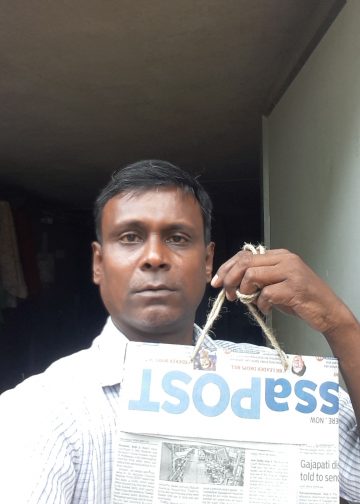
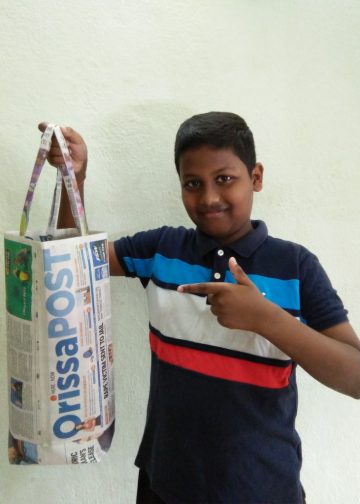
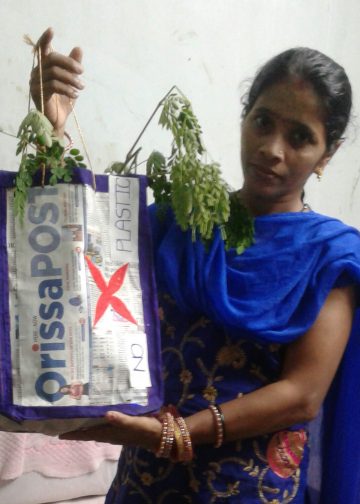
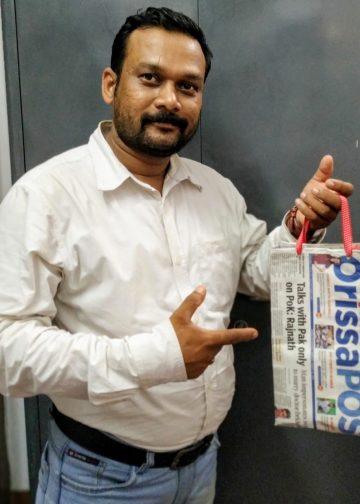
Click Here: Plastic Free Odisha

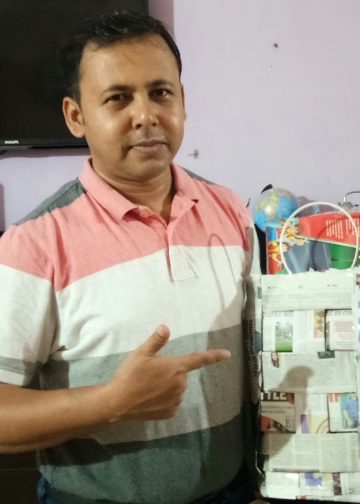
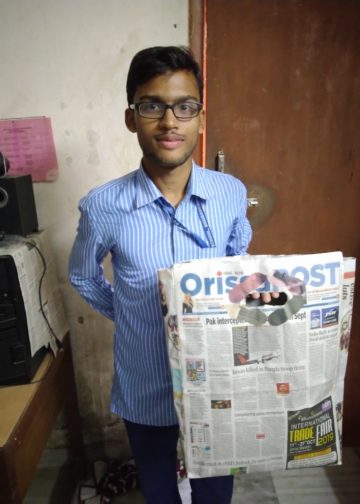
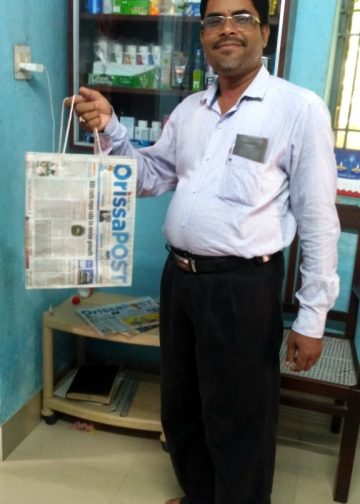
#MyPaperBagChallenge

Aishwarya Ranjan Mohanty

December 12, 2019
#MyPaperBagChallenge

Praptimayee Biswal

December 12, 2019
#MyPaperBagChallenge

Arya Ayushman

December 12, 2019
#MyPaperBagChallenge

Priyabrata Mohanty

December 12, 2019
#MyPaperBagChallenge

Sibarama Khotei

December 12, 2019
#MyPaperBagChallenge

Kamana Singh

December 12, 2019
#MyPaperBagChallenge

Diptiranjan Biswal

December 12, 2019
#MyPaperBagChallenge

Smitarani Sahoo

December 12, 2019
#MyPaperBagChallenge

Subhajyoti Mohanty

December 12, 2019
#MyPaperBagChallenge

Geetanjali Patro

December 12, 2019
#MyPaperBagChallenge

Narendra Kumar

December 12, 2019
#MyPaperBagChallenge

Pitabas Tripathy

December 12, 2019
#MyPaperBagChallenge

Keshab Chandra Rout

December 12, 2019
#MyPaperBagChallenge

Pragyan Priyambada

December 12, 2019
#MyPaperBagChallenge

Akriti Negi

December 12, 2019
#MyPaperBagChallenge

Pratik Kumar Ghibela

December 12, 2019
#MyPaperBagChallenge

Archit Mohapatra

December 12, 2019
#MyPaperBagChallenge

Sarfraz Ahmad

December 12, 2019
#MyPaperBagChallenge

Anasuya Sahoo

December 12, 2019
#MyPaperBagChallenge

Adyasha Priyadarsani Sendha

December 12, 2019
#MyPaperBagChallenge

Debasis Mohanty

December 12, 2019
#MyPaperBagChallenge

Adweeti Bhattacharya

December 12, 2019
#MyPaperBagChallenge

Parbati Mohanty

December 12, 2019
#MyPaperBagChallenge

Bijswajit Pradhan

December 12, 2019
#MyPaperBagChallenge

Lopali Pattnaik

December 12, 2019
#MyPaperBagChallenge

Archana Parida

December 12, 2019
#MyPaperBagChallenge

Vandana Singh

December 12, 2019
#MyPaperBagChallenge

Sarmistha Nayak

December 12, 2019
#MyPaperBagChallenge

Ramakanta Sahoo

December 12, 2019
#MyPaperBagChallenge

Chinmay Kumar Routray

December 12, 2019

Archives

Editorial

Trump Trapped

Donald Trump
April 1, 2026

It is the fifth week running since US President Donald Trump and Israeli Prime Minister Benjamin Netanyahu launched the war...

Read moreDetails

Not Forgetting Myanmar

March 31, 2026

While a big war is being waged in the Middle East, global attention has moved away from another theatre of...

Read moreDetails

Fuel Politics

Fuel Politics
March 30, 2026

Fuel has been a long-time great economic and political tool in the hands of the government in India. It enables...

Read moreDetails

Selective Outrage

Aakar Patel
March 29, 2026

Consider this thought experiment. Imagine that two large missiles struck the White House. The first hit the residential quarters at...

Read moreDetails
  • Home
  • State
  • Metro
  • National
  • International
  • Business
  • Editorial
  • Opinion
  • Sports
  • About Us
  • Advertise
  • Contact Us
  • Jobs
Developed By Ratna Technology

© 2025 All rights Reserved by OrissaPOST

  • News in Odia
  • Orissa POST Epaper
  • Video
  • Home
  • Trending
  • Metro
  • State
  • Odisha Special
  • National
  • International
  • Sports
  • Business
  • Editorial
  • Entertainment
  • Horoscope
  • Careers
  • Feature
  • Today’s Pic
  • Opinion
  • Sci-Tech
  • About Us
  • Contact Us
  • Jobs

© 2025 All rights Reserved by OrissaPOST

    • News in Odia
    • Orissa POST Epaper
    • Video
    • Home
    • Trending
    • Metro
    • State
    • Odisha Special
    • National
    • International
    • Sports
    • Business
    • Editorial
    • Entertainment
    • Horoscope
    • Careers
    • Feature
    • Today’s Pic
    • Opinion
    • Sci-Tech
    • About Us
    • Contact Us
    • Jobs

    © 2025 All rights Reserved by OrissaPOST