Dipti Ranjan Das, OP
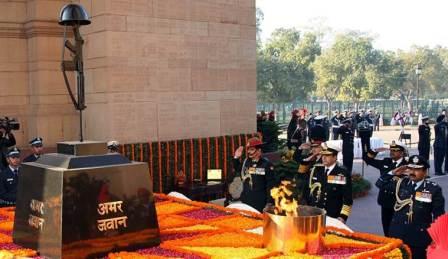
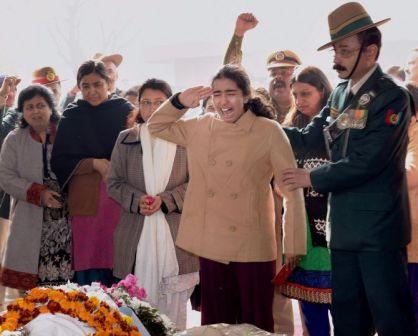
Bhubaneswar: The tyrant dies and his rule is over, the martyr dies and his rule begins. Sacrificing one’s life for the cause of nation is one of the highest honours to be achieved by an individual. Going back in history, the true heroes of our country were hardly recognised the way they deserved to be.
There are several cases where families of the martyrs are ignored and are never supplemented with the promises made to them. The situation still prevails. Some quick examples would be:
Lance Naik Chandrakant Galande of 6 Bihar Regiment was one of the martyrs of Uri surgical strike on September 16, 2016. His family’s struggle continues even after two-and-a-half years. They were asked to vacate their army-provided accommodation and now are left without a roof over their heads.
The family members of Lance Naik Saurabh Farate suffered a similar fate. A gunner of the 131 AD Regiment, Farate died in a terrorist attack on an Army convoy in Pampore, Jammu & Kashmir, on December 17, 2016, along with two others.
The widow of soldier Vikas Kulmithe of 6 Bihar Regiment, who died in the Uri attack, says that the government is yet to fulfill the promises made to them.
Naib Subedar Nasruddin of 24 Rajput Regiment from Hinganpur village was martyred in the Kargil War. Till date, his family is struggling for the government benefits promised to them. Surprisingly, no state or central leader has ever visited Nasruddin’s graveyard to pay tribute. Not even on ‘Saheed Divas’—a day to remember the Kargil War martyrs.
Martyr Sanjeev Rana, who died in Pathankot terror strike in Jan-2016, left his family and native villagers to struggle for the promises made after his death.
It took 86 days for the government to disburse ex-gratia to the family of Mandeep Singh, popularly known as ‘Machhil brave heart’, who sacrificed his life in honor of his country. His body was badly mutilated by the terrorists near the Line of Control (LoC).
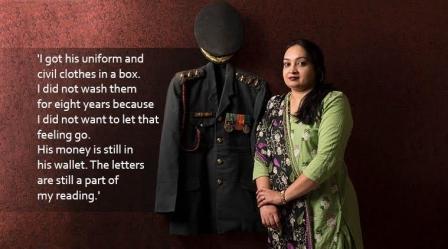
A case from the state can also be discussed here. On September 29, 2008, deputy commandant of CRPF Debakar Mohapatra laid down his life in a Naxalite attack in Bastar District of Chattisgarh while providing security to the then President of India. Mohapatra was a local.
The Chief Minister of Odisha, who shows deep concern and support to every martyr of the state, provided each and every possible support from the state government immediately. ‘Tankapani Road’ — the road connecting Ravi talkies square to Tankapani temple — was declared as ‘Saheed Debakar Marg’ in the martyr’s honor. Unfortunately, some people with vested interests, news agencies and politicians renamed it to ‘Tankapani Road’ deliberately. Worse, the statue of Saheed Debakar is lying unattended in one corner of the local club and is yet to be inaugurated. This proves that paying tribute to martyrs has been reduced to a mere political exercise.
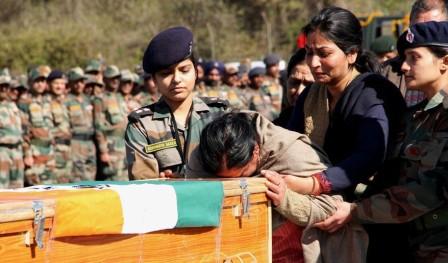
A department of a very famous university in Bhubaneswar started a candle light march in memory of the Pulwama incident. Most participants of the march were drunk. The slogan quickly turned to slangs and people were dancing in the procession. A solemn procession became an event of merriment for the youth.
Political slogans start with blaming the government when incidents like this happen. Government may not be directly responsible for the killing of the soldiers but the attitude of leaders is not commendable either. Can we really expect respect for the martyrs from political leaders?
Some politicians went on to say that for some people, an entire nation cannot be blamed but when the nation is mourning the death of 49 jawans in the Pulwama incident, comments like these feel like salt on an open wound.
Blood donation camps organised in memory of martyrs carry huge banners about politicians and the political parties and less about the martyrs. This defeats the sole purpose of such initiatives. Despicably, it seems like a method to publicise the political party by drawing on people’s sympathy.
All India Traders Union observed a day of no-trade in memory of the incident. It was heartwarming to see some small-time traders from various castes and religion come together and fast for a day. They also conducted a mass-prayer. However, others treated the day as a mere holiday.
There have been arguments in popular tea-joints as to why the Pulwama martyrs are mourned as they did not die in war. Four more jawans died the very next day after 16 hours of gun battle and their sacrifice is more worthy. It is indeed saddening to see that as fellow citizens, we are discriminating among the martyrs.
War leads to loss of lives and is not a source of entertainment. Soldiers put their life on the line of fire; they are not players and the battlefield not a playground. War can never be the solution to any problem. The soldiers come from families and do not hesitate to lay down their lives for the country. They deserve the highest respect from the people of the country.