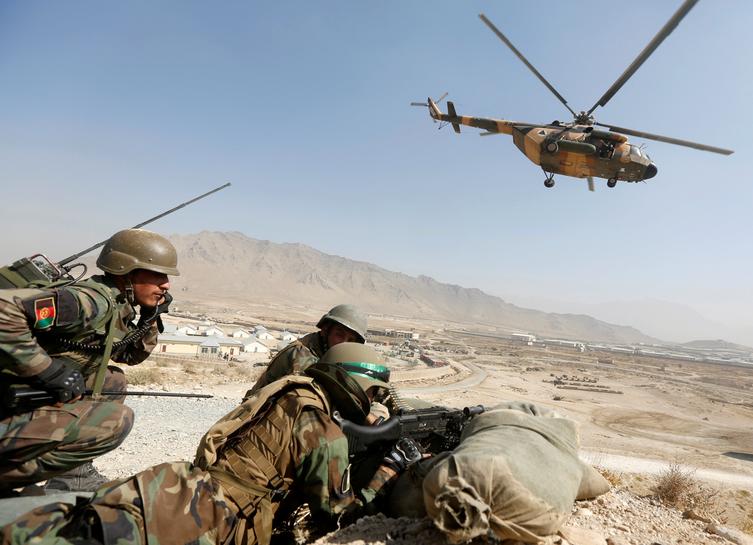


Kabul, April 1: Fighting in Afghanistan has escalated ahead of the usual spring season, as both sides seek to increase leverage in talks on a peace settlement – a gamble that analysts warn could also risk hardening positions.
In March, hundreds of Afghan forces were killed or wounded in heavy clashes in southern, western and northern Afghanistan, according to unofficial reports. Two US special forces were killed near Kunduz, and attacks by both sides caused civilian casualties. US air strikes also accidentally killed Afghan soldiers, in a case of friendly fire.
“Government forces are on the offensive this year. We expect a lot of fighting and obviously casualties,” said a senior Afghan security source.
Seasonal trends to fighting have become less defined over the years, as most Taliban now fight near their homes and so do not need to wait for snow to melt in the mountain passes to travel to battlefields, said Graeme Smith, a consultant for the International Crisis Group (ICG).
Even so, the Taliban annually announces the start of a spring offensive with fanfare and a name evoking epic importance, such as last year’s “Al Khandaq” campaign – named after the Battle of the Trench, fought by the Prophet Mohammad to defend the city of Medina in Islam’s early days.
This year, Afghan forces beat the Taliban to naming their offensive, launching a spring operation dubbed “Khaled”, an Arabic word for “endless”, said the Afghan security source.
“The objective of the operations this year will be to improve intelligence gathering and targeted strikes against the enemy,” he said.
The “fight and talk” strategy has been used to describe the Afghan war as far back as the Obama US presidency. One diplomat said Afghanistan’s escalation follows a similar path of greater fighting in South Sudan and Colombia ahead of peace settlements for those conflicts. But for a country 17 years into its latest war, the escalation only adds to a sense of discouragement.
Rising violence also comes with the risk that positions will harden, deferring a settlement, rather than creating urgency that could bring the sides together, said the ICG’s Smith.
Afghanistan Chief Executive Abdullah Abdullah, asked about the more aggressive strategy, said it simply reflected a need to be ready for every possibility.
Pentagon spokesman Lieutenant-Colonel Kone Faulkner said in an email that there has been “no change” in U.S. policies and in its partnered fighting with Afghan forces.































Diplomatic Faux Pas
United States Secretary of State Marco Rubio’s second visit to India has ruffled quite a few feathers in New Delhi....
Read moreDetails