Odisha News, Odisha Latest news, Odisha Daily - OrissaPOST
  • Home
  • Trending
  • State
  • Metro
  • National
  • International
  • Business
  • Feature
  • Entertainment
  • Sports
  • More..
    • Odisha Special
    • Editorial
    • Opinion
    • Careers
    • Sci-Tech
    • Timeout
    • Horoscope
    • Today’s Pic
  • Video
  • Epaper
  • News in Odia
  • Home
  • Trending
  • State
  • Metro
  • National
  • International
  • Business
  • Feature
  • Entertainment
  • Sports
  • More..
    • Odisha Special
    • Editorial
    • Opinion
    • Careers
    • Sci-Tech
    • Timeout
    • Horoscope
    • Today’s Pic
  • Video
  • Epaper
  • News in Odia
No Result
View All Result
OrissaPOST - Odisha Latest news, English Daily -
No Result
View All Result

Chinese mission may help unlock secrets of Earth, Moon’s evolution

PTI
Updated: May 16th, 2019, 20:04 IST
in International
0
Share on FacebookShare on TwitterShare on WhatsAppShare on Linkedin

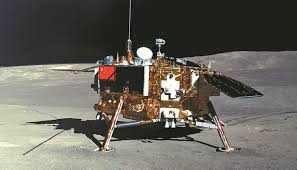
Beijing, May 16: China’s Chang’e-4 mission, the first to perform a soft landing on the far side of the Moon, has shed light on the chemical and mineralogical composition of the lunar mantle, an advance that could unravel the mystery of the evolution of Earth and its natural satellite.

The Chinese spacecraft became the first misson to land on the lunar far side also known as the dark side of the moon in January. The rover Yutu-2 then rolled off the lander to explore its surroundings.


Also Read

Donald Trump

Trump voices frustration with allies as Iran war, strait closure push fuel prices higher

1 day ago
Representational Image

Iran strikes fully loaded oil tanker off Dubai coast as gas reaches USD 4 gallon in US

1 day ago

Using data obtained by the visible and near infrared spectrometer installed on Yutu-2, a research team led by Li Chunlai, with the National Astronomical Observatories of China under the Chinese Academy of Sciences, found that the lunar soil in the landing area of the Chang’e-4 probe contains olivine and pyroxene which came from the lunar mantle deep inside the Moon.

The first important scientific discovery of the Chang’e-4 probe was published online in the latest issue of the academic journal Nature.

The Moon comprises a core, mantle and crust, like the Earth. With the evolution of lunar magma, the light plagioclase rose to the upper layer to form the lunar crust, while the heavier olivine and pyroxene sank to form the lunar mantle, Li said.

“But since the lunar crust is very thick, and there has been no volcanic activity and plate movement on the Moon for billions of years, it’s hard to find materials from the lunar mantle on the surface,” Li told state-run Xinhua news agency.

As a result of the tidal locking effect, the Moon’s revolution cycle is the same as its rotation cycle, and the same side of the Moon always faces the Earth.

The lunar far side, which is turned away from Earth, is more rugged than the familiar near side and has fewer “maria” – dark plains formed by ancient volcanic eruptions.

The rover landed inside a 180 kilometer wide impact bowl called Von Karman crater. But that smaller crater lies within the 2,300 kilometer wide South Pole Aitken (SPA) Basin, which covers nearly a quarter of the Moon’s circumference.

It is not known exactly how old the SPA Basin is, but is thought to be at least 3.9 billion years old. The asteroid that carved it out is thought to have been about 170-kilometer wide, BBC reported.

The rover has now identified rocks with a very different chemical make-up to those found elsewhere on the moon, the report said.

Early results from the rover’s Visible and Near Infrared Spectrometer (VNIS) suggest the rocks contain minerals known as low-calcium (ortho)pyroxene and olivine.

They fit the profile of rocks from the lunar mantle and suggest that the ancient impact that created the SPA drove right through the 50-kilometer deep crust into the mantle.

Observational data taken by the Moon-orbiting spacecraft have been inconclusive as to the presence of mantle rocks on the surface. The authors of the paper want to continue their examination of these rocks and find others.

They have also raised the possibility of sending another mission to deliver some of them to Earth for study in laboratories. The results could now help scientists understand the chemical and mineralogical composition of the mantle, which could shed light on the origins and evolution of the moon itself, it said. The team members also want to find out more about what happened after the asteroid collided with the Moon and formed the SPA Basin.

Scientists predict that the hole in the surface may have been filled by molten rock – forming a “melt sheet” within the impact bowl, which complicates the picture of this region’s geology. Patrick Pinet, from the Research Institute in Astrophysics and Planetology (IRAP) in Toulouse, France, called the results “thrilling” and said they “could have considerable implications for characterising the composition of the Moon’s upper mantle”.

“It is of the utmost importance to make progress towards unpacking the geology of the lunar far side, expanding our fundamental knowledge of the Moon’s formation and the origin of the crustal asymmetry that exists between its near and far sides, and preparing future sample-return missions,” he said. Analysis showed the lunar soil in the landing area contains a large amount of olivine, low-calcium pyroxene and a small amount of high-calcium pyroxene, which are very likely from the lunar mantle, Li said.


 

ShareTweetSendShare
Suggest A Correction

Enter your email to get our daily news in your inbox.


OrissaPOST epaper Sunday POST OrissaPOST epaper

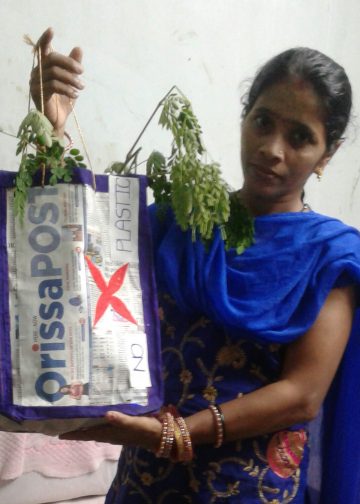
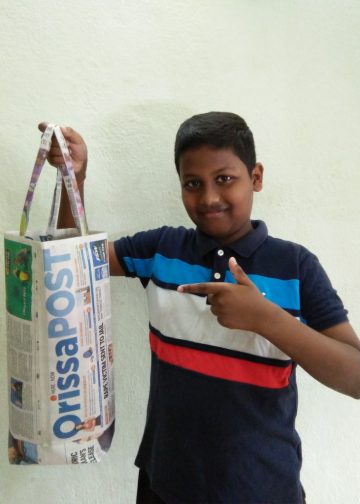
Click Here: Plastic Free Odisha

#MyPaperBagChallenge

Akriti Negi

December 12, 2019
#MyPaperBagChallenge

Aishwarya Ranjan Mohanty

December 12, 2019
#MyPaperBagChallenge

Sibarama Khotei

December 12, 2019
#MyPaperBagChallenge

Archana Parida

December 12, 2019
#MyPaperBagChallenge

Adyasha Priyadarsani Sendha

December 12, 2019
#MyPaperBagChallenge

Narendra Kumar

December 12, 2019
#MyPaperBagChallenge

Tabish Maaz

December 12, 2019
#MyPaperBagChallenge

Amritansh Mishra

December 12, 2019
#MyPaperBagChallenge

Mrutyunjaya Behera

December 12, 2019
#MyPaperBagChallenge

Ramakanta Sahoo

December 12, 2019
#MyPaperBagChallenge

Subhajyoti Mohanty

December 12, 2019
?????????????????????????????????????????????????????????????????????????????????????????????????????????????????????????????????
#MyPaperBagChallenge

Dibya Ranjan Das

December 12, 2019
#MyPaperBagChallenge

Mandakini Dakua

December 12, 2019
#MyPaperBagChallenge

Ramakanta Sahoo

December 12, 2019
#MyPaperBagChallenge

Jyotshna Mayee Pattnaik

December 12, 2019
#MyPaperBagChallenge

Pratik Kumar

December 12, 2019
#MyPaperBagChallenge

Pragyan Priyambada

December 12, 2019
#MyPaperBagChallenge

Priyabrata Mohanty

December 12, 2019
#MyPaperBagChallenge

Debasis Mohanty

December 12, 2019
#MyPaperBagChallenge

Adweeti Bhattacharya

December 12, 2019
#MyPaperBagChallenge

Akshaya Kumar Dash

December 12, 2019
#MyPaperBagChallenge

Swarit Praharaj

December 12, 2019
#MyPaperBagChallenge

Sipra Mishra

December 12, 2019
#MyPaperBagChallenge

Sitakanta Mohanty

December 12, 2019
#MyPaperBagChallenge

Faiza Firdous

December 12, 2019
#MyPaperBagChallenge

Kamana Singh

December 12, 2019
#MyPaperBagChallenge

Lopali Pattnaik

December 12, 2019
#MyPaperBagChallenge

Spinoj Pattnaik

December 12, 2019
#MyPaperBagChallenge

Geetanjali Patro

December 12, 2019
#MyPaperBagChallenge

Sisirkumar Maharana

December 12, 2019

Archives

Editorial

Trump Trapped

Donald Trump
April 1, 2026

It is the fifth week running since US President Donald Trump and Israeli Prime Minister Benjamin Netanyahu launched the war...

Read moreDetails

Not Forgetting Myanmar

March 31, 2026

While a big war is being waged in the Middle East, global attention has moved away from another theatre of...

Read moreDetails

Fuel Politics

Fuel Politics
March 30, 2026

Fuel has been a long-time great economic and political tool in the hands of the government in India. It enables...

Read moreDetails

Selective Outrage

Aakar Patel
March 29, 2026

Consider this thought experiment. Imagine that two large missiles struck the White House. The first hit the residential quarters at...

Read moreDetails
  • Home
  • State
  • Metro
  • National
  • International
  • Business
  • Editorial
  • Opinion
  • Sports
  • About Us
  • Advertise
  • Contact Us
  • Jobs
Developed By Ratna Technology

© 2025 All rights Reserved by OrissaPOST

  • News in Odia
  • Orissa POST Epaper
  • Video
  • Home
  • Trending
  • Metro
  • State
  • Odisha Special
  • National
  • International
  • Sports
  • Business
  • Editorial
  • Entertainment
  • Horoscope
  • Careers
  • Feature
  • Today’s Pic
  • Opinion
  • Sci-Tech
  • About Us
  • Contact Us
  • Jobs

© 2025 All rights Reserved by OrissaPOST

    • News in Odia
    • Orissa POST Epaper
    • Video
    • Home
    • Trending
    • Metro
    • State
    • Odisha Special
    • National
    • International
    • Sports
    • Business
    • Editorial
    • Entertainment
    • Horoscope
    • Careers
    • Feature
    • Today’s Pic
    • Opinion
    • Sci-Tech
    • About Us
    • Contact Us
    • Jobs

    © 2025 All rights Reserved by OrissaPOST