United Nations: About 273 million Indians moved out of multidimensional poverty between 2005-06 and 2015-16, according to a UN report, which noted that India has recorded the largest reduction in the number of people living in this category.
The data, released by the United Nations Development Programme (UNDP) and the Oxford Poverty and Human Development Initiative (OPHI), shows that 65 out of 75 countries studied significantly reduced their multidimensional poverty levels between 2000 and 2019.

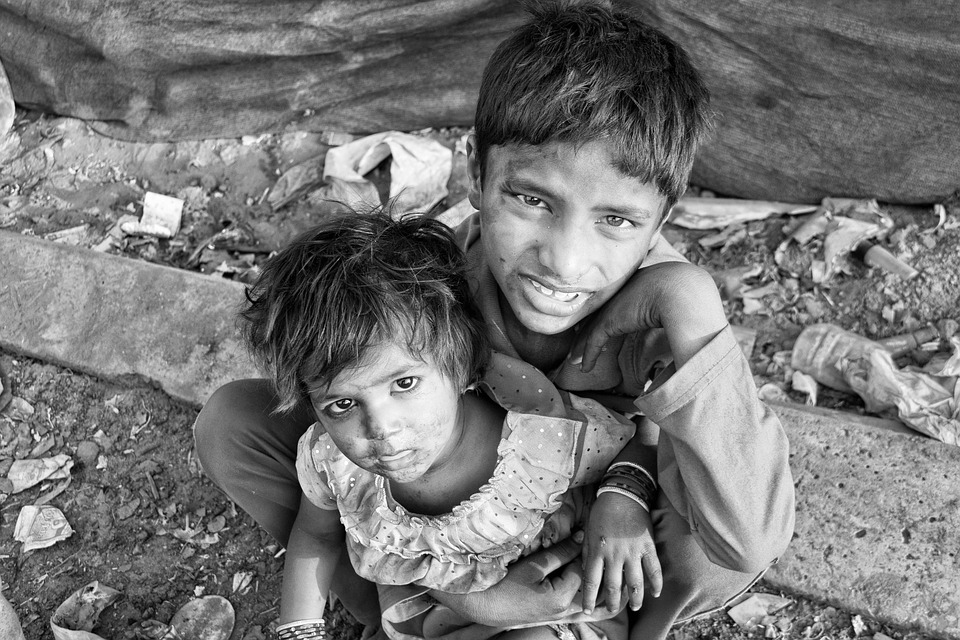
Multidimensional poverty encompasses the various deprivations experienced by poor people in their daily lives – such as poor health, lack of education, inadequate living standards, poor quality of work, the threat of violence, and living in areas that are environmentally hazardous, among others.
Of the 65 countries that reduced their Multidimensional Poverty Index (MPI) value, 50 also reduced the number of people living in poverty.
“The largest reduction was in India, where approximately 273 million people moved out of multidimensional poverty over 10 years,” the report said.
The report said that four countries—Armenia (2010–2015/2016), India (2005/2006–2015/2016), Nicaragua (2001–2011/2012) and North Macedonia (2005/2006–2011) halved their global MPIT value and did so in 5.5–10.5 years.
“These countries show what is possible for countries with very different initial poverty levels. They account for roughly a fifth of the world’s population, mostly because of India’s large population,” the report said.
MPIT is the Multidimensional Poverty Index estimate that is based on harmonized indicator definitions for strict comparability over time.
“Four countries halved their MPI value. India (2005/2006–2015/2016) did so nationally and among children and had the biggest reduction in the number of multidimensionally poor people (273 million),” it said.
The report noted that India saw the most people moving out of multidimensional poverty – some 270 million people between 2005/06 and 2015/16.
In a footnote related to the number of 273 million people moving out of poverty, the report said that the number of people living in multidimensional poverty in India is based on population data from United Nations Department of Economic and Social Affairs (UNDESA) (2019), which imply a larger number of multidimensionally poor people in 2006; previous estimates were based on UNDESA (2017).
The report additionally notes that India and Nicaragua’s time periods cover 10 and 10.5 years respectively, and during that time both countries halved their MPIT values among children.
“So decisive change for children is possible but requires conscious policy efforts,” it said.
Fourteen countries reduced multidimensional poverty in all their subnational regions: Bangladesh, Bolivia, the Kingdom of Eswatini, Gabon, Gambia, Guyana, India, Liberia, Mali, Mozambique, Niger, Nicaragua, Nepal and Rwanda.
The report stressed that while the new figures released show that before the COVID-19 pandemic hit, progress was being made in tackling multidimensional poverty, that progress is at risk.
“COVID-19 is having a profound impact on the development landscape. But this data – from before the pandemic – is a message of hope. Past success stories on how to tackle the many ways people experience poverty in their daily lives, can show how to build back better and improve the lives of millions,” Director of OPHI at the University of Oxford Sabina Alkire said.
While data is not yet available to measure the rise of global multidimensional poverty after the pandemic, simulations for 70 countries in the developing world, based on the anticipated impacts of the virus on just two components of the global MPI – nutrition and school attendance – suggests how much impact the crisis could have unless it is addressed.
In three scenarios of varying deterioration in which 10, 25 and 50 per cent of people who are multidimensionally poor or vulnerable become undernourished, and half of primary school-aged children no longer attend school, poverty levels could be set back 8 to 10 years.
“But even if we look only at the impact on nutrition, if anticipated increases in undernutrition are not prevented or swiftly reversed, the setback could range between 3–6 years,” it said.
“COVID-19 is the latest crisis to hit the globe, and climate change all but guarantees more will follow soon. Each will affect the poor in multiple ways. More than ever, we need to work on tackling poverty – and vulnerability to poverty – in all its forms,” Director of the Human Development Report Office at UNDP Pedro Conçeicão said.
The data shows that across 107 developing countries, 1.3 billion people—22 per cent—live in multidimensional poverty. The data also reveals that the burden of multidimensional poverty disproportionately falls on children.
Half of the 1.3 billion poor (644 million) have not yet turned 18, while 107 million are 60 or older, a particularly important figure during the COVID-19 pandemic.
About 84.3 per cent of multidimensionally poor people live in Sub-Saharan Africa.
The report also said that 10 countries account for 60 per cent of unvaccinated children, and 40 per cent of children unvaccinated for DTP3 live in just four countries: Nigeria, India, Pakistan and Indonesia.
PTI