Odisha News, Odisha Latest news, Odisha Daily - OrissaPOST
  • Home
  • Trending
  • State
  • Metro
  • National
  • International
  • Business
  • Feature
  • Entertainment
  • Sports
  • More..
    • Odisha Special
    • Editorial
    • Opinion
    • Careers
    • Sci-Tech
    • Timeout
    • Horoscope
    • Today’s Pic
  • Video
  • Epaper
  • News in Odia
  • Home
  • Trending
  • State
  • Metro
  • National
  • International
  • Business
  • Feature
  • Entertainment
  • Sports
  • More..
    • Odisha Special
    • Editorial
    • Opinion
    • Careers
    • Sci-Tech
    • Timeout
    • Horoscope
    • Today’s Pic
  • Video
  • Epaper
  • News in Odia
No Result
View All Result
OrissaPOST - Odisha Latest news, English Daily -
No Result
View All Result
EVOS

Scientists map human, primate brains at cellular, genetic levels

PTI
Updated: October 13th, 2023, 18:55 IST
in Sci-Tech
0
Scientists map human, primate brains at cellular, genetic levels

Credit: Dennis Kunkel Microscopy/Science Photo Library

Share on FacebookShare on TwitterShare on WhatsAppShare on Linkedin

New Delhi: Scientists forming an international collaboration have mapped the genetic, cellular, and structural makeup of the human brain and the nonhuman primate brain.

Along with new knowledge about the brain cells, they share new insights about our nervous systems’ cellular makeup across many regions of the brain and what makes the human brain distinctive.


Also Read

Cloudflare

Cloudflare investigates outage that brought down sites including Zoom, LinkedIn

16 hours ago
KV Singh Deo

World Soil Day: Odisha Dy CM Singh Deo bats for adoption of natural farming

17 hours ago

Hundreds of scientists from around the world worked together to complete a range of studies to demonstrate how a suite of scalable techniques can be used to study the detailed organisation of the human brain at unprecedented resolution.

The detailed mapping of the brain allows for a deeper knowledge of its function and dysfunction at the cellular level, helping pave the way for a new generation of precision therapeutics for people with mental disorders and other illnesses of the brain, the researchers said.

Their findings appear in more than 20 papers published across the journals Science, Science Advances and Science Translational Medicine.

In one of the studies, scientists at the Karolinska Institute, Sweden, and the Allen Institute for Brain Science, US, studied the genes switched on in individual brain cells, a technique known as single-cell transcriptomics, revealing that we have more than 3,000 different kinds of brain cells.

Other questions that the studies aimed to answer were – How different are individual people’s brains at the cellular level? How different are our brains from those of our closest ape relatives? What are the properties of the different kinds of brain cells?  How do these cells emerge and mature in development?

Another study explored the anatomy and physiology of neurons in the outermost layer of the neocortex – part of the brain involved in higher-order functions such as cognition, motor commands, and language.

The study revealed differences between the human brain and the mouse brain, suggesting this region may be an evolutionary hotspot, with changes in humans reflecting the higher demands of regulating humans’ more complex brain circuits.

Comparing brain cell types of humans and of our closest ape relatives, chimpanzees and gorillas, some studies reveal that while we share the same basic brain cell type architecture with our close evolutionary cousins, many genes involved in connections between neurons and the formation of circuits in the brain are different between humans and other primates.

“That creates a plausible explanation for how you could increase cognitive capability through evolution, by wiring up circuits of the same kinds of cells or changing the gain in the system in slightly different ways,” said Ed Lein, Senior Investigator at the Allen Institute, who led several of the newly published studies.

The relatively small changes in gene expression in the human lineage led to changes in neuronal wiring and synaptic function that likely allowed for greater brain plasticity in humans, supporting the human brain’s ability to adapt, learn, and change, the scientists found.

Another study provided new insights into brain development and function across the lifespan. The study found a link between the properties of cells in the adult brain and the properties of those cells during development, by exploring how cells vary in different brain regions in marmosets.

The link suggests that developmental programming is embedded in cells when they are formed and maintained into adulthood and that some observable cellular properties in an adult may have their origins very early in life, the researchers said.

In another study, led by the University of California San Diego, US, the researchers analysed more than 1.1 million brain cells across 42 distinct brain regions from three human brains.

They identified 107 different subtypes of brain cells and were able to correlate aspects of their molecular biology to a wide range of neuropsychiatric illnesses, including schizophrenia, bipolar disorder, Alzheimer’s disease and major depression.

The researchers then used this data to create machine learning models to predict how certain sequence variations in the DNA can influence gene regulation and contribute to disease.

“Mapping the brain’s cellular landscape is a critical step toward understanding how this vital organ works in health and disease,” said Joshua A. Gordon, director of the National Institute of Mental Health in the US.

“These new detailed cell atlases of the human brain and the nonhuman primate brain offer a foundation for designing new therapies that can target the specific brain cells and circuits involved in brain disorders,” said Gordon.

All the studies form a part of the BRAIN Initiative Cell Census Network (BICCN) collection and were funded by the US National Institutes of Health’s Brain Research Through Advancing Innovative Neurotechnologies (BRAIN) Initiative.

PTI

Tags: brainhumanRESEARCH
ShareTweetSendShare
Suggest A Correction

Enter your email to get our daily news in your inbox.


OrissaPOST epaper Sunday POST OrissaPOST epaper

Click Here: Plastic Free Odisha

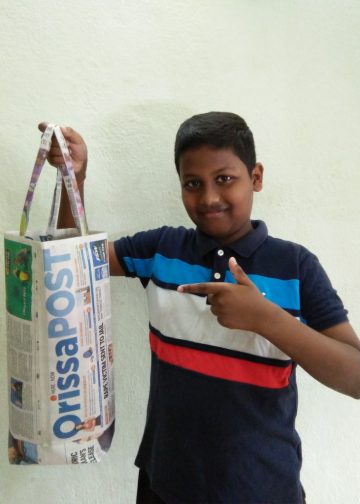
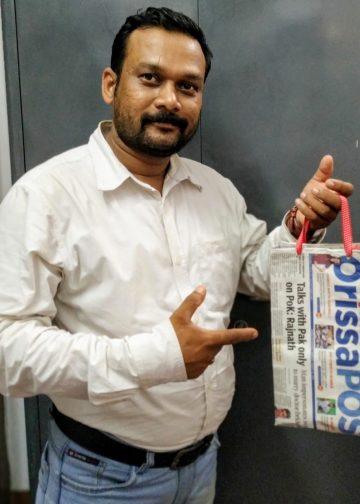
#MyPaperBagChallenge

Pratik Kumar

December 12, 2019
#MyPaperBagChallenge

Keshab Chandra Rout

December 12, 2019
#MyPaperBagChallenge

Adrita Bhattacharya

December 12, 2019
#MyPaperBagChallenge

Aishwarya Ranjan Mohanty

December 12, 2019
#MyPaperBagChallenge

Sisirkumar Maharana

December 12, 2019
#MyPaperBagChallenge

Sarmistha Nayak

December 12, 2019
#MyPaperBagChallenge

Diptiranjan Biswal

December 12, 2019
#MyPaperBagChallenge

Sipra Mishra

December 12, 2019
#MyPaperBagChallenge

D Rama Rao

December 12, 2019
#MyPaperBagChallenge

Anup Mahapatra

December 12, 2019
#MyPaperBagChallenge

Aman Kumar Barisal

December 12, 2019
#MyPaperBagChallenge

Manas Samanta

December 12, 2019
#MyPaperBagChallenge

Arya Ayushman

December 12, 2019
#MyPaperBagChallenge

Priyabrata Mohanty

December 12, 2019
#MyPaperBagChallenge

Sarfraz Ahmad

December 12, 2019
#MyPaperBagChallenge

Amritansh Mishra

December 12, 2019
?????????????????????????????????????????????????????????????????????????????????????????????????????????????????????????????????
#MyPaperBagChallenge

Dibya Ranjan Das

December 12, 2019
#MyPaperBagChallenge

Geetanjali Patro

December 12, 2019
#MyPaperBagChallenge

Ramakanta Sahoo

December 12, 2019
#MyPaperBagChallenge

Saishree Satyarupa

December 12, 2019
#MyPaperBagChallenge

Tapaswini Mallick

December 12, 2019
#MyPaperBagChallenge

Sitakanta Mohanty

December 12, 2019
#MyPaperBagChallenge

Priyasha Pradhan

December 12, 2019
#MyPaperBagChallenge

Subhajyoti Mohanty

December 12, 2019
#MyPaperBagChallenge

Smitarani Sahoo

December 12, 2019
#MyPaperBagChallenge

Vandana Singh

December 12, 2019
#MyPaperBagChallenge

Bijswajit Pradhan

December 12, 2019
#MyPaperBagChallenge

Pragyan Priyambada

December 12, 2019
#MyPaperBagChallenge

Chinmay Kumar Routray

December 12, 2019
#MyPaperBagChallenge

Jyotshna Mayee Pattnaik

December 12, 2019

Archives

Editorial

‘Smooth Transition’

Silent Shift
December 6, 2025

Andhra Pradesh seems to have decided that the safest way to navigate the future is to stop time itself, at...

Read moreDetails

Trump-Maduro Tensions

December 3, 2025

Tensions between the US and Venezuela have reached a seemingly critical level over what the US administration ostensibly calls its...

Read moreDetails

Indo-China Hiccups

India, China
December 2, 2025

Despite the newfound bonhomie between China and India in the wake of US President Donald Trump’s tariff war, China is...

Read moreDetails

Credibility Loss

Sri Lanka's IMF bailout to wait until the New Year: FM Semasinghe
December 1, 2025

In its latest annual review, the International Monetary Fund (IMF) has assigned a ‘C’ grade to India’s national accounts statistics...

Read moreDetails
  • Home
  • State
  • Metro
  • National
  • International
  • Business
  • Editorial
  • Opinion
  • Sports
  • About Us
  • Advertise
  • Contact Us
  • Jobs
Developed By Ratna Technology

© 2025 All rights Reserved by OrissaPOST

  • News in Odia
  • Orissa POST Epaper
  • Video
  • Home
  • Trending
  • Metro
  • State
  • Odisha Special
  • National
  • International
  • Sports
  • Business
  • Editorial
  • Entertainment
  • Horoscope
  • Careers
  • Feature
  • Today’s Pic
  • Opinion
  • Sci-Tech
  • About Us
  • Contact Us
  • Jobs

© 2025 All rights Reserved by OrissaPOST

    • News in Odia
    • Orissa POST Epaper
    • Video
    • Home
    • Trending
    • Metro
    • State
    • Odisha Special
    • National
    • International
    • Sports
    • Business
    • Editorial
    • Entertainment
    • Horoscope
    • Careers
    • Feature
    • Today’s Pic
    • Opinion
    • Sci-Tech
    • About Us
    • Contact Us
    • Jobs

    © 2025 All rights Reserved by OrissaPOST