Charudutta Panigrahi
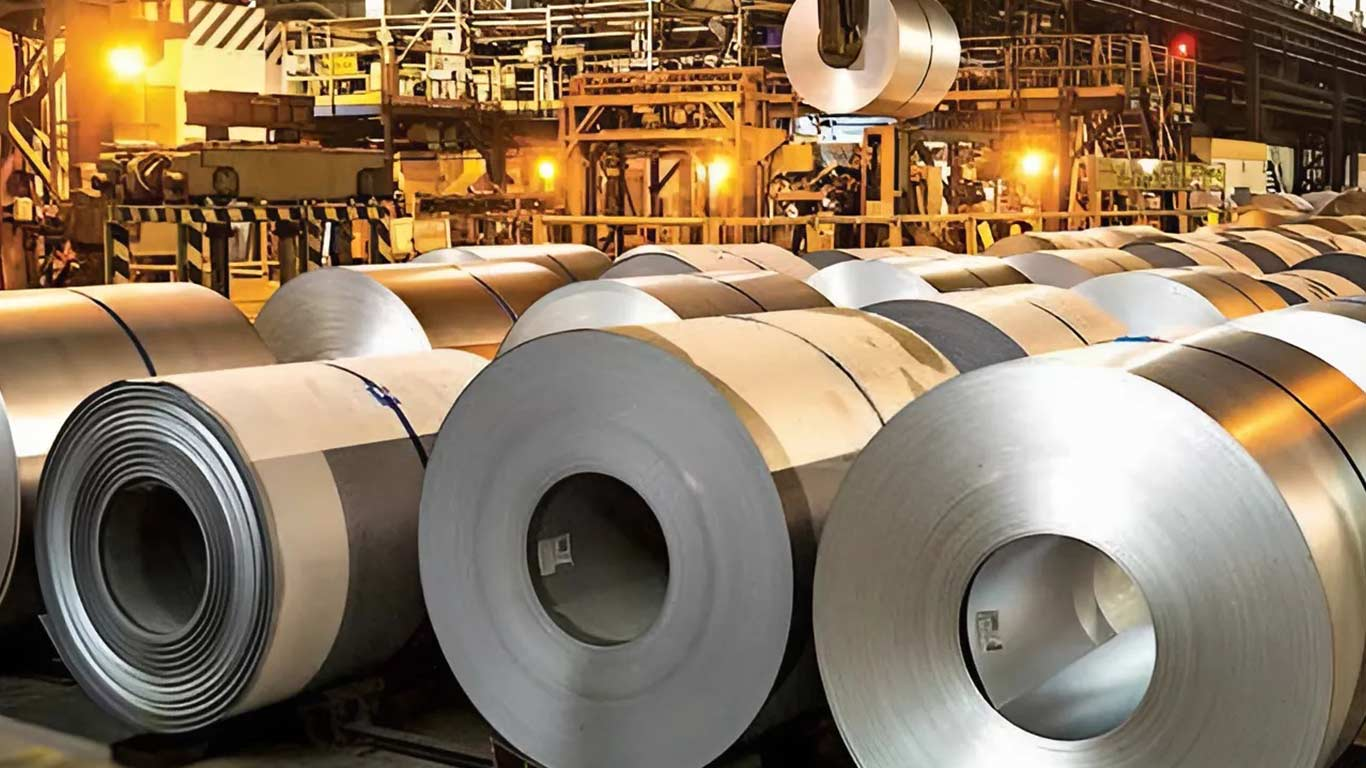
India’s steel industry is poised for exponential growth, targeting 300 million tonnes of production by 2030. Yet this ambition collides with a stark reality: coal-heavy technologies drive emissions of 2.6 tons of CO per ton of crude steel, far above the global average of 1.92. With steel accounting for 12% of India’s total greenhouse gas emissions, decarbonisation is no longer a choice—it is a strategic necessity. The sector is at the crossroads, and India’s decarbonisation imperative is unfolding in the middle of an unimaginably shifting global trade order.


Prime Minister Modi has repeatedly expressed confidence that steel will remain the “skeleton of modern economies,” powering skyscrapers, highways, shipping, and industrial corridors. His optimism underscores the sector’s centrality to India’s growth story. For this confidence to trans late into global competitiveness, India must urgently accelerate its clean energy transition.
India’s per capita steel consumption, currently 98kg, is projected to rise to 160kg by 2030. This expansion underpins industrial maturity, urbanisation, and economic progress. Steel contributes nearly 3% to GDP and sustains a million livelihoods. Yet growth without sustainability risks exclusion from the very markets India seeks to penetrate. In today’s trade regime, carbon is currency—and India must learn to spend wisely. Recent trade developments underscore the urgency of India’s steel transition: EU-India FTA: The landmark agreement opens unprecedented market access, covering 99% of exports by trade value. But Europe’s Carbon Border Adjustment Mechanism (CBAM) will penalise high-emission steel. Indian producers must align with EU benchmarks or face tariffs that erode competitiveness. The FTA is both an opportunity and a warning: access is conditional on decarbonisation.
US tariff negotiations: The reduction of tariffs on Indian steel exports from 25% to 18% offers short-term relief. Yet US protectionism remains strong, and future access will hinge on India’s ability to demonstrate credible low-carbon steel pathways. Without this, India risks being locked out of premium markets, even as competitors like Europe and China accelerate hydrogen-based steelmaking. These shifts mean India’s steelmakers are no longer competing only on volume—they are competing on carbon intensity.
India’s scrap recycling ecosystem remains underdeveloped, despite its critical role in decarbonisation. The ferrous scrap recycling market, valued at $14.3 million in 2024, is projected to reach $19.4 million by 2033, growing at just 3.5% annually—far be low what is needed to support India’s steel expansion. The sector faces structural challenges. The 18% GST on scrap transactions has disrupted local collection, particularly in northern India, where volumes are highest. Infrastructure gaps mean scrap is often manually segregated, lowering quality and efficiency. Limited domestic supply forces reliance on imports, exposing producers to global price volatility.
Globally, 85% of scrap steel is already recycled, leaving little room for growth. India cannot rely solely on scrap to meet its decarbonisation targets. Instead, it must combine recycling with hydrogen-based steel making and renewable-powered electric arc furnaces (EAFs).
Certain states, such as Punjab & Haryana (industrial dismantling hubs), UP (large scrap markets in Kanpur & Ghaziabad), Maharashtra (construction & automotive scrap from Mumbai & Pune), and Tamil Nadu (industrial flows from Chennai) are emerging as leaders. Yet the sector remains largely informal. Reforming GST, investing in advanced processing, and formalising scrap markets are essential if India is to bridge the gap between growth and sustainability. Scrap recycling is essential, but it is not a silver bullet. India must pursue a dual strategy—maximising scrap use while simultaneously investing in hydrogen-based steelmaking and renewable-powered EAFs. Only then can the country bridge the gap between growth and sustainability. Hydrogen-based steelmaking could cut emissions by 97%, while renewable-powered EAFs could reduce them by 88%. Yet progress has been slow. Only a handful of large-scale green hydrogen projects have been sanctioned so far, despite the enormous scope for industrial application. High costs, limited electrolyser manufacturing capacity, and infrastructure gaps—such as inadequate pipelines and storage facilities— continue to stall momentum. Europe and China are already building hydrogen hubs, leaving India at risk of falling behind. India’s renewable energy ambitions—500GW by 2030— are critical to powering green steel. Yet challenges in land acquisition, transmission, and execution of power purchase agreements slow progress. Unless renewable deployment accelerates, India’s steel industry will remain shackled to coal.
India’s Green Steel Taxonomy, launched last year, is a commendable start but lacks the rigour of EU frameworks. Scope 3 emissions—upstream mining and downstream use—remain excluded, underestimating true carbon footprints. Investors and regulators increasingly demand full transparency. Without mandatory targets, shorter review cycles, and financial incentives akin to EU subsidies, India risks falling behind.
The EU updates benchmarks annually, while India reviews thresholds every three years. This slower pace risks locking India into outdated standards. Moreover, voluntary adoption dilutes impact. Mandatory compliance, coupled with carbon pricing and subsidies, is essential to accelerate transformation.
To secure its place in the global low-carbon steel economy, India must: i) mandate Scope 3 emissions reporting to align with EU and US standards; ii) introduce carbon pricing and subsidies for hydrogen-based steelmaking and carbon capture technologies; iii) accelerate renewable energy deployment to meet the 500GW target by 2030; iv) negotiate trade terms that reward decarbonisation, not penalize it; and v) structure the scrap market with tax reforms and advanced recycling infrastructure.
These measures are not optional—they are survival strategies in a trade regime where carbon intensity defines competitiveness. India’s steel story is no longer just about growth—it is about survival in a trade regime where carbon is currency.
The crossroads are clear – India can either cling to coal and risk exclusion, or embrace hydrogen, renewables, and global standards to lead the future of steel. The gamble is immense, but so is the opportunity. In a world where trade wars are fought on carbon intensity, India’s steel industry must transform not just to grow—but to survive.
The writer is a technocrat and a policy specialist.