Odisha News, Odisha Latest news, Odisha Daily - OrissaPOST
  • Home
  • Trending
  • State
  • Metro
  • National
  • International
  • Business
  • Feature
  • Entertainment
  • Sports
  • More..
    • Odisha Special
    • Editorial
    • Opinion
    • Careers
    • Sci-Tech
    • Timeout
    • Horoscope
    • Today’s Pic
  • Video
  • Epaper
  • News in Odia
  • Home
  • Trending
  • State
  • Metro
  • National
  • International
  • Business
  • Feature
  • Entertainment
  • Sports
  • More..
    • Odisha Special
    • Editorial
    • Opinion
    • Careers
    • Sci-Tech
    • Timeout
    • Horoscope
    • Today’s Pic
  • Video
  • Epaper
  • News in Odia
No Result
View All Result
OrissaPOST - Odisha Latest news, English Daily -
No Result
View All Result

Patriarchy persists in India’s electoral politics

Updated: April 25th, 2026, 08:35 IST
in Opinion
0
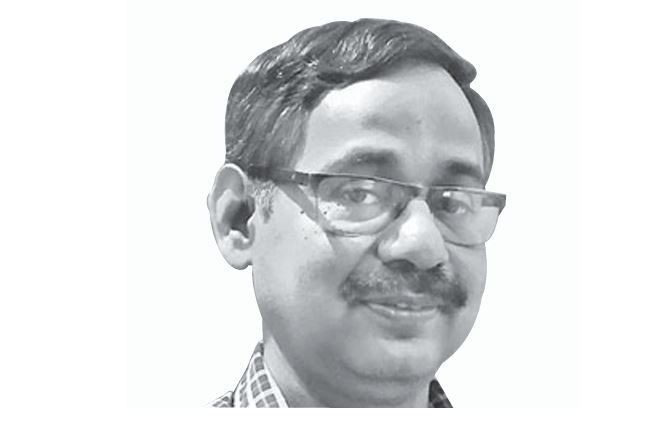
Santosh Kumar Mohapatra

Santosh Kumar Mohapatra

Share on FacebookShare on TwitterShare on WhatsAppShare on Linkedin

By Santosh Kumar Mohapatra

India stands today at a defining crossroads in its democratic journey. While the promise of gender equality and women’s empowerment is loudly proclaimed, its actual realization continues to be quietly deferred. The renewed debate on women’s reservation, despite being presented as a progressive milestone, reveals a deeper and more uncomfortable truth—what appears as reform is often a carefully structured postponement. Once again, women are denied their rightful share in political representation.

Also Read

Shivaji Sarkar

Sachet to pink slips – the squeeze

1 day ago

THE WORLD MUST ELECTRIFY

1 day ago

At the heart of this delay lies an entrenched and persistent force: male chauvinism. This ideology, which assumes men to be inherently superior, more capable, and more deserving of leadership, continues to shape political decisions. It manifests not only through overt discrimination but also through subtle institutional mechanisms that delay or dilute reforms meant to empower women.

The demand for women’s reservation in legislatures has a long history in India. Yet, despite repeated assurances from political parties across the spectrum, it has not been implemented. Both the ruling establishment and opposition parties claim commitment to the cause, but their actions often suggest otherwise. Instead of building consensus, the issue is frequently used as a tool for political positioning.

Critics argue that before introducing recent Bills—the Constitution (131st Amendment) Bill, 2026; the Union Territories Laws (Amendment) Bill, 2026; and the Delimitation Bill, 2026—the government should have held wider consultations with opposition parties and implemented reservation within the existing Lok Sabha and Assembly seats.

These Bills sought to expedite women’s reservation by linking it to delimitation based on the 2011 Census instead of waiting for the post-2026 census. They also aimed to increase the number of Lok Sabha seats from 543 to 850, with implementation targeted for the 2029 general elections. However, the Bills failed to pass April 17, 2026, as it did not secure the required two-thirds majority. Following its defeat, the Delimitation Bill was withdrawn.

In practical terms, increasing the number of seats may not even be necessary. Advances in communication, transportation, and administrative efficiency have reduced the need for larger legislative bodies. Expanding seats would also impose a significant financial burden on the public exchequer. Earlier, even schemes like MPLADS did not exist.

A critical question, therefore, arises: why did political parties not implement women’s reservation in the 2024 elections after passing the 2023 Act? The answer likely lies in the reluctance of sitting male MPs to vacate their constituencies—even for women from their own families. This resistance explains why repeated attempts since 1996 have failed to produce results.

If political parties were genuinely committed, they could have voluntarily allocated one-third of their tickets to women. However, the data tell a different story. According to the Association for Democratic Reforms (ADR) and National Election Watch (NEW), out of 51,708 candidates in the 2024 Lok Sabha and State/UT Assembly elections, only 5,095—about 10 percent—were women.

Globally, India’s position remains weak. Among BRICS nations, India has the lowest share of women in Parliament at approximately 13.79 percent in 2025—well below the global average of 27.25 percent. Countries such as South Africa (46 percent), the United Kingdom (35 percent), and the United States (29 percent) perform significantly better. India ranks 149th out of 193 countries in women’s parliamentary representation and 131st out of 148 in the Global Gender Gap Report.

Data from the Inter-Parliamentary Union show that in 2023, 52 countries held parliamentary elections, with women accounting for an average of 27.6 percent of elected representatives. Globally, women now constitute about 26.9 percent of all MPs. India, which was ranked 143rd earlier, is likely to slip further due to declining representation.

The conclusion is clear and urgent. It is time to implement 33 percent reservation for women not only in the Lok Sabha and State Legislative Assemblies but also in the Rajya Sabha and Legislative Councils. Additionally, there should be restrictions on multiple MPs or MLAs from the same family to ensure broader and more equitable representation.

Until such reforms are enacted with sincerity and urgency, the promise of gender equality will remain unfulfilled. The continued delay only reinforces one reality—male chauvinism, rather than constitutional limitations, remains the biggest obstacle to women’s political empowerment in India.

The author is an Odisha-based economist and columnist.

Tags: Opinion
ShareTweetSendShare
Suggest A Correction

Enter your email to get our daily news in your inbox.


OrissaPOST epaper Sunday POST OrissaPOST epaper

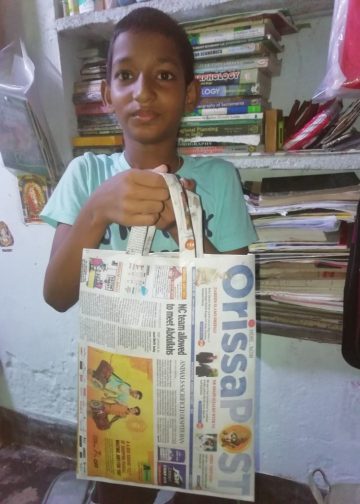
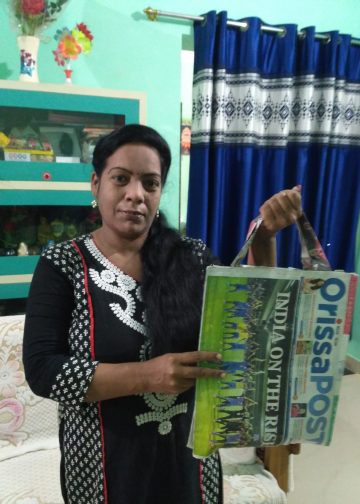
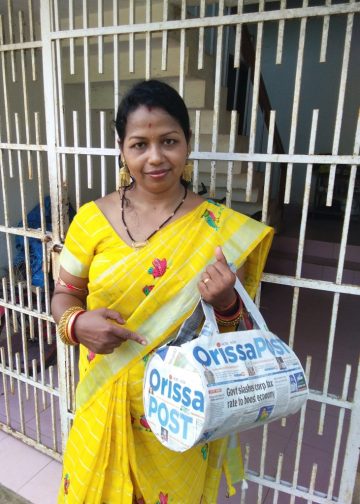
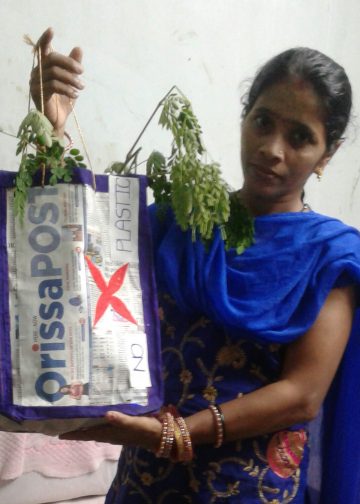
Click Here: Plastic Free Odisha

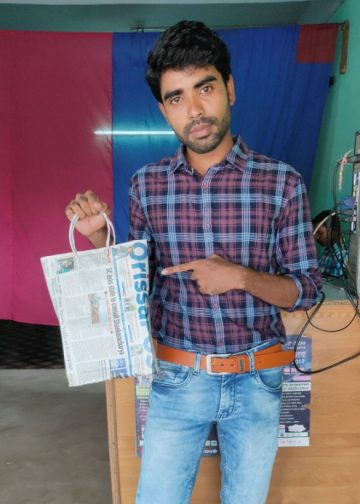
#MyPaperBagChallenge

Swarit Praharaj

December 12, 2019
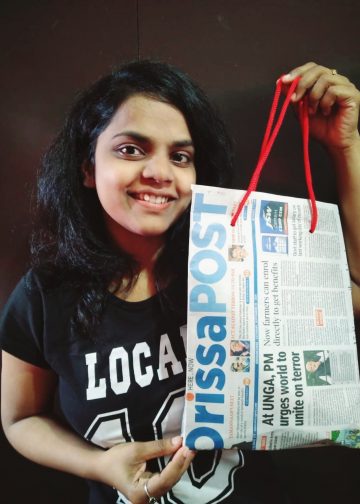
#MyPaperBagChallenge

Saishree Satyarupa

December 12, 2019
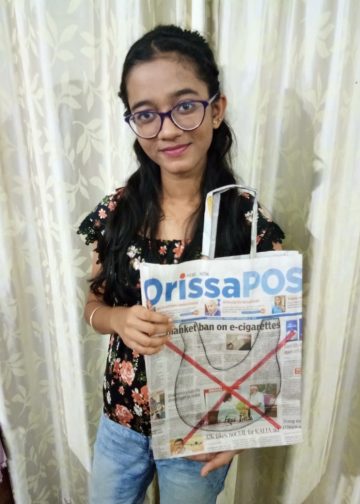
#MyPaperBagChallenge

Anasuya Sahoo

December 12, 2019
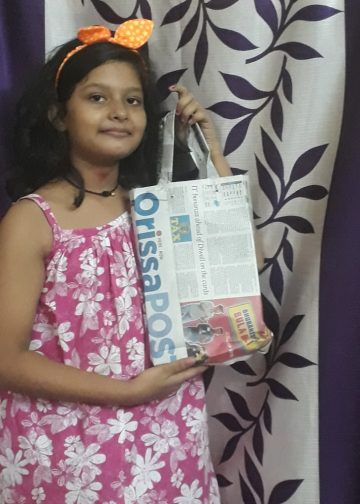
#MyPaperBagChallenge

Ankita Balabantray

December 12, 2019
#MyPaperBagChallenge

Pratyasharani Ghibela

December 12, 2019
#MyPaperBagChallenge

Narendra Kumar

December 12, 2019
#MyPaperBagChallenge

Parbati Mohanty

December 12, 2019
#MyPaperBagChallenge

Sitakanta Mohanty

December 12, 2019
#MyPaperBagChallenge

Matrumangal Jena

December 12, 2019
#MyPaperBagChallenge

Tabish Maaz

December 12, 2019
#MyPaperBagChallenge

Jhili Jena

December 12, 2019
#MyPaperBagChallenge

Adrita Bhattacharya

December 12, 2019
#MyPaperBagChallenge

Pitabas Tripathy

December 12, 2019
#MyPaperBagChallenge

Sisirkumar Maharana

December 12, 2019
#MyPaperBagChallenge

Debasis Mohanty

December 12, 2019
#MyPaperBagChallenge

Aishwarya Ranjan Mohanty

December 12, 2019
#MyPaperBagChallenge

Praptimayee Biswal

December 12, 2019
#MyPaperBagChallenge

Surya Sidhant Rath

December 12, 2019
#MyPaperBagChallenge

Anup Mahapatra

December 12, 2019
#MyPaperBagChallenge

Archana Parida

December 12, 2019
#MyPaperBagChallenge

Tapaswini Mallick

December 12, 2019
#MyPaperBagChallenge

Pratik Kumar

December 12, 2019
#MyPaperBagChallenge

Ramakanta Sahoo

December 12, 2019
#MyPaperBagChallenge

Jyotshna Mayee Pattnaik

December 12, 2019
#MyPaperBagChallenge

Arya Ayushman

December 12, 2019
#MyPaperBagChallenge

Ipsita

December 12, 2019
#MyPaperBagChallenge

Priyabrata Mohanty

December 12, 2019
#MyPaperBagChallenge

Subhajyoti Mohanty

December 12, 2019
#MyPaperBagChallenge

Vandana Singh

December 12, 2019
#MyPaperBagChallenge

Subhajyoti Mohanty

December 12, 2019

Archives

Editorial

EU-Taliban Trap

European Union
June 30, 2026

The European Union has lent itself to criticism for a controversial meeting of its officials with Taliban representatives in Brussels...

Read moreDetails

Writings On A Wall

National War Memorial
June 29, 2026

A nation remembers its wars not only through victories but also through the names of those who never returned to...

Read moreDetails

Rules Over Rights

Rights & Restrictions: AAKAR PATEL
June 28, 2026

By Aakar Patel What cannot be passed in Parliament as law can be incarnated as a change in the rules....

Read moreDetails

Justice on Hold

DILIP CHERIAN
June 27, 2026

By Dilip Cherian The Uttarakhand government’s decision to clear whistleblower forest officer Sanjiv Chaturvedi for a possible deputation to the...

Read moreDetails
  • Home
  • State
  • Metro
  • National
  • International
  • Business
  • Editorial
  • Opinion
  • Sports
  • About Us
  • Advertise
  • Contact Us
  • Jobs
Developed By Ratna Technology

© 2025 All rights Reserved by OrissaPOST

  • News in Odia
  • Orissa POST Epaper
  • Video
  • Home
  • Trending
  • Metro
  • State
  • Odisha Special
  • National
  • International
  • Sports
  • Business
  • Editorial
  • Entertainment
  • Horoscope
  • Careers
  • Feature
  • Today’s Pic
  • Opinion
  • Sci-Tech
  • About Us
  • Contact Us
  • Jobs

© 2025 All rights Reserved by OrissaPOST

    • News in Odia
    • Orissa POST Epaper
    • Video
    • Home
    • Trending
    • Metro
    • State
    • Odisha Special
    • National
    • International
    • Sports
    • Business
    • Editorial
    • Entertainment
    • Horoscope
    • Careers
    • Feature
    • Today’s Pic
    • Opinion
    • Sci-Tech
    • About Us
    • Contact Us
    • Jobs

    © 2025 All rights Reserved by OrissaPOST