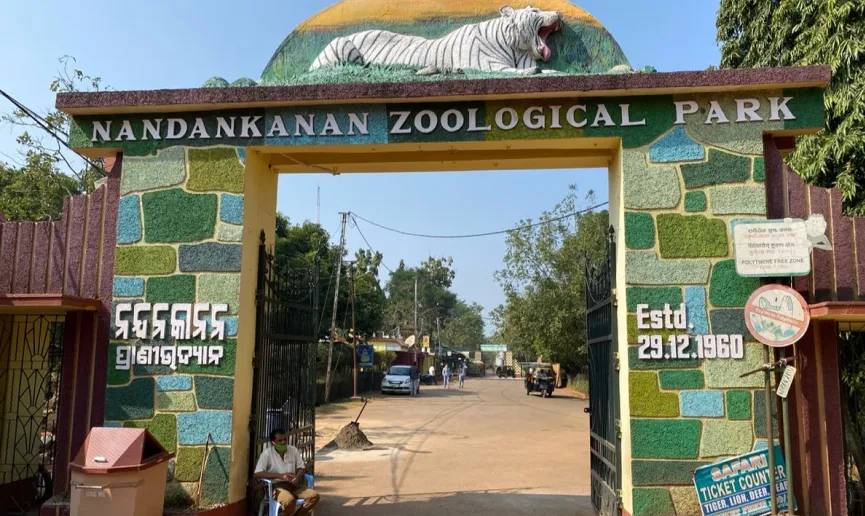
Bhubaneswar: As temperatures continue to soar during the summer season, Nandankanan Zoological Park (NZP) has intensified its summer management measures to safeguard both animals and visitors from the ongoing heatwave conditions.
The zoological park, which welcomes more than 3.9 million visitors annually, houses over 4,000 animals representing 179 species.


To combat extreme weather conditions, the zoo authorities have implemented a comprehensive seasonal disaster management system supported by a detailed Standard Operating Procedure (SOP) for animal care during summer.
Dedicated teams of biologists are closely monitoring animal behaviour and stress levels while designing enrichment programmes to keep the animals comfortable and active.
Veterinarians are simultaneously overseeing regular health checks, nutritional management and emergency medical preparedness.
Rather than relying solely on artificial cooling, the zoo has adopted an adaptive comfort system that enables animals to regulate their own body temperatures naturally.
Enclosures now feature shaded shelters, pools, mud wallows, misting systems, indoor resting areas and hideouts.
Animals are also being provided with ice blocks, frozen food items and moisture-rich fruits to reduce heat stress and maintain natural activity levels.
Big cats, including lions, tigers and leopards, have been given shaded pools with continuously flowing water during peak heat hours.
Feeding areas are covered with straw roofing, while resting cell doors remain open to allow access to cooler indoor spaces.
Frozen meat enrichment and ice blocks are also being provided regularly.
Smaller wild cats such as fishing cats, jungle cats and leopard cats are being kept comfortable through bamboo-shaded enclosures, stand fans and specially designed hide boxes.
For deer species, the zoo has installed sprinkler systems and shaded structures to simulate cooler, rain-like conditions.
Mud and water pools for species like sambar and swamp deer are cleaned and replenished frequently.
Elephants, known to be highly sensitive to heat, are receiving daily baths, overhead sprinklers resembling natural rainfall and hydrating fruits as part of their summer care.
Giraffes and other large herbivores are being supplied with additional green fodder and uninterrupted access to clean drinking water.
Bears are being protected from the heat with shaded shelters, mist baths, cooled drinking water and freshwater moats. Their summer diet includes watermelon, papaya and sugarcane juice frozen into ice blocks.
During extreme daytime temperatures, the bears are shifted indoors for added comfort.
Small mammals such as pangolins are housed in cooled enclosures equipped with moist substrates, soaking pots and enhanced ventilation systems.
Porcupines, mongooses, ratels and meerkats are also being provided with shaded burrows and cooled ground surfaces.
Primates, chimpanzees and other apes have access to air coolers and rain guns, while their outdoor exposure is restricted during extreme heat.
Their diet now includes tender coconut water, watermelon, papaya and pineapple.
Smaller primates like capuchins, tamarins, marmosets and squirrel monkeys are being maintained in bamboo-shaded enclosures with hydration supplements and enrichment-based feeding activities.
Bird enclosures across the zoo are being maintained as cooler microclimates through curtains, foggers and frequent water spraying.
Earthen water pots and electrolyte supplements are helping prevent dehydration among birds.
Emus and ostriches receive spray baths during the early morning hours, while vultures are housed in shaded aviaries with uninterrupted access to water and sprinklers.
To ensure visitor safety, the zoo has strengthened its support systems with regularly monitored drinking water points, temporary water stations, mobile emergency squads, first-aid facilities, shaded rest areas and water sprinkling arrangements.
An air-conditioned recovery room has also been set up near the main gate to handle heatstroke cases, with standby transportation available for emergency medical referrals.
Alongside these seasonal initiatives, Nandankanan Zoo is also enhancing its long-term climate resilience strategy through plantation drives, expansion of water storage systems, upgraded pipelines and the development of additional shaded infrastructure across the campus.