By DR MILAN KUMAR
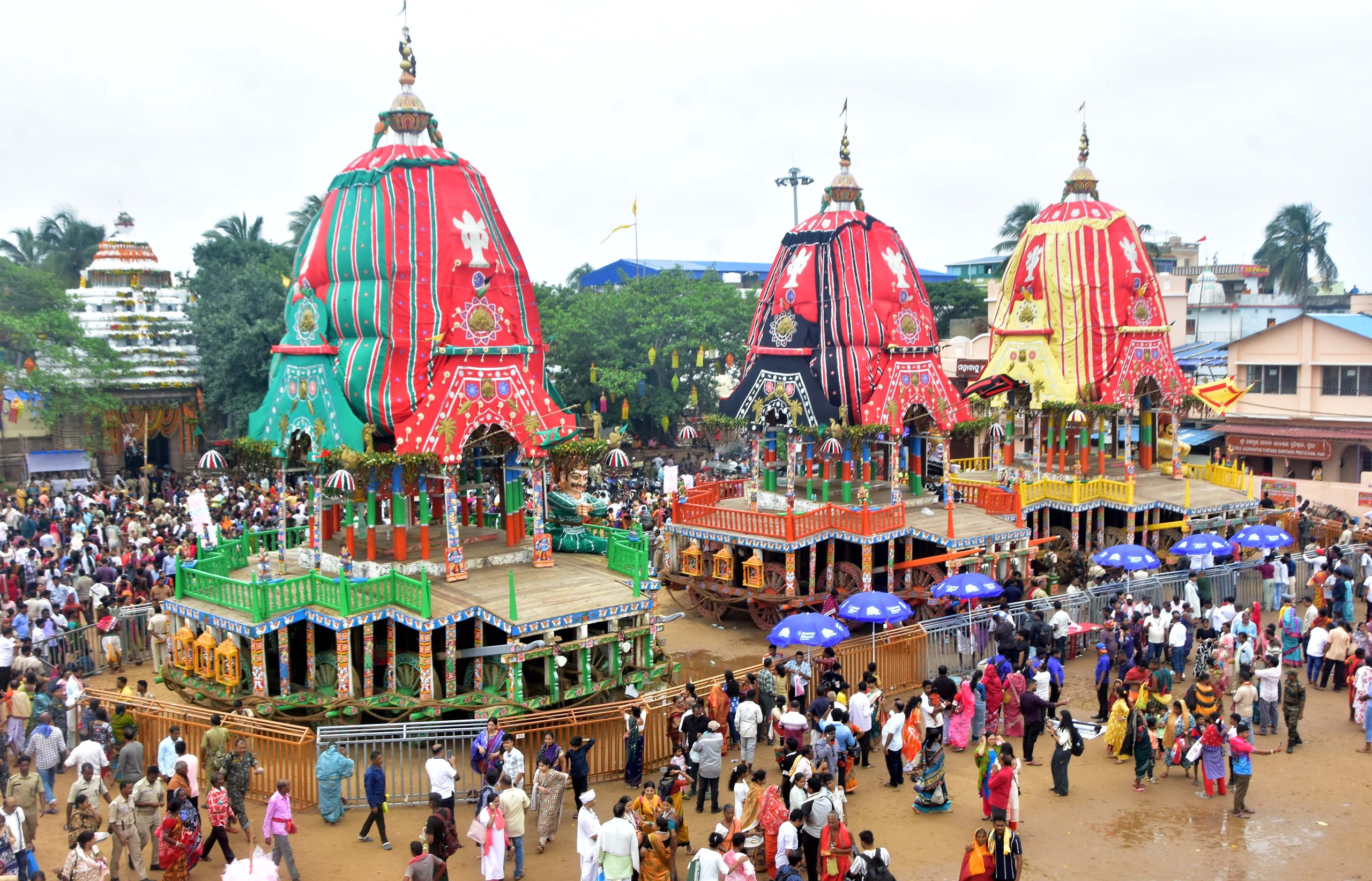
The Ghosa Yatra, or Ratha Yatra, of Lord Jagannath is one of the world’s most distinctive religious festivals. Once every year, Lord Jagannath, accompanied by Lord Balabhadra and Devi Subhadra, emerges from the sanctum of the Srimandir to bless millions of devotees who cannot enter the temple. The procession symbolises the Lord’s compassion and accessibility to all.


Jagannath tradition holds that the festival is not meant solely for human devotees.
It is believed that all beings—including bhutas, pretas and pisachas (unseen spiritual entities)— receive the Lord’s grace during the annual journey. This belief is reflected in one of the festival’s most unique rituals, Adhara Pana.
Scholars have long noted the influence of Tantric traditions on the Jagannath cult.
Certain Tantric texts identify Lord Jagannath with Bhairava and Goddess Vimala with Bhairavi, highlighting the synthesis of Vaishnavite and Tantric traditions in Odisha.
Scriptures such as the Rudrayamala, Kalika Purana and Brahmayamala are often cited to explain these mystical dimensions.
The Kalika Purana includes the verse: “Udrakhyam prathamam pitham Dvitiyam Jalasailajam Trtiyam Purana Pitham tu Kamarupam caturthakam.”
The ritual of Adhara Pana is observed on Asadha Sukla Dwadasi, after the deities have remained on their chariots.
A sweet drink is offered by touching large earthen pots to the lips (adhara) of the deities, giving the ritual its name. According to Jagannath tradition, the offering is intended not only for the deities but also for the unseen spiritual beings believed to accompany the chariots.
It is believed that receiving the Lord’s blessings through this offering enables these beings to attain moksha (spiritual liberation).
Immediately after the offering, the earthen pots are ritually broken by the sebayats, signifying that the sacred drink is reserved exclusively for these invisible beings and not for human consumption.
The ritual also reflects the significance of the number nine in Tantric tradition. Nine earthen pots are used, and the drink is prepared from nine ingredients—milk, cream, sugar, chhena, banana, grated coconut, camphor, nutmeg and pepper.
Nine Pani Apats (water carriers) assist nine Suaras (temple cooks) in preparing the offering.
More than a ceremonial drink, Adhara Pana represents the spiritual inclusiveness of the Jagannath tradition, where divine grace is believed to extend beyond humanity to all forms of existence, making it one of the most remarkable rituals of Odisha’s cultural and religious heritage.