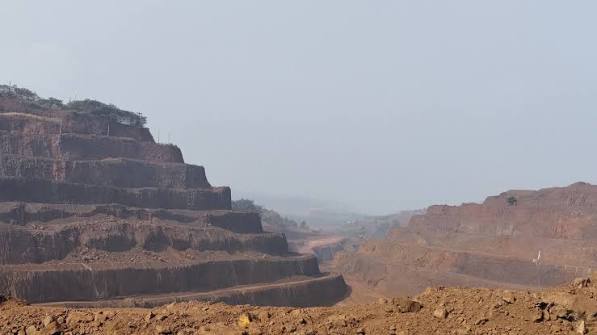
Jajpur: JSW Steel Ltd underpaid Rs 147.76 crore in stamp duty and registration fees on increased production capacity at its Nuagaon iron ore mine in Kendujhar district, according to a report by the Comptroller and Auditor General of India (CAG).
The report flagged a total revenue shortfall of Rs 148.46 crore across three mines in Kendujhar and Jajpur districts because stamp duty and registration fees were not reassessed after production capacity increased through revised mining plans. The other two mines were the Gandhamardan iron ore block in Kendujhar and the Kaliapani chromite mine in Jajpur.


The shortfall at these mines amounted to Rs 70 lakh. Under the Indian Stamp Act, 1899, as amended in Odisha, stamp duty is payable on mining leases where rent is fi xed and no premium is paid. A state government notification issued August 5, 2008, prescribed stamp duty at 5 per cent and registration fees at 2 per cent.
A Steel and Mines Department notification dated January 13, 2012, stipulated that the maximum annual production specified in an approved mining plan should be considered when assessing stamp duty. Any subsequent increase in capacity required reassessment of the additional duty, which had to be paid before the increase took effect.
The CAG audited leases registered at the district sub-registrar offices in Kendujhar and Jajpur and cross-checked records with mining plans and production data maintained by the Deputy Directors of Mines in Kendujhar and Jajpur Road. It found that capacity had increased at all three mines without corresponding reassessment of charges.
Nuagaon mine was leased to JSW Steel under an agreement with the state government in June 2020, with an annual production limit of 75,90,258 tonnes. A revised mining plan approved by the Indian Bureau of Mines in October 2020 raised the maximum capacity to 20 million tonnes annually for 2020-21 to 2024 25.
The increase of 1,24,09,742 tonnes attracted Rs 147.76 crore in stamp duty and registration fees, which remained uncovered. At Gandhamardan, capacity rose from 91,15,680 tonnes to 91,20,000 tonnes, an increase of 4,320 tonnes.
At Kaliapani, it increased from 2,03,860 tonnes to 2,15,000 tonnes, a difference of 11,140 tonnes. The CAG said the state government had been informed of the lapses, but no action had been taken by the time this report was filed.