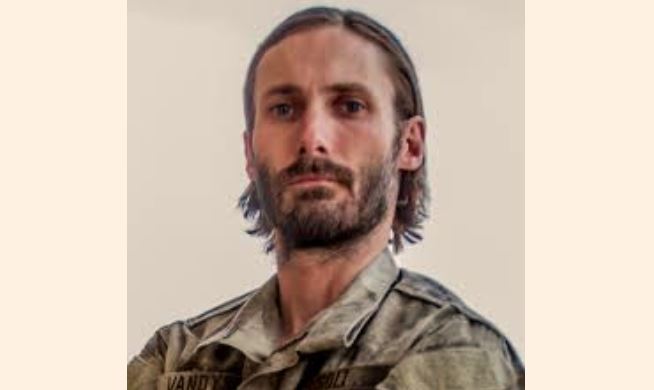
New Delhi: A Delhi court Friday extended till February 24 next year the permission granted to US national Matthew Aaron VanDyke and six Ukrainian nationals to remain outside India in the Myanmar arms training case being probed by the NIA.
Special Judge Prashant Sharma passed the order while hearing applications moved by the seven foreign nationals. The proceedings were held in-camera.
The court’s decision came after the National Investigation Agency (NIA) submitted that they need more time to investigate several aspects of the case, with its counsel Rahul Tyagi making submissions to this effect.
The court also granted liberty to VanDyke to return to the US, as he appeared in person Friday. The other six accused appeared through video conferencing, citing health issues.
Speaking with PTI outside the courtroom, VanDyke questioned the continuation of the case against him.
“There’s no reason for it to continue. If not, I’ll stay in India. Until this is over,” he said.
VanDyke, who was granted default bail last month, had returned to India to appear before the court and seek an extension of the permission granted to him to travel abroad.
In September, the court had allowed him to travel to the US for a month to meet his family, subject to the condition that he return to India and appear before it.
The US national also said that he had removed his lawyer due to financial difficulties.
“I don’t have any comments on the case. It’s all ongoing. Especially now that I’m my own lawyer. I don’t want to talk about it. There is a money issue. That’s the main issue,” he said.
VanDyke also denied receiving any assistance from the US embassy in the case.
The NIA had alleged that VanDyke and the six Ukrainian nationals entered India on tourist visas, travelled to the northeastern region without mandatory permits and subsequently crossed from Mizoram into Myanmar, where they allegedly trained ethnic armed organisations.
The agency had initially invoked provisions of the Unlawful Activities (Prevention) Act, including those relating to conspiracy.
It had also alleged that the accused disclosed details about the network and were involved in assembling equipment and targeting a passenger aircraft in Myanmar.
However, in its charge sheet, the NIA did not invoke the UAPA provisions and instead proceeded under Sections 21 and 23 of the Immigration and Foreigners Act, which provide for offences that can be compounded before the Foreigners Regional Registration Office (FRRO).
The agency had earlier indicated that its investigation into the alleged terror-related aspects was continuing and that further allegations could be included in a supplementary charge sheet.