BANAMALI SENAPATI, OP
Aali: While the Central and state governments are implementing various schemes to improve the quality of education, many schools continue to lack basic infrastructure and facilities.


A shortage of classrooms and teachers remains a major challenge, depriving students at several institutions of a conducive learning environment.
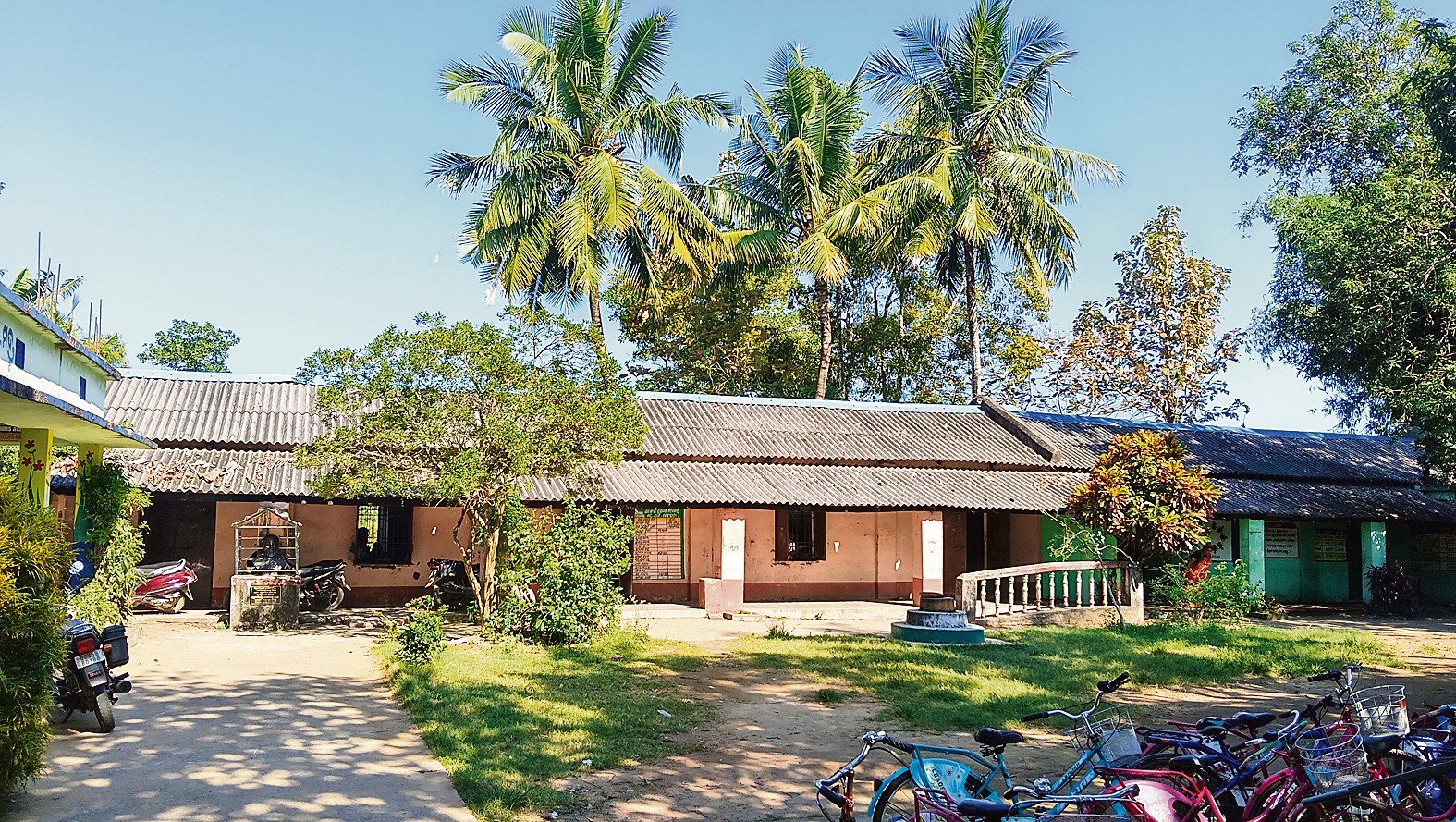
The Government Upper Primary School at Mahu in Aali block of Kendrapada district is a case in point.
Established in 1962, the school has 118 students this year, including 30 in Class VI, 43 in Class VII and 45 in Class VIII.
However, it has only three teachers, and the headmaster’s post has been vacant for the past four months.
One of the three teachers has been given the additional responsibility of acting headmaster along with teaching duties, adding to the school’s difficulties.
The shortage of classrooms is another major concern.
While Class VIII students attend lessons in a concrete building, those in Classes VI and VII are forced to study in a dilapidated room with a cracked asbestos roof.
The old structure has deteriorated considerably, with several roofing sheets damaged.
During the rainy season, water leaks into the classroom through the damaged roof and cracked walls.
The seepage also creates an electrical hazard, with the smart board reportedly becoming electrically charged.
Cracks in the walls have also allowed poisonous snakes to enter the classroom in the past, posing a serious threat to students.
Despite the unsafe conditions, students have little choice but to continue attending classes in the dilapidated room, often studying in fear.
The school has a tube well on its premises, but declining groundwater levels have affected its functioning, leaving students struggling to access drinking water.
The problem becomes particularly acute during summer. Although a proposal was made to install a water purifier and a stand was set up for it, the purifier has yet to be installed.
The absence of a proper drainage system further compounds the problems.
Rainwater accumulates on the school premises during the monsoon, creating unhygienic conditions.
The school received only Rs 3.5 lakh in government grants over the past five years.
Of this amount, Rs 1.5 lakh was spent on constructing toilets, while Rs 2 lakh was used to build boundary walls along two sides of the campus.
The remaining two sides are still without boundary walls.
Although the school has a kitchen for preparing midday meals, it lacks a dining hall.
As a result, students are forced to eat on the verandah.
The school also has no playground, depriving children of adequate opportunities for sports and other physical activities.
Acting headmaster Ratikanta Patra said the school had been facing a shortage of classrooms for a long time.
The rooms used by students in Classes VI and VII are not suitable for conducting classes.
However, teachers have no alternative but to use them because of the lack of space.
He said the school urgently needed additional classrooms, a permanent headmaster, a physical education teacher and a science laboratory.
School management committee president Manoranjan Sahu said the asbestos roof had developed cracks, allowing rainwater to seep into classrooms even during light showers.
Heavy rainfall often disrupts classes.
Snakes have also been spotted emerging from cracks in the walls, he said.
Sahu said the committee had submitted a written complaint to the Block Development Officer (BDO) seeking intervention to address the problems.
BDO Abinash Biswajit Sethi said the tender process for constructing a new classroom on the school premises had been completed and work would begin soon.
Block Education Officer (BEO) Ratikanta Senapati said he was aware of the school’s problems and that the administration had planned to construct a permanent classroom.
Steps were also being taken to fill the vacant headmaster’s post, he said.