
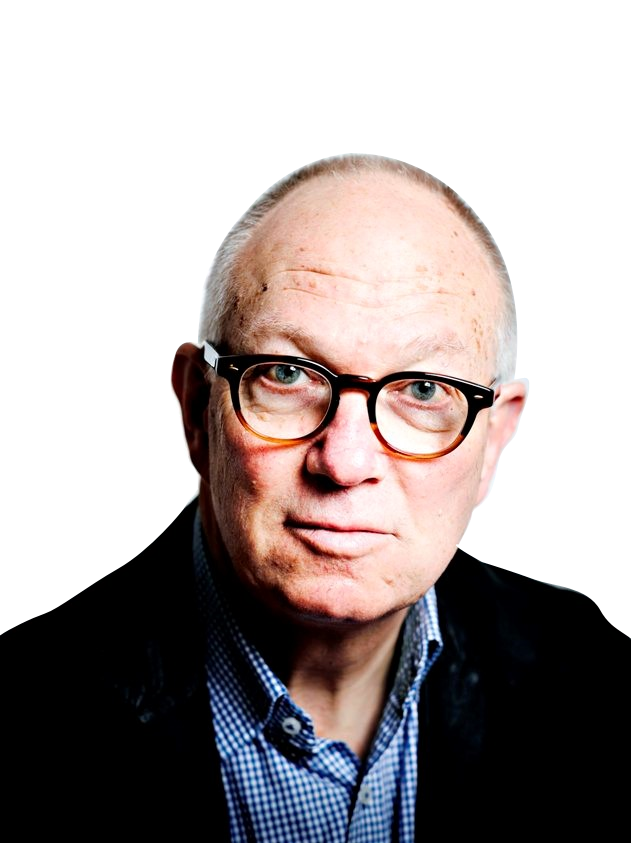
Ian Buruma
What should be done about mass murderers once the regime they served is toppled? Countries all over the world, from post-Nazi Germany to post-junta Argentina, have faced this problem. The process is always messy and riddled with hypocrisies. Now it’s Syria’s turn to confront this question. A 40-year old man named Amjad Youssef was recently arrested for his role in the shooting of an estimated 288 blindfolded civilians over an open pit in 2013. Unfortunately for Youssef, the killers documented the brutal deed, now known as the Tadamon massacre, after the Damascus neighbourhood where it took place, in a series of videos. Youssef, who was a military intelligence officer under the ruthless dictatorship of Bashar al-Assad, deserves to be prosecuted, if only to give his victims’ relatives a sense that justice has been served. But that would not settle the matter. Youssef may have been involved in other atrocities.
More significantly, Syrian President Ahmed al-Sharaa has retained other suspected war criminals as advisers. Fa di Saqr, for example, is helping the new government negotiate with rebellious remnants of Assad’s regime. More powerful than Youssef, Saqr commanded a militia accused of taking a leading role in the Tadamon massacre. Saqr might still be prosecuted, but the government’s stated reason for protecting him so far is a familiar one: a balance must be struck between justice and stability. Ensuring a mostly peaceful transition from dictatorship—a process that could easily devolve into sectarian violence or even civil war—depends on at least some people from the old regime being pacified, co-opted, and integrated into the new order. This is why, after World War II, General Charles de Gaulle pretended that all French citizens had been upstanding patriots under German oc cupation.
The trials of Nazi collaborators, many from the Vichy regime, had to be kept to a minimum. Less than ten years after the war, West Germany’s first chancellor, Konrad Adenauer, who had never been a Nazi himself, supported releasing Nazi war criminals from prison, and even appointed some of them to his government. His rationale? “One doesn’t throw out dirty water, as long as one doesn’t have clean water.” While clearly unjust, is such a response always unjustified? The first problem after the fall of a criminal regime is to decide who to prosecute for its crimes. In the case of Hitler’s Third Reich, hundreds of thousands—perhaps even millions—of people had been complicit in the persecution and extermination of the Jews.
Not only were the torturers and murderers implicated, but so were jurists who wrote racial laws, professors who defended them, soldiers who participated in mass shootings, and even the lowly railway administrators who ensured the trains reached the death camps on time. Prosecuting them all would have been impossible. The courts would have been overwhelmed for decades. And in a country where the judiciary itself was deeply corrupted by the criminal regime, it was not even clear which courts could legitimately have tried such cases. In any case, massive purges of elites can fracture societies into warring factions and make them ungovernable, as happened in Iraq after the fall of Saddam Hussein. This is why, in 1945, the Allied powers decided to place only the surviving Nazi and Japanese leaders on trial for war crimes (in Nuremberg and Tokyo, respectively). Many people who had served them in the bureaucracy, the judiciary, the corporate world, and the armed forces went scot-free.
Even some leaders avoided punishment: many Japanese war crimes were committed in the name of Emperor Hirohito, but the United States allowed him to remain on the throne to preserve political stability. The Nuremberg and Tokyo war crimes trials have been accused of imposing “victor’s justice,” with some arguing that it would have been better for German and Japanese courts to try their own people. But it is hard to see how this could have worked.
As de Gaulle and Adenauer recognised, they needed the support of tainted elites to rebuild their broken societies. Regardless, the “victors” later stopped trying war criminals when their former enemies became allies against Communist powers. In fact, German courts did try Nazi criminals, but not until the 1960s, once the Federal Republic of Germany was a relatively stable democracy. But even those trials, against the operators of death camps in Poland, achieved only partial justice. Some of the worst thugs went to prison, while the majority of the people who cooperated in less violent ways went unpunished. That was probably inevitable; perfect justice is a utopian dream. More important than punishment is an honest appraisal of the past. The gravest insult to former victims is to forget what was done to them. But it takes time to remember.
A serious reckoning with France’s Nazi collaborators began only in the 1970s, after the American historian Robert Paxton published his classic book Vichy France: Old Guard and New Order on Marshal Philippe Pétain’s puppet regime. Now that Spain is a democracy, the wounds of the Spanish Civil War are written about more than ever. Syria’s new leaders should not be judged too harshly. Their first task is to prevent their country from spiralling into disorder and reaching new depths of violence and depravity. To manage this exceedingly difficult task, fuller accountability for the Assad regime’s killers, torturers, and enablers may have to wait a little longer.
The writer is the author of numerous books, most recently, Spinoza: Freedom’s Messiah (Yale University Press, 2024).
Orissa POST – Odisha’s No.1 English Daily