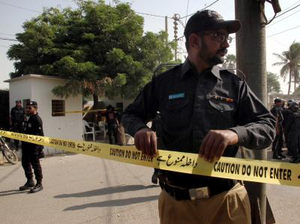
Islamabad: At least 216 terrorists, 36 civilians and 22 personnel were killed in the days-long operation launched in response to terror attacks at multiple places in the restive Balochistan province, the Pakistan Army said Thursday.
The Inter-Services Public Relations (ISPR), the Pakistan military’s media wing, announced in a statement that it has “successfully concluded” the operation, code-named Radd-ul-Fitna-1, that was launched January 26.

The Pakistan Army said that the operations were initiated in Panjgur and on the outskirts of Harnai district after credible and verified intelligence confirmed the presence of terrorists.
“During this phase, security forces undertook operations against identified terrorist hideouts, resulting in the elimination of 41 terrorists,” it said.
It said subsequently, aggressive and steadfast responses by the security forces effectively thwarted the attacks.
“As a result of these well-coordinated engagements and subsequent clearance operations, 216 terrorists have been sent to hell, significantly degrading the leadership, command-and-control structures and operational capabilities of terrorist networks,” the ISPR said.
The army said 36 civilians, including women and children, and 22 personnel of the security forces and law enforcement agencies were killed in the operations.
The statement alleged that “Indian-sponsored terrorist elements were seeking to disrupt peace and development” in the region.
India has earlier categorically rejected as baseless Pakistan’s allegations of an Indian hand in attempts to disturb peace in Balochistan, and said it is Islamabad’s usual tactic to deflect attention from its “internal failings”.
Meanwhile, railway services have been restored in Balochistan province after remaining suspended for the last five days, a Pakistan Railways official said Thursday.
Pakistan Railways spokesperson Muhammad Kashif said that after the outbreak of terror attacks in different parts of the province since Saturday, all railway traffic from Quetta had been suspended because of security reasons.
He said that during the attacks, several railway tracks were damaged which also led to the suspension of railway services.
On Tuesday, Pakistan’s National Assembly adopted a resolution urging the government to adopt an “aggressive” national response to tackle the threat of external sponsors of militancy and their internal facilitators.
Balochistan, bordering Iran and Afghanistan, is home to a long-running violent insurgency. Baloch insurgent groups have previously carried out several attacks targeting the USD 60 billion CPEC (China-Pakistan Economic Corridor) projects.
In 2025, the Balochistan Liberation Army (BLA) claimed responsibility for the March hijacking of the Jaffar Express train travelling from Quetta to Peshawar, killing 31 civilians and security personnel and holding hostage over 300 passengers.