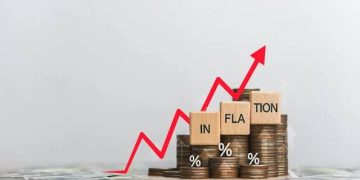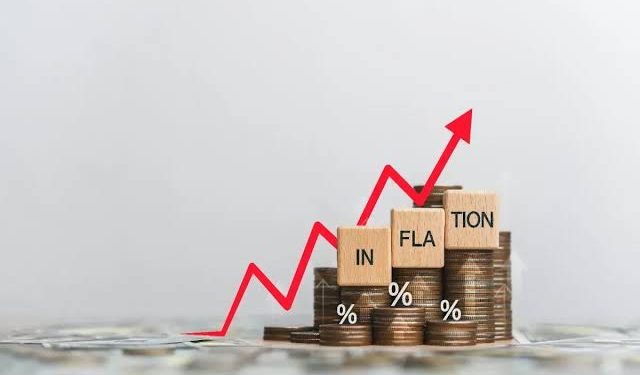
With the retail inflation in India climbing to 4.38 per cent, tell tale signs of the global economic crisis have started showing up. Driven by higher fuel and food costs, the headline inflation rate has already breached Reserve Bank of India’s medium-term target of 4 per cent. India’s retail inflation, measured by the Consumer Price Index (CPI), rose to 4.38 per cent year-on-year in June, up from 3.93 per cent in May.
Rural retail inflation in India reached 4.74 per cent, outpacing urban retail inflation, which stood at 3.92 per cent. The recent acceleration in price growth was primarily fueled by food inflation. Weak monsoon due to the El Niño effect and rising fuel prices due to the crisis in the Middle East have added to the problems. However, the lack of planning to face these foretold eventualities on the part of the government has led to the present severe economic mess in India. The agricultural sector in India has been under pressure for decades now. Corrective measures have been very few and far between. The lack of infrastructure to support a primarily agricultural economy is very visible.
Also Read


India’s dependence on rains is due to poor irrigation and water resources infrastructure. Scanty rainfall leaves the country high and dry, whereas a small spell of heavy rains floods everything and causes severe damage. Infrastructural planning for irrigation systems is miserably lacking and therefore leads to poor yield and crop loss. Similarly, storage infra for food grains and agricultural produce is negligible. This has led to wastage and distress sales during bumper crop season and scarcity during times of need. Added to this is the issue of unscrupulous traders hoarding foodstuff and releasing limited quantities into the market, artificially inflating prices of essential items. In order to get a grip on this, the collection, storage and distribution of food commodities should be strengthened and made efficient.
Unfortunately, India has not adequately developed these facilities, making it difficult to stabilise prices. The tremendous job loss and decline in industrial production caused by no clear economic vision or foresight on the part of those in the Indian Establishment as also the Trump-instigated tariff war, followed by the US-Israel war on Iran and the resultant crisis has overtaken this country and crippled the Indian economy to dangerous levels. Given the growing impacts of global warming and climate change, weather fluctuations cannot be controlled. Their economic consequences, however, could be minimised through better preparedness. Instead, India’s policymakers appear to be influenced by a very small group of politicians and industrialists, all the while neglecting the welfare of common citizens. The pricing of petroleum products is a clear example.
Over the past several months, tensions in the Middle East have been cited as a justification for repeated fuel price hikes by the Indian government and oil marketing companies. Yet, whenever international crude oil prices have dropped, consumers have never been given any corresponding relief. Consequently, during this period of inflation and rising prices of essentials, people with limited incomes are bearing the greatest burden. A significant portion of household expenditure now goes toward purchasing of food and grocery items. When a country or organisation is effectively controlled by a small group of influential people, it is described as an oligarchy.
Present-day India increasingly reflects such a situation. Economic policies are altered swiftly to benefit industrialists, while policymakers hesitate to implement reforms that would directly benefit common citizens. As a primarily agriculture-based economy, India must prioritise irrigation systems, storage facilities, cold storage infrastructure and stronger regulation of agricultural markets.
Instead, excessive reliance on market forces allows powerful business groups to influence and shape policy in ways that suit their own interests. The three farm laws introduced by the Centre in the recent past may serve as an example. Widespread protests in northern India and mounting pressure after deaths of several protesters eventually forced the government to repeal the controversial laws.
However, many of the policies contained within those laws were later implemented quietly. The weakness of the Indian economy is evident from the continuous depreciation of the Indian rupee against the US dollar. It is difficult to understand whether those at the highest levels of government truly possess the ability to understand the country’s economy and give solutions for a future economic roadmap. If policymakers struggle to comprehend the national economy, it is difficult to believe they can effectively navigate through complexities of the global economy.
Blaming others for economic problems has become a political strategy, but ground realities are far more complex. It seems economic issues are now governed primarily by politics. While we proclaim that India is a big economic powerhouse, the metrics tell a different story. Citizens are constantly losing buying power and struggling to survive. Genuine progress must be demonstrated through effective action. At the very least, policymakers must stop functioning merely as obedient executors of the wishes of oligarchs and instead formulate policies that genuinely serve public interest.