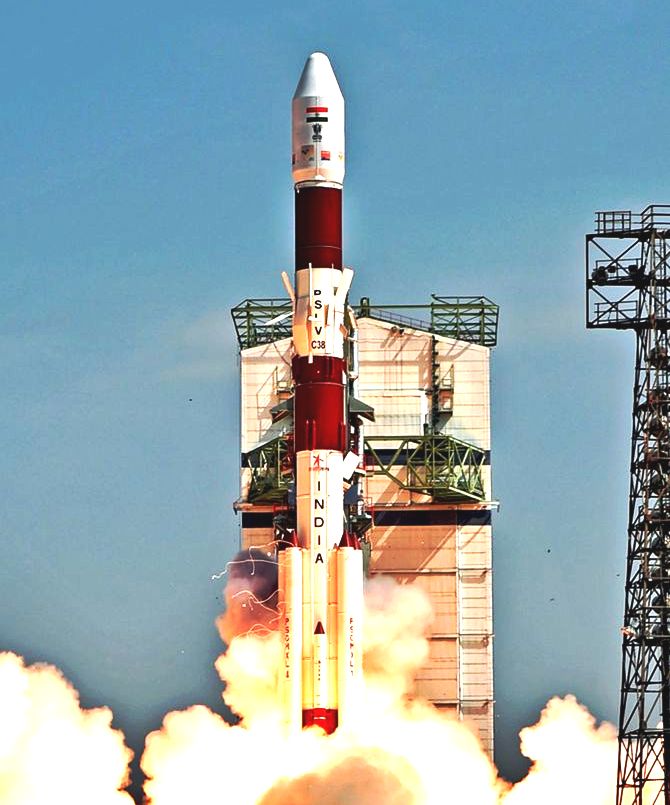
This is ISRO’s second launch in November. The space agency had launched its latest communication satellite GSAT-29 on board GSLV MkIII-D2 November 14.
Details of the launch


According to ISRO, the Indian rocket Polar Satellite Launch Vehicle Core Alone Variant (PSLV-CA) will be equipped with 380 kg HysIS satellite and 30 overseas satellites together weighing 261.5 kg.
The PSLV rocket is a four-stage launch vehicle with alternating solid and liquid stages/engines.
The entire mission is expected to complete in 112 minutes after the rocket takes off.
Within 17 minutes into the flight, the PSLV rocket will place the HysIS satellite with a mission lifespan of five years in 636 km polar sun synchronous orbit.
After that, the rocket will be brought to a lower altitude to about 503 km from 642 km.
About PSLV
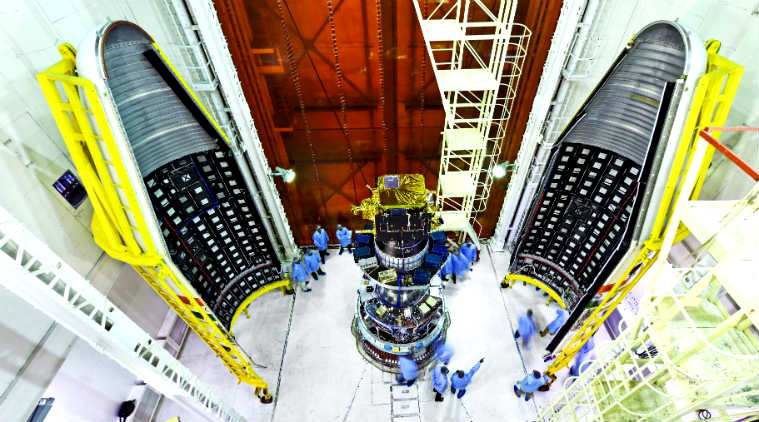
Polar Satellite Launch Vehicle (PSLV) was launched October 1994, it is the third generation launch vehicle of India.
It is the first Indian launched vehicle to be equipped with liquid stages.
PSLV has emerged as a workhouse launch vehicle of India with 39 consecutively successful missions by June 2017.
This vehicle has launched 48 Indian satellites for customers from abroad.
It has also launched Chandrayaan-1 in 2008 and Mars Orbiter Spacecraft in 2013.
Earlier spacecraft launched and HysIS
The Indian space agency has earlier done a satellite mission for over two hours in January 2018.
HysIS mission is to study the earth’s surface near infrared and shortwave infrared regions of the electromagnetic spectrum.
The co-passengers of HysIS include 1 micro and 29 nano satellites from eight different countries.
All these satellites will be placed in a 504 km orbit.
More updates coming soon…