
VITAL STATS
Bhubaneswar is one of the fastest growing cities in the country as its population grew by 30 per cent between 2001 and 2011
The city, which has nearly 10 lakh population, is expected to have 20 lakh by 2030
49 per cent of the registered vehicles in the city are two-wheelers and another 11 per cent are cars
90% of authorised public parking spaces are on-street, occupying valuable road space and worsening the traffic jam
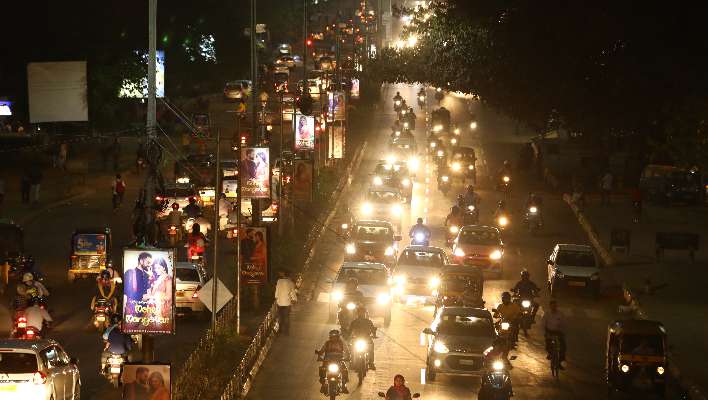
Bhubaneswar: With a view to curbing traffic congestion in the city, the Bhubaneswar Smart City Limited (BSCL) has floated a tender to develop a parking policy and a master plan to address the nagging problem in a scientific way even as three lakh vehicles have been added to the city streets during last five years.
According to the document uploaded on the website of city authorities, the future plan is to manage the traffic issue in a sustainable way as the city is experiencing difficulties every passing day.
Bhubaneswar is one of the fastest growing cities in the country with its population increasing by 30 per cent between 2001 and 2011. The city, which has nearly 10 lakh population, is expected to reach 20 lakh by 2030.
A key area of focus for Bhubaneswar Smart City project is sustainable urban mobility. Increase in the city’s population has led to an increase in urban mobility within the city. As per the Comprehensive Development Plan (CDP 2008), 49 per cent of the registered vehicles in the city are two-wheelers and another 11 per cent are cars. Over the last five years almost three lakh vehicles have been added to the streets of the city, with a growth rate far above the national average.
Lack of parking facilities has emerged as a major challenge for the city and 90 per cent of authorised public parking spaces in the city are on-street, occupying valuable road space and worsening the traffic snarl. BSCL aims at developing a two-pronged approach to address parking issues – to develop a city level parking policy and a parking management plan.
The aim of the parking policy would be to guide the development of planned parking facilities in line with Smart City goals, urban transit objectives and city development plans.
Likewise, the aim of the parking management plan should be to assess the existing parking scenario in the city, list out parking issues and develop a phase-wise plan to manage existing and future parking demand and supply (on-street and off-street), keeping in mind the development of mass transit facilities, smart technologies, land use integration and transit oriented development.
Notably, the BSCL has started working on two sites along Janpath, in the Bhubaneswar Town Centre District, to develop two multi-level car parking facilities which are expected to lessen the congestion due to on-street parking on Janpath and its major arterial roads around Sahid Nagar, Unit I and Unit II areas.
There are also several plans as per the Smart City proposal to implement non-motorised transport projects like Smart Janpath by including dedicated bicycle tracks, apart from an ambitious plan to have a public bicycle sharing system in the city.
The city bus modernisation plan, under which 200 buses will be added in the first phase, ahead of upcoming Odisha Men’s World Cup Hockey 2018, would also help the city to have an efficient public transport network and lessen the burden on personal transport arrangements.
VITAL STATS
Bhubaneswar is one of the fastest growing cities in the country as its population grew by 30 per cent between 2001 and 2011
The city, which has nearly 10 lakh population, is expected to have 20 lakh by 2030
49 per cent of the registered vehicles in the city are two-wheelers and another 11 per cent are cars
90% of authorised public parking spaces are on-street, occupying valuable road space and worsening the traffic jam