
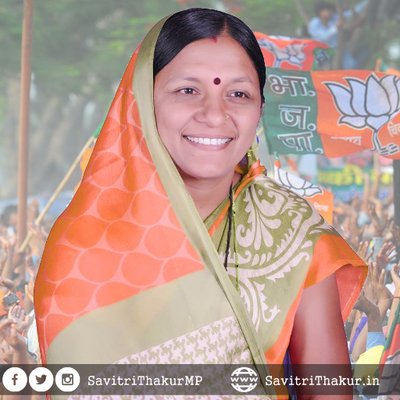
New Delhi: The Central government has taken appropriate measures to improve menstrual hygiene practices through schemes and interventions of various ministries and departments, Minister of State for Women and Child Development Savitri Thakur told Rajya Sabha Wednesday.
The Union health ministry implements the Scheme for Promotion of Menstrual Hygiene for adolescent girls aged 10-19 years. The scheme focuses on enhancing awareness on menstrual hygiene and access to sanitary napkins, and promoting safe disposal practices, Thakur said in a written reply to a question.
The Ministry of Health and Family Welfare has formulated a menstrual hygiene policy for school-going girls after detailed deliberations with the line ministries, she said.
The policy streamlines access to low-cost menstrual hygiene products, gender-segregated toilets and safe disposal facilities, promotes menstrual hygiene education through school curriculum, and prioritises sensitisation and awareness in schools, Thakur’s reply said.
Teachers and frontline workers, including auxiliary nurse midwives, accredited social health activists and anganwadi workers, are oriented in the scheme, the budget for which is provided under the Rashtriya Kishor Swasthya Karyakram.
Furthermore, one of the objectives of Beti Bachao Beti Padhao components of Mission Shakti is to generate awareness about menstrual hygiene and the use of sanitary napkins, she said.
The National Family Health Survey-5 (NFHS-5) data shows that the percentage of women aged 15-24 years using hygienic methods during their menstrual cycles has risen from 57.6 per cent in NFHS-4 to 77.3 per cent in NFHS-5, she added.
The Ministry of Drinking Water and Sanitation has developed National Guidelines on Menstrual Hygiene Management under the Swachh Bharat Abhiyan to create awareness on menstrual hygiene practices in rural areas as part of its overall interventions for behavioural change on sanitation and hygiene aspects, Thakur said.
The Department of School Education and Literacy implements an integrated scheme, Samagra Shiksha, under which state-specific projects have been approved for varied interventions, including installation of sanitary pad vending machines and incinerators.
The Ministry of Education has issued an advisory June 7, 2024, to all the states and Union Territories and the heads of autonomous bodies such as the Central Board of Secondary Education, Kendriya Vidyalaya Sangathan and Navodaya Vidyalaya Samiti, Thakur said.
The University Grants Commission, through an advisory on March 18, 2025, has requested all higher educational institutions to ensure provisions for sanitary facilities at conspicuous locations in their institutions.
The Department of Health Research under the Ministry of Health and Family Welfare carries out studies to look into newer methods of managing menstrual health and other sustainable alternatives to sanitary napkins.
Since 2015-16, the menstrual hygiene scheme has been supported by the National Health Mission through the State Programme Implementation Plan route based on proposals received from states, Thakur said.
The states have been instructed to procure sanitary napkin packs at prices reached through competitive bidding, she said.
In 2021-22, approximately 34.92 lakh adolescent girls were provided sanitary napkin packs every month, according to data from the Health Management Information System.
The government has also taken initiatives to improve the accessibility of sanitary napkins and good quality medicines at an affordable price, Thakur said in her written reply.
The Department of Pharmaceuticals under the Ministry of Chemicals and Fertilisers implements the Pradhan Mantri Bharatiya Janausadhi Pariyojana. Under this, over 16,000 Janaushidhi Kendras have been set up to provide oxo-biodegradable sanitary napkins named ‘Suvidha’ at Rs 1 per pad.
The cumulative sales of Suvidha Napkins stood at Rs 96.30 crore as November 30, 2025, the reply said.