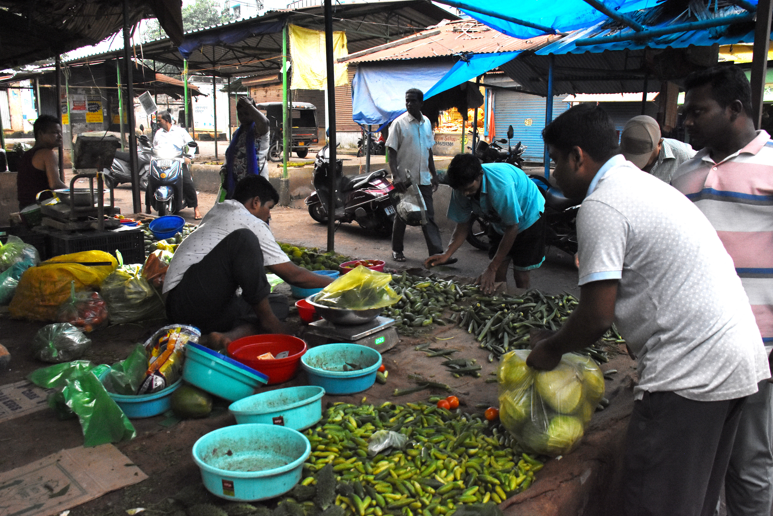
Bhubaneswar: Damana Market remains one of the prominent markets in Bhubaneswar, catering to thousands of residents of the City’s northern neighbourhoods. Spread over 8 acres and 162 decimals, the market currently operates on around 4 acres due to certain legal disputes.
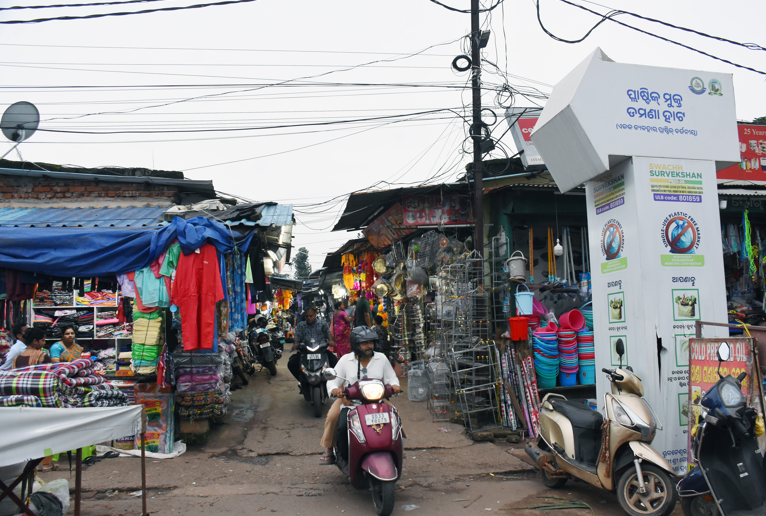
Established August 12, 1990, the market remains open daily from morning until around 11 pm, while the vegetable market operates three days a week — Sunday, Tuesday and Thursday. Located next to Damana Square, the market is strategically placed, with the Jayadev Vihar-Nandankanan main road to its east and the Damana-Sail ashree Vihar road to its north. Residents of Damana, Sail ashree Vihar, Patia, Kanan Vihar, Housing Board Colony, Gadakana, Niladri Vihar, BDA Colony, Samanta Vihar, Maitri Vihar and Gajapati Nagar depend heavily on the market for their daily needs.


Since its establishment, the market has been managed by Sri Sri Gopinath Jew RMC Damana Haat Byabasayi Sangha. After the Regulated Market Committee (RMC), Jatani, brought the market under its jurisdiction in 2005, it was registered under No. 1379/130/2006/07. Around 500 traders earn their livelihood.
Of them, 230 vegetable vendors operate from designated stalls, while the remaining 270 traders run permanent shops selling groceries, clothing, puja items, brass utensils, cosmetics and other goods. There are also shops offering phone-repair services, besides salons, snack shops and small hotels. Meat and fish vendors selling fish, chicken and dried fish also operate in the market.
Vegetable and other vendors who set up stalls on market days are charged Rs 30 per week (three days). The amount is collected by RMC employees. Other regular traders pay Rs 10 per day on a monthly basis.
Parking woes; CCTV the only security
Legal restrictions concerning the market’s boundaries have prevented the construction of a perimeter wall. As a result, the market has no proper security arrangements or security guards. It relies solely on CCTV cameras installed by the traders’ association and some individual traders. The market has a small designated parking area, but it is not fully functional. As a result, parking has emerged as a major problem, especially the days when the vegetable market operates.
Five main access roads and several smaller lanes allow vehicles to enter the market. During peak hours, parked vehicles add to the congestion. The problem is particularly acute along the Damana-Sail ashree Vihar road, where haphazard parking on both sides, especially near the haat, can occupy almost half the available road width.
The lack of adequate parking space is fuelling traffic snarls and increasing the risk of accidents, despite the road otherwise having sufficient space for the smooth movement of vehicles. Shoppers, who park their vehicles illegally on the roadside, citing a lack of parking space, are often fined by traffic police.
On several occasions, two-wheelers and four-wheelers have also been towed to the police station. The market also lacks dedicated fire-safety arrangements. Traders do not have their own fire extinguishers. However, the main roads leading to the market are wide, and traders hope fire engines would be able to enter the market easily in an emergency and facilitate a smooth evacuation.
Basic facilities
Basic facilities are available for traders and customers. With the association’s efforts and support from BMC and RMC, drinking water facilities have been provided inside the market and at its entrances. Traders also have access to borewell water.
There is one free public toilet and two urinals. Although the BMC is responsible for their maintenance, the facilities need better upkeep. The traders’ association has installed its own transformer to supply electricity to all traders. A generator is also available for emergencies.
Warehouses
The market has several warehouses, including those for rice and banana. Many varieties of rice are brought directly from Kolkata every week and made available at the market. Potato-laden trucks also arrive at the market, which has three potato warehouses.
Solar-powered cold storage under construction
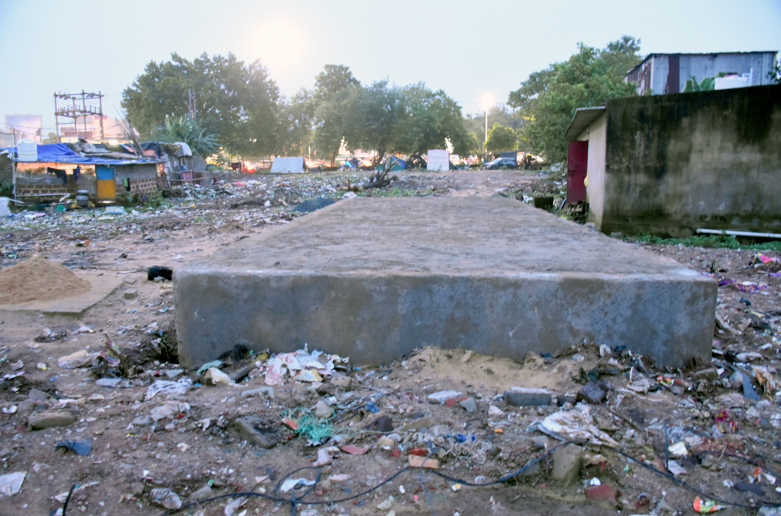
An area of 26,000 square feet on one side of the market has been cleared of encroachment, where a solar-powered cold storage facility with a capacity of 10 metric tonnes is being constructed.
The project is a joint initiative of the RMC, Odisha Renewable Energy Development Agency, Ecozen, Balaji Solar, Lumborg and the Department of Horticulture. Construction is expected to be completed soon. Once operational, the facility will enable vegetables and other commodities to be stored for longer periods.”
Handia trade near the market
For years, around 30 people from a nearby slum have been selling handia, a traditional rice-based alcoholic drink, adjacent to the market. The activity has led to foul odours and turned the area into a gathering place for antisocial elements, affecting the environment around the market.
Despite the trade continuing along a major road near a prominent market such as Damana Haat, the Excise Department has apparently failed to take notice. The market traders’ association has opposed the activity and informed the BMC. However, the vendors have not been removed.
Traders’ body election every 3 years
Elections for the market traders’ association are held every three years, with the presidential contest drawing particular interest. The election is conducted much like a general election, with candidates campaigning extensively among association members.
After the election date is announced, presidential candidates go door-to-door seeking votes. Campaign slips are distributed and each candidate is assigned a separate election symbol. A limited period is allowed for filing nominations. Intimation letters are also sent to the inspector-in-charge of the nearby police station, the RMC and other concerned departments.
On polling day, association members cast their votes in the presence of the election officer, officials from the local police station, general body members and officials or representatives of other departments.
The candidate securing the highest number of votes is declared president. The newly elected president then forms a core committee comprising several board members. The list is presented at a general body meeting, where members nominate the vice president, general secretary, assistant secretary, treasurer and assistant treasurer.
Ganesh Puja for 6 days
Ganesh Puja is celebrated with great enthusiasm at the market every year. Before the festival, a general body meeting is held, and donations are collected from traders based on a decision taken collectively.
The festivities continue for six days, with puja ceremonies accompanied by five days of Badipala performances and an evening of devotional music. Prasad is also distributed. After the puja, a community feast is organised for around 1,500 people, including traders and office-bearers of the association.
Devendra Kumar Sahu, traders’ body president said, Compared with other markets in the capital, our market has almost all the basic facilities. More than 10,000 people from nearby areas depend on this market.
Keeping their needs in mind, the association is taking all possible steps. There are problems related to parking and security at the market.
Once the cold storage facility is completed, traders and customers will have additional facilities. Security is being monitored through CCTV cameras installed at the market, but that is not enough.
Therefore, we will try to take further steps to strengthen security.
Manoranjan Dash, traders’ body general secretary said, Our market gives priority to basic facilities for both traders and customers. Toilets and drinking water facilities are available.
Over the past four years, we have undertaken several development works at the market. A drainage system has been put in place to drain water from the market, and LED lighting has also been installed.
Despite the availability of various facilities, parking has emerged as one of the major problems at the market